Choosing the right running watch with recovery tracking can make training feel more structured and less guesswork-heavy. The best options help you balance hard efforts, easy days, and rest so you can train consistently.
In this roundup, we focus on watches that are easy to wear daily, reliable for workouts, and useful for understanding how ready you are to go again.
Best 10 Running Watch with Recovery Tracking Picks for 2026
Compact Garmin with Recovery Focus

- Training readiness blends sleep, recovery, load, and HRV.
- Garmin Coach plans adapt to your performance and recovery.
- 42mm AMOLED design suits smaller wrists.
Best For: Runners and triathletes who want compact recovery tracking and coaching
Premium Garmin for Deep Training Insight

- Training readiness and training status guide hard days and recovery.
- Built-in maps, multi-band GPS, and race-adaptive workouts.
- Running dynamics and wrist-based power add training detail.
Best For: Serious runners and triathletes wanting advanced recovery insights
Ultra-Light COROS for Daily Running

- 30g design stays comfortable for all-day wear.
- Dual-frequency GPS improves accuracy in challenging areas.
- Up to 38 hours of GPS or 24 days of daily use.
Best For: Runners who prioritize comfort, battery life, and GPS accuracy
Ultralight Recovery-Focused Runner
POLAR Pacer Pro GPS Training Watch
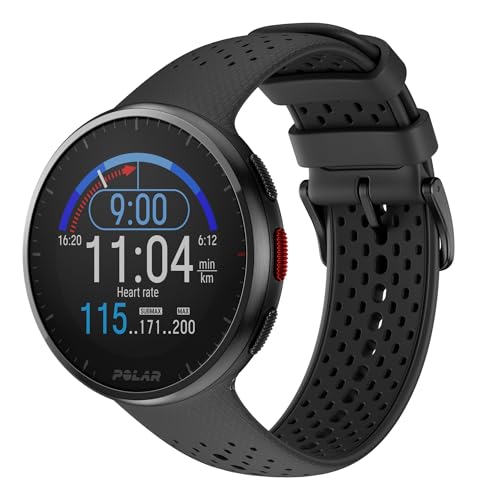
- 41 g lightweight running-focused design
- Sleep and recovery tools with optical HR
- Up to 35 hours training battery life
Best For: Runners wanting a light GPS watch with recovery features
Simple Training Guide
Garmin Forerunner 55 Running Watch

- Suggested workouts use recovery time and fitness data
- Up to 2 weeks battery in smartwatch mode
- Wrist HR and GPS in a lightweight 37 g build
Best For: Runners who want simple, recovery-aware training guidance
Smart Training Planner
Amazfit Active Max Recovery Watch

- BioCharge helps balance workouts and recovery
- Zepp Coach running plans from 3K to marathon
- 1.5-inch AMOLED display with 25-day battery
Best For: Runners who want coaching, recovery insight, and a bright screen
Recovery-First Performance Pick
Garmin Forerunner 265 Running Smartwatch

- Training readiness and HRV status guide harder or easier days.
- Daily suggested workouts adapt after every run.
- Multi-band GNSS and AMOLED display add premium utility.
Best For: Runners who want detailed recovery tracking and adaptive training
Everyday Wellness Runner
Garmin Venu Sq 2 GPS Smartwatch

- Monitors sleep score, Body Battery, stress, and heart rate.
- More than 25 sports apps include running and GPS workouts.
- Garmin Coach and free workouts support training plans.
Best For: Runners who want wellness tracking with basic recovery support
Value Training Pick
Garmin Forerunner 165 Running Smartwatch

- Recovery time and training effect labels support smarter workouts.
- Daily suggested workouts adapt to performance and recovery.
- Built-in GPS and AMOLED screen in a lightweight body.
Best For: Runners who want affordable recovery tracking and coaching
Compact Garmin with Recovery Focus – Compact AMOLED Training Watch
If you want a running watch with recovery tracking that also handles triathlon training, the Garmin Forerunner 570 gives you a compact 42mm design, bright AMOLED display, and a strong mix of readiness and workout guidance. It focuses on the kind of daily data that helps you decide whether to push hard or back off.
Best For: Smaller wrists and runners who want recovery guidance, adaptive coaching, and triathlon support in a lighter-size Garmin.
Pros:
- Training readiness uses sleep quality, recovery, training load, and HRV status.
- Personalized Garmin Coach plans and daily suggested workouts adapt to performance and recovery.
- Morning and evening reports summarize recovery, training outlook, sleep needs, and weather.
- Built-in mic and speaker add wrist-based calling when paired to a smartphone.
Cons:
- GPS battery life is listed at up to 18 hours, which is solid but not class-leading for ultra-long outings.
- The recovery and readiness metrics are close estimations rather than medical measurements.
The Forerunner 570 is a practical choice if you want recovery-focused training tools in a smaller smartwatch package. It stays centered on running performance while adding triathlon features and everyday smartwatch convenience.
Long-Life Amazfit for Training and Recovery – Long-Battery Multisport Watch
The Amazfit Balance 2 is a strong running watch with recovery tracking if you want long battery life, offline maps, and broad sports coverage in one package. Its recovery metrics, heart-rate monitoring, and dual-band GPS make it appealing for athletes who train across different activities.
Best For: Multi-sport athletes who want long battery life, map support, and recovery data without constant charging.
Pros:
- Up to 21 days of battery life under typical use.
- Dual-band GPS and six-satellite support help keep tracking reliable.
- Recovery metrics, HRV, sleep, stress, and heart rate are monitored around the clock.
- Offline maps and turn-by-turn directions add useful navigation support.
Cons:
- At 47mm, it may feel large on smaller wrists.
- The feature set is broad, so runners who only want a simple watch may not use everything.
Balance 2 stands out when you want training support that extends beyond running into many sports and outdoor sessions. It combines endurance-friendly battery life with recovery and navigation features that make it easy to train longer.
Premium Garmin for Deep Training Insight – Premium AMOLED Running Watch
The Garmin Forerunner 965 is a premium running watch with recovery tracking for athletes who want deep training data, built-in maps, and a bright AMOLED display. It is designed to help you plan workouts, gauge recovery, and stay on track during harder training blocks.
Best For: Serious runners and triathletes who want advanced recovery insights, maps, and detailed performance metrics.
Pros:
- Training readiness uses sleep quality, recovery, training load, and HRV status.
- Daily suggested workouts adapt after every run to match performance and recovery.
- Built-in full-color maps and multi-band GPS support route confidence.
- Running dynamics and wrist-based running power add deeper performance detail.
Cons:
- Premium feature set may be more than casual runners need.
- The watch is built around advanced training, so simpler fitness users may not use every metric.
If you want a running watch with recovery tracking that leans heavily into training depth, the Forerunner 965 is an easy contender. It combines long battery life, navigation, and adaptive workout guidance in a polished package.
Ultra-Light COROS for Daily Running – Lightweight GPS Running Watch
The COROS PACE 3 is a lightweight running watch with recovery tracking for runners who want simple wearability, accurate GPS, and solid battery life. Its design focuses on comfort and training basics, making it a practical pick for daily running and route navigation.
Best For: Runners who want a featherweight watch with GPS accuracy, sleep tracking, and easy navigation.
Pros:
- Very light 30g design with an ultra-slim profile for comfortable all-day wear.
- Dual-frequency GPS is built for accurate tracking in dense city environments.
- Battery life reaches up to 38 hours of continuous GPS or 24 days of daily use.
- Sleep tracking and route planning add useful training context.
Cons:
- Display is transflective LCD rather than AMOLED.
- Recovery-specific coaching features are not as prominent as on some premium competitors.
The PACE 3 is a straightforward option if comfort and battery life matter more than flashy hardware. It covers the essentials well and keeps the focus on reliable running data.
Ultralight Recovery-Focused Runner – POLAR Pacer Pro GPS Training Watch
If you want a running watch with recovery tracking that stays light on the wrist, the Polar Pacer Pro is built around that idea. It combines GPS pace and distance data with Polar’s sleep and recovery tools, making it a practical pick for runners who want training feedback without a bulky case.
Best For: Runners who want a lightweight GPS watch with training and recovery tools in a simple, runner-first design.
Pros:
- Very light at 41 g, which suits daily running and long sessions.
- Includes sleep and recovery tools alongside optical heart rate monitoring.
- Up to 35 hours of training-mode battery life, or 100 hours in power-save mode.
- Tracks pace, distance, laps, and more on a color display.
Cons:
- Uses a button-based interface rather than touchscreen controls.
- Display is LCD, not AMOLED.
- Water resistance is basic compared with higher-rated swim-first watches.
The Pacer Pro makes the most sense if you value lightweight comfort and recovery-aware training over extra smartwatch extras. Its running-centric tools are strong, and the battery life is solid enough for regular training blocks.
Simple Training Guide – Garmin Forerunner 55 Running Watch
The Garmin Forerunner 55 is a straightforward running watch with recovery tracking built into its suggested workouts. It uses wrist heart rate and GPS to help you track runs, then adds training guidance based on your history, fitness level, and recovery time.
Best For: Beginner to intermediate runners who want easy training guidance and recovery-aware workouts in a simple watch.
Pros:
- Suggested workouts consider your training history, fitness level, and recovery time.
- Up to 2 weeks of battery life in smartwatch mode.
- PacePro feature offers GPS-based pace guidance for selected courses or distances.
- Lightweight at 37 g with an easy-to-use button interface.
Cons:
- No touchscreen control.
- Display is a basic MIP style rather than AMOLED.
- Smaller 32 MB storage limits extras.
This is a strong choice if you want a no-fuss running watch that points you toward smarter training decisions. It covers the essentials well and keeps the focus on pace, workouts, and recovery-aware planning.
Smart Training Planner – Amazfit Active Max Recovery Watch
The Amazfit Active Max is a feature-packed running watch with recovery tracking through its BioCharge energy monitoring and Zepp Coach plans. It goes beyond basic run logging with personalized training, offline maps, and a bright AMOLED screen that’s easy to read outdoors.
Best For: Runners and multisport users who want training plans, recovery insight, and a large, easy-to-read display.
Pros:
- BioCharge monitoring helps you balance effort and rest.
- Zepp Coach offers personalized running plans for 3K through marathon distances.
- Huge 1.5-inch AMOLED display with very high brightness.
- Up to 25 days of battery life and built-in GPS with offline maps.
Cons:
- More advanced feature set may be more than casual runners need.
- Bluetooth calls and message replies depend on phone/app setup.
- Heavier on smart features than a pure running-first watch.
If you want a running watch with recovery tracking plus coaching and navigation tools, the Active Max offers a lot in one package. It’s especially appealing for users who want clear screen visibility and long battery life for training and everyday wear.
Recovery-First Performance Pick – Garmin Forerunner 265 Running Smartwatch
If you want a running watch with recovery tracking that goes beyond basic pace and distance, the Garmin Forerunner 265 is built around training readiness, HRV status, and daily suggested workouts. It also adds an AMOLED display, multi-band GNSS, and a morning report that helps you gauge sleep, recovery, and training outlook before you head out the door.
Best For: Runners who want recovery insights, adaptive training guidance, and strong GPS accuracy in a lightweight watch.
Pros:
- Training readiness uses sleep quality, recovery, training load, and HRV status.
- Daily suggested workouts adapt after every run based on performance and recovery.
- Morning report summarizes sleep, recovery, training outlook, HRV status, and weather.
- Multi-band GNSS with SatIQ helps improve positioning in challenging environments.
Cons:
- Recovery and training metrics are estimates, not medical-grade measurements.
- Some advanced features depend on the Garmin Connect app and a compatible smartphone.
Overall, the Forerunner 265 is the most training-centric option here, especially if recovery data drives your workout decisions. It combines performance coaching tools with a bright AMOLED screen and long battery life, making it a strong pick for serious runners.
Everyday Wellness Runner – Garmin Venu Sq 2 GPS Smartwatch
The Garmin Venu Sq 2 is a practical running watch with recovery tracking for people who want health data in an easy-to-read format. It focuses on all-day monitoring like sleep score, Body Battery, stress, and heart rate, while also giving you built-in GPS sports apps and Garmin Coach plans for running goals.
Best For: Runners who want a straightforward smartwatch with broad health tracking and simple training support.
Pros:
- Bright AMOLED display with large, easy-to-read text.
- Tracks Body Battery, sleep score, respiration, hydration, stress, and heart rate.
- Includes more than 25 built-in sports apps, including running and cycling.
- Garmin Coach plans and free workouts help support running training.
Cons:
- It is more health-focused than training-advanced compared with Forerunner models.
- Does not list the same recovery-specific metrics as training-first watches in this roundup.
For runners who care about everyday wellness as much as workout tracking, the Venu Sq 2 is a balanced option. It is less specialized for deep recovery analysis, but it still gives you useful data and coaching support in a compact, mainstream smartwatch package.
Value Training Pick – Garmin Forerunner 165 Running Smartwatch
The Garmin Forerunner 165 is a solid running watch with recovery tracking if you want focused training tools without moving up to a higher-end model. It offers morning report, recovery time, training effect labels, and personalized suggested workouts, plus built-in GPS and an AMOLED touchscreen in a lightweight design.
Best For: Runners who want core recovery metrics and adaptive workout guidance in an easy-to-use watch.
Pros:
- Recovery time tells you how long to wait before your next high-effort workout.
- Daily suggested workouts adapt based on performance and recovery.
- Morning report includes sleep, recovery, training outlook, and HRV status.
- Lightweight design with built-in GPS and AMOLED display.
Cons:
- Battery life is shorter than the Forerunner 265 in smartwatch mode.
- It lacks the more advanced recovery and training-readiness tools of pricier models.
As a value-minded option, the Forerunner 165 covers the recovery basics runners are most likely to use day to day. It is especially appealing if you want Garmin coaching features, a bright display, and a simpler route into recovery-aware training.
How We Picked the Best Running Watch with Recovery Tracking
We prioritized models that combine dependable GPS, clear training metrics, and practical recovery tools such as recovery time estimates, training load, readiness-style insights, and heart-rate-based guidance. Battery life, comfort, and app support also mattered, because a Running Watch with Recovery Tracking should be usable every day, not just on workout days.
Quick Comparison: What Matters Most
Some watches lean toward advanced performance analysis, while others focus on simplicity and ease of use. Premium options typically offer richer training data, brighter AMOLED displays, and more detailed recovery insights. More basic models can still provide useful guidance if you mainly want pace, distance, heart rate, and a simple recovery window after runs.
Key Buying Factors for a Running Watch with Recovery Tracking
Recovery Metrics
Look for recovery time, training status, training load, sleep tracking, and heart rate variability if you want the clearest picture of readiness. These features are most helpful when they work together rather than in isolation.
GPS and Run Data
Accurate GPS matters for pace, distance, intervals, and route mapping. Dual-band GPS and navigation tools are especially valuable if you run in cities, on trails, or in areas with poor signal.
Battery Life
Long battery life reduces charging stress and helps keep recovery data consistent. If you run often or use always-on features, choose a watch that can still last through a full training week.
Comfort and Display
A lightweight fit and readable display make it easier to wear the watch all day. AMOLED screens look great, while simpler displays may offer better battery endurance and faster glanceability outdoors.
Who Should Buy Which Running Watch with Recovery Tracking?
If you want the most advanced training and recovery guidance, choose a higher-end Garmin or similar performance model. If you prefer a lightweight, runner-first device, a streamlined sport watch can be the better fit. If you want a versatile smartwatch that still supports training, consider a hybrid option with strong battery life and broad fitness features. For newer runners, a simpler Running Watch with Recovery Tracking is often the best value because it gives useful guidance without overwhelming detail.
The best choice is the one that matches your training volume, data needs, and how often you want to charge it.