When you think about a hand-wound watch with an exhibition caseback, what comes to mind? It’s not just about telling time; it’s about craftsmanship and personal style. You want a timepiece that reflects your taste while also showcasing intricate mechanics. But how do you choose the right one? Factors like movement type, design, and durability play a significant role. Let’s explore these elements to find out what truly makes a watch timeless.
Men’s SNK807 SEIKO 5 Automatic Stainless Steel Watch with Blue Canvas Band
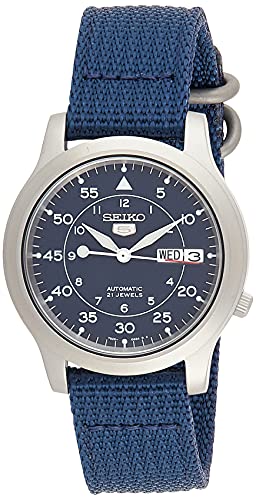
If you’re looking for a reliable and stylish watch, the Men’s SNK807 SEIKO 5 Automatic is an excellent choice. With its striking blue dial and silver-tone stainless steel case, this watch stands out. The blue canvas band adds a casual yet sophisticated touch. Powered by your arm’s movement, it eliminates the hassle of changing batteries. You’ll appreciate its 30 meters of water resistance, making it perfect for daily wear. Plus, the tang clasp guarantees a secure fit. Seiko’s 125-year legacy in timekeeping assures that you’re investing in a quality timepiece that combines tradition and innovation seamlessly.
Best For: Those seeking a stylish and reliable automatic watch for everyday wear without the need for battery changes.
Pros:
- Automatic movement eliminates the need for batteries, powered by the wearer’s arm motion.
- 30 meters water resistance makes it suitable for daily activities and light water exposure.
- Stylish design with a blue dial and canvas band, combining casual elegance.
Cons:
- Limited water resistance may not be suitable for swimming or diving activities.
- Requires daily wear or manual winding to maintain accuracy, which may not be convenient for everyone.
- Smaller case size (37 mm) may not appeal to those who prefer larger watch styles.
Factors to Consider When Choosing a Hand Wound Watch With Exhibition Caseback
When choosing a hand-wound watch with an exhibition caseback, you’ll want to take into account several key factors. Think about the movement type, design aesthetics, and the materials used for durability. Additionally, the visibility of the caseback and the brand’s reputation can greatly influence your decision.
Movement Type Selection
Choosing the right movement type for a hand-wound watch with an exhibition caseback involves understanding your preferences and how you plan to use the watch. You can opt for a manual movement, which requires regular winding and fosters a deeper connection with your timepiece, or an automatic movement that harnesses kinetic energy from your arm. The exhibition caseback lets you admire the intricate mechanics, appealing to horology enthusiasts. Consider the power reserve too; manual watches typically run between 40 to 72 hours without winding. If you wear your watch daily, a manual movement might suit you, while an automatic could be ideal if you wear it less frequently, needing winding only after 8 hours of inactivity.
Design Aesthetics
Selecting a hand-wound watch with an exhibition caseback isn’t just about the movement; design aesthetics play a pivotal role in your choice. You’ll want to appreciate how traditional craftsmanship meets modern elegance, allowing you to admire the intricate mechanics through a sapphire crystal caseback. The materials you choose, whether stainless steel or precious metals, greatly influence both the watch’s durability and its visual appeal. Additionally, consider the dial design, which can range from minimalist to ornate, featuring guilloché patterns or unique colors that express your style. Finally, don’t overlook the size and shape of the case; they determine how the watch fits on your wrist, allowing you to showcase your personal taste effortlessly.
Durability and Materials
Durability is key in a hand-wound watch, especially one with an exhibition caseback. When choosing your watch, pay attention to the materials used in the case and crystal. Opt for stainless steel and sapphire crystal, as they offer superior durability and scratch resistance. A robust case construction is essential, so look for water resistance ratings of at least 30 meters to protect against daily wear and accidental splashes. Don’t overlook the movement quality; higher-end movements are engineered with better materials, guaranteeing longevity. For the exhibition caseback, choose one made from durable sapphire crystal to prevent scratches. Finally, confirm the strap or bracelet is crafted from durable materials like leather or stainless steel to enhance the overall robustness of your watch.
Caseback Visibility
An exhibition caseback offers a fascinating glimpse into the heart of a hand-wound watch, revealing the intricate craftsmanship of its movement. When you choose a watch with this feature, consider the quality of the glass. Sapphire crystal typically provides better scratch resistance and clarity than mineral glass, ensuring you can appreciate the artistry without distractions. The caseback design also affects the watch’s thickness, as a transparent back might require extra engineering for durability while keeping a sleek profile. Additionally, this visibility lets you evaluate the movement type, revealing details like finishing, decoration, and complications. Ultimately, a well-designed exhibition caseback enhances both the visual appeal and your understanding of the watch’s mechanics.
Brand Reputation
Reputation plays an essential role when you’re choosing a hand-wound watch with an exhibition caseback. A brand’s reputation often reflects its commitment to quality and craftsmanship, vital factors in your decision. Established brands usually have a history of reliability and innovation, enhancing the perceived value of their timepieces. Don’t overlook customer reviews and expert opinions; they provide valuable insight into a brand’s performance and after-sale service. Brands with long-standing heritage in horology often blend advanced technologies with traditional techniques, ensuring you receive a well-rounded product. Additionally, a respected brand can greatly affect resale value, as watches from renowned makers tend to hold their value better over time, making it a smart investment for you.
Water Resistance Features
When considering a hand-wound watch with an exhibition caseback, understanding its water resistance features is essential, especially if you plan to wear it in environments where moisture is a concern. Water resistance ratings, typically measured in meters or feet, indicate how well your watch can withstand water exposure. For instance, a rating of 30 meters means it can handle splashes but isn’t suitable for swimming. Each watch’s water resistance is influenced by its construction, including seals and gaskets, which can degrade over time. Make certain to check the manufacturer’s specifications and guarantee the transparent back doesn’t compromise overall resistance. Regular maintenance, like servicing gaskets, is key to keeping your watch functional in wet conditions.