A wrist alarm can make wake-ups and daily reminders more accessible when sound is not a reliable cue. The right choice depends on whether you need a strong vibration to wake you, several discreet reminders throughout the day, or both.
These 10 options include dedicated vibrating watches and wristbands with different alarm styles. Use the guide below to narrow down the features that matter before you buy.
Best 10 Watch for Deaf People Picks for 2026
Best Simple Bedside Alarm
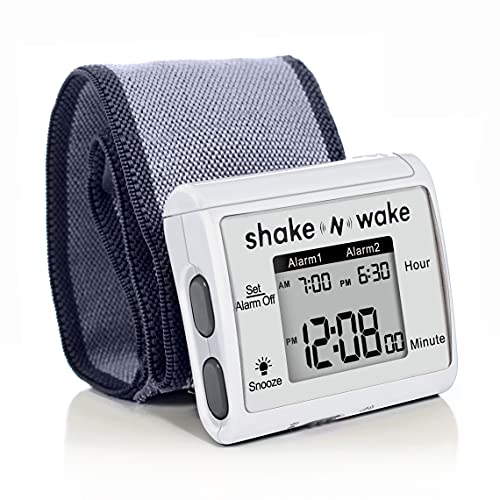
- Two alarms with snooze
- Wrist or under-pillow use
- AAA battery not included
Best For: Light to moderate sleepers seeking a simple vibrating alarm
Best Adjustable Wake-Up Stimulus

- Vibration, beep, and adjustable zap
- iOS and Android app controls
- IP67 rating; up to seven days of battery life
Best For: Heavy sleepers comfortable with app-controlled alerts
Best for Daily Reminders
Tabtime Vibrating Alarm Reminder Watch

- Up to 10 silent daily alarms
- Rechargeable via included USB cable
- Not water resistant
Best For: Multiple discreet medication or routine reminders
Best for Timed Routines
Vibrating Alarm Wristband Clock

- Eight silent alarms
- Repeating countdown timer
- IP65-rated; USB charging
Best For: Silent alerts and repeating timers for structured routines
Most Daily Alarms
eSeasonGear VB80 Vibrating Watch
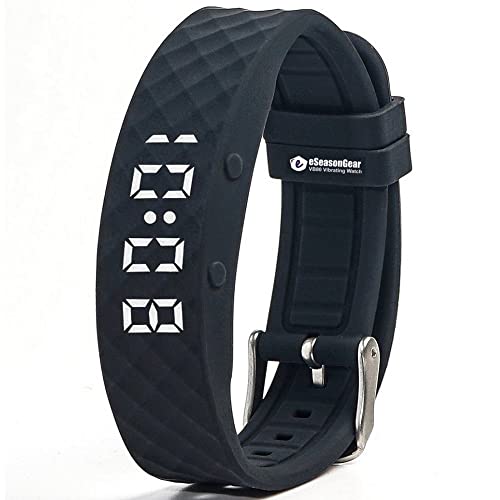
- 12 daily vibrating alarms
- Up to 40-second silent alert
- Not recommended for deep sleepers
Best For: Multiple discreet daily reminders
Alarm and Activity Tracking
Digital Vibrating Fitness Wristband

- Quiet vibration reminders
- On-screen step and activity data
- Alarm capacity not specified
Best For: Discreet alerts plus basic fitness tracking
Phone-Free Fitness Pick
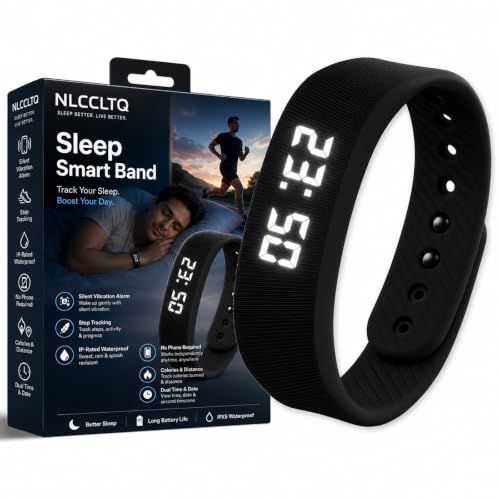
- Silent daily and workout alerts
- Tracks activity without a phone
- Silicone strap for daily wear
Best For: Quiet alerts with standalone fitness tracking
Best Simple Bedside Alarm – Tech Tools Shake N Wake
Tech Tools Vibrating Alarm Clock - Shake N Wake - Silent Alarm Wristband Watch - with Dual Alarms
Check Price On AmazonIf you need a watch for deaf people primarily to wake up without an audible alarm, the Shake N Wake offers a straightforward vibrating wristband that can also sit beneath a pillow. Its two alarm times appear on the backlit display.
Best For: Light to moderate sleepers who want a simple, partner-friendly wake-up alarm.
Pros:
- Two independently set alarms with a snooze feature.
- Switches between vibration and an audible beep.
- Can be worn on the wrist or placed under a pillow.
Cons:
- Vibration may not be strong enough for heavy sleepers.
- Requires one AAA battery, which is not included.
This is a practical choice when uncomplicated controls matter more than extra features. Consider your sensitivity to vibration before relying on it as your only morning alarm.
Best Adjustable Wake-Up Stimulus – Pavlok Shock Clock 3
For someone comparing a watch for deaf people who sleeps through ordinary vibrations, the Pavlok Shock Clock 3 adds an adjustable electrical stimulus alongside vibration and an optional beep. Its iOS and Android app lets you configure alarms and intensity.
Best For: Heavy sleepers who want more wake-up options than vibration alone and are comfortable using an app.
Pros:
- Customizable vibration, beep, and adjustable zap options.
- App controls alarms and stimulus intensity.
- IP67-rated for water and sweat, with up to seven days of battery life.
Cons:
- Requires a smartphone app for customization.
- The electrical stimulus may not suit everyone.
Its range of alerts makes this the most configurable wake-up option here, but choose a comfortable setting and avoid assuming any alarm will work equally well for every sleeper.
Best for Daily Reminders – Tabtime Vibrating Alarm Reminder Watch
If a watch for deaf people needs to handle daytime routines as well as wake-up alerts, the Tabtime lets you set up to 10 silent vibrating alarms per day. That capacity is useful for medication, hydration, appointments, or other recurring reminders.
Best For: Anyone who needs multiple discreet daily reminders on their wrist.
Pros:
- Supports up to 10 vibrating alarms per day.
- Two-button setup keeps adjustments straightforward.
- Rechargeable battery and included USB charging cable.
Cons:
- Not water resistant.
- Listed strap fit is 6.3 to 8.3 inches in circumference.
The generous alarm count is its main advantage over simpler wake-up watches. Check the wrist measurement and keep it away from water before choosing it for everyday wear.
Best for Timed Routines – Vibrating Alarm Wristband Clock
This watch for deaf people combines eight silent vibrating alarms with a repeating countdown timer, making it useful for both wake-ups and structured daily tasks. Its adjustable silicone band is designed for daytime and overnight wear.
Best For: People who want silent alarms plus repeating timers for work, study, or other routines.
Pros:
- Eight custom vibrating alarms and a loop countdown timer.
- Direct plug-in USB charging and IP65 resistance to handwashing, sweat, and light rain.
- Tracks steps and calories and records sleep data during a specified overnight window.
Cons:
- Sleep tracking is specified only for 11:00 p.m. to 7:00 a.m.
- IP65 resistance does not mean it is suitable for swimming or immersion.
Choose this one if interval timing matters alongside silent alerts. Its activity features add convenience, though the stated sleep-tracking window may be limiting for an irregular schedule.
Most Daily Alarms – eSeasonGear VB80 Vibrating Watch
If you need a watch for deaf people that delivers scheduled reminders without sound, the VB80 offers 12 daily vibrating alarms. Its 40-second wake-up vibration and button controls make it a straightforward option for regular routines.
Best For: People who need multiple discreet daily reminders and are not deep sleepers.
Pros:
- Supports 12 daily vibrating alarms.
- Silent wake-up vibration lasts up to 40 seconds.
- Rechargeable battery is listed for approximately 1–4 weeks of use.
Cons:
- The maker warns it will not work for deep sleepers.
- IP65 splash protection does not make it waterproof.
- USB charger is not included.
The VB80 is strongest as a frequent-reminder watch. Check the small or large band measurements before ordering, especially if wrist fit is a concern.
Strong Wake-Up Vibration – VA001 Silent Alarm Wristband
For shoppers comparing a watch for deaf people primarily for waking up, the VA001 emphasizes a strong, silent wrist vibration lasting up to 30 seconds. Its speakerless design keeps the alarm personal in shared bedrooms.
Best For: People who want a phone-free vibrating wake-up alarm without disturbing someone nearby.
Pros:
- Up to 30 seconds of strong wrist vibration.
- Button-operated alarms require no app or Bluetooth pairing.
- Advertised battery life is up to 20 days per two-hour charge.
Cons:
- The supplied details conflict on water resistance, listing both IP68 protection and “Not Water Resistant.”
- The notes do not specify how many alarms can be set.
This is the wake-up-focused choice of the three, but vibration strength cannot guarantee that every heavy sleeper will wake. Confirm its water-resistance rating before exposing it to water.
Alarm and Activity Tracking – Digital Vibrating Fitness Wristband
If you want a watch for deaf people that pairs quiet vibration alerts with basic fitness information, this wristband displays time, steps, estimated calories burned, and moving distance. Its tracking works without a phone connection.
Best For: People who want discreet reminders and a simple, phone-free activity display in one band.
Pros:
- Silent vibration alerts suit shared rooms and other quiet settings.
- Displays steps, calories burned, and moving distance.
- Basic activity tracking does not require Bluetooth or a smartphone.
Cons:
- The notes do not specify vibration duration or the number of alarms.
- Water-resistance information is limited to moisture and everyday splashes; no immersion rating is given.
Consider this band for its combination of reminders and on-wrist activity data rather than for a verified heavy-sleeper wake-up strength. Its unspecified alarm capacity makes it harder to assess for complex schedules.
Simple Silent Wake-Up – Two-Alarm Vibrating Wristband
If you’re looking for a watch for deaf people primarily to provide a silent wake-up alert, this lightweight wristband offers two vibration alarms and a bright digital time display. It also tracks steps, distance, and estimated calories.
Best For: Someone who wants two personal wrist reminders without sounding an alarm in a shared room.
Pros:
- Two separate vibration alarms for wake-ups or daily reminders.
- Approximately 16 g, with a soft silicone band suitable for wearing to bed.
- Displays time and basic daily activity information.
Cons:
- Limited to two alarms.
- Specified wrist fit is approximately 12.5–18.5 cm.
This is the straightforward option if silent reminders matter more than a long list of alarm times. Check the wrist-fit range before buying, and don’t assume its vibration will wake every heavy sleeper.
For shoppers comparing a watch for deaf people with basic fitness functions, this wristband combines silent vibration alerts with on-device step, distance, and calorie displays. Its supplied notes say exercise tracking works without a Bluetooth phone connection.
Best For: Someone who wants a quiet wrist alert and standalone activity tracking for everyday wear.
Pros:
- Vibration alerts include a daily clock reminder and workout-goal notification.
- Records exercise data without requiring a phone connection.
- Silicone strap is described as resistant to sweat, handwashing splashes, and light rain.
Cons:
- The supplied notes do not specify how many daily alarms can be set.
- No specific waterproof rating is provided in the notes.
Choose this one for the combination of quiet reminders and phone-free fitness data, rather than for a confirmed multi-alarm schedule. The listing describes water resistance but does not give a rating to rely on.
If your search for a watch for deaf people centers on frequent silent reminders, this wristband supports up to eight independent vibration alarms. A repeating countdown timer adds another way to manage intervals, breaks, and daily routines.
Best For: Someone who needs several quiet alerts throughout the day, plus a reusable countdown timer.
Pros:
- Up to eight separate vibration alarms.
- Looping countdown timer for recurring intervals.
- Shows time, date, and weekday, with a raise-to-wake display.
- Tracks steps and stores 30 days of activity data, according to the supplied notes.
Cons:
- Water-resistance claims conflict: the notes mention both IP68 and IP65.
- Sleep monitoring is described for a fixed 11:00 p.m.–7:00 a.m. window.
Its alarm capacity makes it the strongest fit here for a reminder-heavy schedule. Verify the actual water-resistance rating before exposing it to water, and assess vibration strength during your normal wake-up routine.
How We Picked the Best Watch for Deaf People
We focused on the features most relevant to someone who cannot depend on an audible alarm: wrist-based vibration, the number and flexibility of alarms, ease of setting them, and suitability for sleep or daytime wear. The selection spans simple alarm watches, multi-reminder models, and devices marketed toward heavy sleepers. Product descriptions do not establish how reliably any device will wake a particular person, so treat claims such as “strong” or “silent” as starting points to verify, not guarantees.
Quick Comparison: Which Type Fits Your Routine?
For waking up: Start with a sleep-focused vibrating wristband. The Tech Tools Shake N Wake lists dual alarms, which may suit someone who wants a primary alarm and a backup. If ordinary vibration has not worked for you, the Pavlok Shock Clock 3 offers vibration alongside other alert modes; check its settings carefully if you want a vibration-only experience.
For recurring daytime prompts: Tabtime lists up to 10 personal alarms or pill reminders per day, while the VB80 lists 12 alarms. Those capacities can matter more than wake-up intensity when you need prompts for medication, appointments, or routines.
For a basic wearable alarm: Several listings describe similar heavy-sleeper vibrating wristbands. Compare their actual specifications, controls, and return terms rather than relying on nearly identical product names.
Key Buying Factors for a Watch for Deaf People
Vibration You Can Notice
Alarm strength is personal, especially during deep sleep. Look for adjustable intensity if available, and check whether an alarm repeats or requires acknowledgment. A wrist alarm is not a substitute for a reliable emergency alerting system, such as an appropriate smoke alarm with accessible alerts.
Alarm Count and Controls
Two wake-up alarms may be enough for a morning routine; medication schedules may call for many independently set alerts. Confirm how alarms are programmed, whether they repeat on chosen days, and whether the display and buttons are practical for you. An app-controlled model adds flexibility but may also require a compatible phone and setup.
Comfort, Power, and Alert Modes
For overnight use, check strap fit, bulk, and whether the device stays secure while you move. Review battery life and how clearly low power is indicated. Some listings mention beeps or a shock or zap function: confirm those modes can be disabled if you need a fully silent, vibration-only alarm. Check the maker’s current water-resistance guidance before showering or swimming with any device.
Who Should Buy Which Watch for Deaf People?
Choose a straightforward vibrating watch if you want a discreet alarm without phone setup. Choose a multi-alarm reminder watch if your main goal is staying on schedule during the day. Consider an app-controlled or multimode wrist alarm if you need more customization and are comfortable configuring it. For a heavy sleeper, prioritize a return policy that lets you test the alarm in your own routine: no Watch for Deaf People can promise to wake everyone reliably.