The best adjustable orthotic insoles let you fine-tune arch height and support instead of settling for a one-size-fits-all feel. That flexibility can help shoppers with plantar fasciitis, flat feet, high arches, or changing comfort needs.
We selected options ranging from removable-pad designs and heel wedges to firm, heavy-duty orthotics and discreet 3/4-length inserts. Use the guide below to narrow the choices by fit, support level, shoe type, and intended use.
Best 10 Adjustable Orthotic Insoles Picks for 2026
Heavy-Duty Support Pick
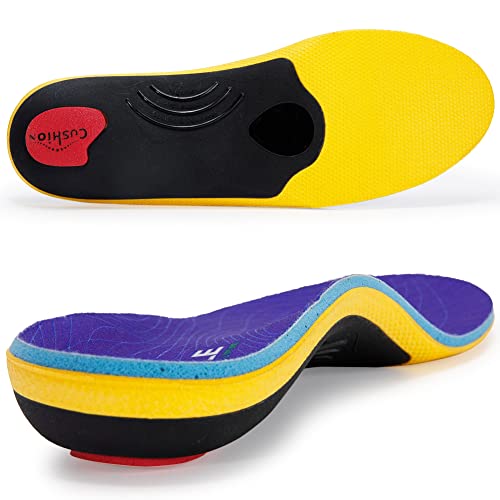
- Designed for users over 220 pounds
- Rigid high-arch and deep-heel support
- Trim-to-fit design for boots and shoes
Best For: Heavy-duty support during work, standing, or walking
Low-Profile Comfort Pick
Spenco Rx 3/4-Length Arch Support

- Flexible arch and heel plate
- Low-profile 3/4-length design
- Cushioning and airflow channels for daily wear
Best For: Low-arch support without toe-box bulk
Best Modular System
TrioPodo Adjustable Arch Insoles

- Three swappable arch-support levels
- Repositionable T-shape and teardrop metatarsal pads
- Deep heel cup and reinforced stability shell
Best For: Fine-tuning arch and forefoot support
Maximum Stability Pick

- Angled heel post helps address overpronation
- Firm support with dual-layer cushioning
- No trimming; removable insole required
Best For: Flat feet and overpronation needing firm stability
Most Adjustable Arch
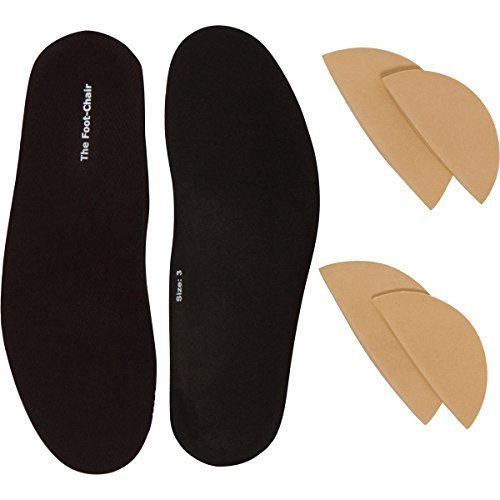
- Removable pads customize arch height
- Cushions heel, arch, and ball of foot
- Higher profile may need more shoe space
Best For: Customizable high-arch support for foot pain
Best Multi-Arch System

- Low, medium, and high arch inserts included
- Gel-cushioned heel cup absorbs shock
- Fits many shoe styles and 11 sizes
Best For: Shoppers wanting flexible arch-height customization
Adjustable Height Lift
CALTO 1.8-Inch Height Increase Insoles

- Choose a 1.4-inch or 1.8-inch lift
- 3/4 length leaves toe room
- EVA base with mesh covering
Best For: Discreet height increase in boots and casual shoes
Customizable Arch Support
Guamar Three-Height Orthotic Inserts

- Three removable arch-height options
- TPU construction is light and washable
- 3/4 length needs no trimming
Best For: Adjustable support for varied arch types and foot concerns
Heavy-Duty Support Pick – VALSOLE High Arch Orthotics
If you need adjustable orthotic insoles for demanding workdays or higher body weight, the VALSOLE Heavy Duty Support Orthotics emphasize rigid high-arch support, shock absorption, and a deep heel cup. The trim-to-fit design works with many boots, work shoes, running shoes, and walking footwear.
Best For: Adults over 220 pounds who need firm high-arch support for plantar fasciitis, flat feet, standing, walking, or work boots.
Pros:
- Designed for users over 220 pounds with strong high-arch support.
- Poron heel padding and shock-absorbing construction help reduce step impact.
- Deep heel cup and TPU support promote stability during walking or running.
- Can be trimmed for use in boots, shoes, and athletic footwear.
Cons:
- The rigid, super-high arch may require an adjustment period.
- May be too structured for shoppers seeking soft, flexible cushioning.
Choose this model when durability and firm correction matter more than a low-profile feel. Its support-oriented construction is particularly suited to long periods of standing and heavier-duty footwear.
Most Customizable – Dr.woofeet Adjustable Heel Wedges
These adjustable orthotic insoles use a stackable three-layer heel-wedge system rather than a conventional full insole. The extended 3/4-length design creates a gentler transition, while the removable layers let you tailor correction for overpronation, supination, or uneven gait.
Best For: People seeking customizable pronation or supination correction for sneakers, boots, and work shoes with enough heel width.
Pros:
- Three stackable layers allow adjustable correction intensity.
- Extended 3/4-length profile is designed to reduce ledge feel and toe crowding.
- High-density foam is intended to maintain its correction angle under weight.
- Honeycomb texture, adhesive, and placement guidance help limit slipping.
Cons:
- Requires a 1–3 day break-in period as feet adjust.
- Fit is best in shoes with an interior heel width greater than 5.7 cm.
- Placement and layering require more setup than a standard insole.
This is a specialized choice for alignment-focused shoppers who want to fine-tune heel elevation. Follow the fit guidance carefully, especially when choosing between the large and small lengths.
Low-Profile Comfort Pick – Spenco Rx 3/4-Length Arch Support
Spenco Rx Orthotic Arch Support 3/4 Length Shoe Insoles Women's 11-12.5/Men's 10-11.5
Check Price On AmazonFor shoppers who want adjustable orthotic insoles without filling the entire toe box, the Spenco Rx uses a flexible heel and arch plate in a slim 3/4-length format. SpenCore cushioning, breathable air channels, and a smooth cover make it practical for everyday shoes and extended standing.
Best For: Adults with low arches who want flexible arch support and cushioning without adding bulk under the toes.
Pros:
- Flexible heel and arch plate conforms to the foot for personalized support.
- SpenCore cushioning helps absorb shock and reduce foot fatigue.
- 3/4-length, low-profile design helps avoid toe crowding.
- Diamond-shaped air channels support airflow and comfort.
Cons:
- Provides less full-foot coverage than a full-length insole.
- Its low-arch design may not suit people needing high-arch support.
The Spenco Rx is a sensible everyday option when fit flexibility and a discreet profile are priorities. It is less suited to shoppers looking for rigid, intensive correction or substantial heel structure.
Best Modular System – TrioPodo Adjustable Arch Insoles
These adjustable orthotic insoles offer a complete modular setup: three interchangeable arch-support levels plus repositionable metatarsal pads. A reinforced stability shell, deep heel cup, and layered cushioning provide a way to tune support for flat feet, plantar fasciitis, metatarsal discomfort, and long days in boots or sneakers.
Best For: People who want to experiment with arch intensity and metatarsal-pad placement before settling on a support configuration.
Pros:
- Includes medium, firm, and maximum arch modules for three support levels.
- Two metatarsal-pad shapes can be repositioned or omitted.
- Deep heel cup and reinforced shell provide firm stability for low arches.
- Includes replacement adhesive and 12 size options to simplify fitting.
Cons:
- Requires careful placement and possible trimming for the best fit.
- Firm structural support may feel less plush than gel-focused insoles.
- Full-length construction may take up more shoe space than a 3/4 insert.
This kit stands out for its adjustability and included accessories. It is a strong match for shoppers whose support needs vary by shoe, activity, or tolerance, provided they are willing to spend time testing the modules.
Maximum Stability Pick – PowerStep Pinnacle Maxx
For shoppers seeking adjustable orthotic insoles focused on motion control, the PowerStep Pinnacle Maxx combines a firm-but-flexible build with an angled heel post. It is designed to help limit inward rolling associated with overpronation while adding cushioning from heel to toe.
Best For: People with flat feet or overpronation who want firm stability and a deep heel cradle.
Pros:
- Slightly angled heel post supports stability and helps limit inward rolling.
- Deep heel cradle and dual-layer cushioning provide support and comfort.
- Requires no trimming and is made in the USA.
- HSA- and FSA-eligible.
Cons:
- Its thickest Pinnacle design requires shoes with removable factory insoles.
- The firm, corrective construction may not suit shoppers seeking a soft or low-profile insert.
The Pinnacle Maxx is a strong choice when stability takes priority over minimal bulk. Check your shoe’s removable-insole space before buying, since its thick profile needs room.
Most Adjustable Arch – FootChair Orthotics
Among adjustable orthotic insoles, FootChair Orthotics stand out for their removable arch pads. You can change the arch height to fine-tune support, while the full-length footbed cushions the heel, arch, and ball of the foot.
Best For: People who need customizable, higher arch support for plantar fasciitis, flat feet, or prolonged standing.
Pros:
- Removable pads let you adjust the arch height to your comfort level.
- Contoured full-length design supports and cushions the heel, arch, and forefoot.
- Firm yet flexible polypropylene construction acts as a shock absorber.
- Suitable for walking, running, sports, and extended standing.
Cons:
- The higher-than-average arch may require a larger shoe.
- Designed for shoes with removable insoles, and fit is not guaranteed in every shoe.
FootChair is a practical option if standard inserts feel too low or too high. Its adjustability is useful, but the high-arch profile makes shoe compatibility especially important.
Best Multi-Arch System – WalkFit Platinum
The WalkFit Platinum is a versatile adjustable orthotic insole system with low-, medium-, and high-arch inserts. It also includes a reflexology insert and a gel-cushioned Bio-Lock heel cup, making it a flexible option for shoppers who want to experiment with different support levels.
Best For: Men and women who want multiple arch options for everyday shoes, work, walking, sports, or standing all day.
Pros:
- Includes low, medium, and high arch inserts for a customizable fit.
- Gel-padded Bio-Lock heel cup adds cushioning and shock absorption.
- Fits a range of footwear, including sneakers, dress shoes, boots, and tennis shoes.
- Available in 11 sizes and includes a 30-day money-back satisfaction guarantee.
Cons:
- Requires a gradual break-in schedule, starting at one hour on the first day.
- The included insert choices require trial and adjustment to find the preferred setup.
WalkFit Platinum is appealing for shoppers who are unsure which arch height they need. Its gradual break-in guidance and broad shoe compatibility make it a flexible everyday system.
Adjustable Height Lift – CALTO 1.8-Inch Height Increase Insoles
These adjustable orthotic insoles are designed for shoppers who want a discreet height boost with some flexibility in lift level. The two-layer, 3/4-length design provides either a 1.4-inch or 1.8-inch increase while leaving extra room in the toe box.
Best For: Men and women seeking a hidden height increase, heel support, or help accommodating a leg length discrepancy in boots and casual shoes.
Pros:
- Two-layer design lets you choose between 1.4-inch and 1.8-inch lift levels.
- 3/4-length shape fits many shoes without crowding the toes.
- Mesh-covered EVA construction offers arch support and shock absorption.
- Heel cup helps keep the insert secure inside the shoe.
Cons:
- One-size medium-width design may not suit every foot or shoe.
- The elevated incline requires a gradual break-in period.
- Its primary focus is height increase rather than comprehensive pain relief.
Choose this model when discreet elevation is the priority. Its adjustable lift and toe-friendly 3/4 profile make it more versatile than a fixed, full-length height insert, but users should ease into wearing it.
Heavy-Duty Pain Support – PORON High Arch Orthotic Insoles
These adjustable orthotic insoles are built for shoppers who need substantial support and cushioning in work boots or other supportive footwear. Double PORON cushioning, a high-arch profile, and a deep heel cup target pressure distribution and stability.
Best For: Men and women seeking high-arch support, shock absorption, and added stability for plantar fasciitis, flat feet, heel pain, or demanding daily use.
Pros:
- Double PORON cushioning provides shock absorption and dual elasticity.
- Three-point support targets the forefoot, arch, and heel.
- Deep U-shaped heel cup helps limit side slippage during movement.
- Sweat-resistant fabric and a PU layer add comfort and durability.
Cons:
- High-arch construction may feel too aggressive for low or sensitive arches.
- The listed size is limited to men’s 5.5–6.5 or women’s 7.5–8.5.
- The full-length design may require shoes with adequate interior space.
This is a strong option when structured support matters more than a minimal profile. Check the listed sizing and shoe volume carefully, especially if you have a lower arch or wear snug footwear.
Customizable Arch Support – Guamar Three-Height Orthotic Inserts
These adjustable orthotic insoles let you tailor arch height with three removable support options. Their 3/4-length TPU design is intended to address different arch types while preserving forefoot flexibility and space in a range of shoes.
Best For: People with flat feet, high arches, pronation, supination, or plantar fasciitis who want adjustable support in athletic, work, casual, or hiking footwear.
Pros:
- Three adjustable arch heights accommodate low, medium, and high arches.
- Biomimetic arch shape is designed to distribute pressure and support alignment.
- Lightweight TPU offers cushioning, shock absorption, and easy cleaning.
- 3/4 length fits most shoes without trimming or crowding the toes.
Cons:
- A break-in period is recommended, starting with short daily wear.
- The 33mm high-arch option may be too substantial for some users.
- Adhesive heel rings may be needed to help prevent shifting.
Guamar stands out for its adjustable arch configuration rather than a one-shape-fits-all design. It is a practical pick for comparing support levels, provided you follow the gradual break-in guidance and confirm the size range.
How We Picked the Best Adjustable Orthotic Insoles
We focused on designs that offer meaningful support customization, including removable arch pads, multiple height settings, angled heels, or adaptable 3/4-length construction. We also considered stated weight capacities, arch-support firmness, heel stability, sizing coverage, and compatibility with common footwear.
Because foot shape and pain triggers vary, no insole is ideal for everyone. Product descriptions and sizing claims were weighed alongside practical considerations such as trimability, bulk, break-in time, and whether the insert is better suited to athletic shoes, work boots, dress shoes, or casual footwear.
Quick Comparison
| Best for | Look for | Typical design |
|---|---|---|
| Maximum stability | Firm shell and structured heel | Full-length heavy-duty orthotic |
| Custom arch height | Removable or interchangeable pads | Adjustable arch-support insert |
| Limited shoe space | Shorter length and low profile | 3/4-length insole or heel wedge |
| Height increase | Built-up heel with secure fit | Lift-style 3/4-length insert |
| General everyday support | Balanced cushioning and structure | Versatile full-length insole |
Key Buying Factors for Adjustable Orthotic Insoles
Adjustment Range and Arch Shape
Check exactly how adjustment works. Some models use removable pads, while others provide several height options or a fixed angled support. More adjustment is useful only if the available shapes match your arch; an insert that is too high or too aggressive can create pressure rather than relief.
Firmness, Cushioning, and Stability
Firm orthotics generally provide stronger control for overpronation, flat feet, or demanding work, but they may require a gradual break-in period. Softer designs can feel comfortable sooner but may provide less structural correction. Look for heel-cup depth and side-to-side stability if your feet roll inward or fatigue quickly.
Size, Volume, and Shoe Compatibility
Measure according to the manufacturer’s chart rather than relying only on your usual shoe size. Confirm whether the insert can be trimmed and whether it replaces the original insole. Full-length models need more interior volume; 3/4-length designs often work better in dress shoes or snug footwear.
Weight Rating and Construction
If you need support for long shifts, walking, running, or a higher body weight, compare the stated capacity and materials. A durable shell, reinforced heel, and non-slip top can matter more than plush cushioning for sustained use.
Who Should Buy Which Adjustable Orthotic Insoles?
Choose a Customizable Arch-Pad Design If:
You are unsure which arch height feels right, share a pair of shoes, or want to fine-tune support over time. These are especially useful for shoppers comparing low, medium, and high arch settings.
Choose a Firm Heavy-Duty Orthotic If:
You spend long hours standing, need stronger motion control, or prioritize stability for flat feet and overpronation. Allow several days of gradual wear rather than using a rigid insert all day immediately.
Choose a 3/4-Length Model If:
Your shoes have limited toe-box space or a removable footbed is difficult to replace. These inserts leave the forefoot open but still need to sit securely beneath the heel and arch.
Choose a Heel Wedge or Lift If:
Your primary goal is heel positioning or added height, but verify that the design does not make the shoe unstable. Persistent pain, numbness, or worsening symptoms should be evaluated by a qualified medical professional.