The right compression socks can provide graduated support during long workdays, travel, exercise, or extended periods of sitting. For people managing restless-leg symptoms, comfort and consistent wear matter as much as compression strength.
We selected 10 popular options with different pressure levels, materials, pack sizes, and designs, including full-foot socks and footless calf sleeves. Use the guide below to narrow your choices by fit, intended use, and support needs.
Best 10 Compression Socks for Restless Legs Syndrome Picks for 2026
All-Day Active Support

- 20–30 mmHg graduated-style support for daily wear
- Designed for running, work shifts, flights, and travel
- Machine-washable nylon-spandex construction
Best For: Active adults and travelers needing firm, versatile compression
Footless Flexibility
CAMBIVO Calf Compression Sleeves

- Footless sleeves provide targeted calf compression
- Three pairs support frequent use and rotation
- Lightweight, moisture-wicking fabric for activity
Best For: Runners and travelers who prefer uncovered feet
Everyday Cushioned Support
FITRELL 20–30 mmHg Compression Socks
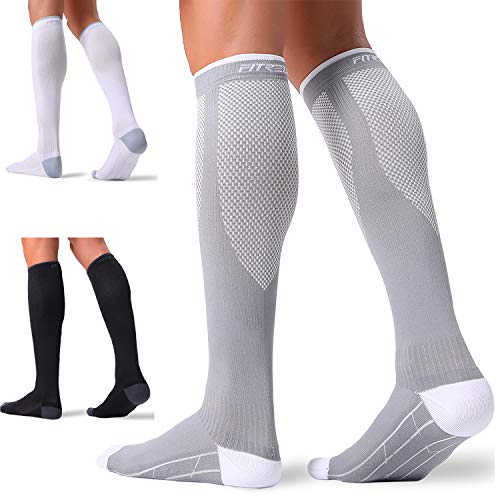
- Five-zone compression supports circulation and swelling reduction
- Padded sole and seamless toe improve activity comfort
- Three-pack includes black, white, and gray
Best For: Daily wear, running, travel, and work
Warm Copper-Infused Comfort
FuelMeFoot Copper Compression Socks
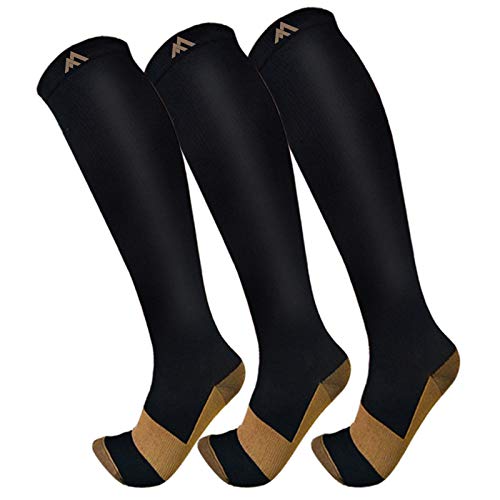
- Three-pair nylon bundle for regular rotation
- Copper-infused fabric is designed to help prevent odors
- Machine washable and quick drying
Best For: Daily, athletic, work, and travel use when a multipack matters
Best Overall Value
Everyday 15-20 mmHg Compression Socks

- Moderate graduated ankle-to-calf compression
- S-XL sizing with calf measurements
- Three pairs with breathable, moisture-wicking fabric
Best For: Everyday wear, travel, work shifts, and post-activity comfort
Best Budget Multipack
6-Pack Copper Compression Socks

- Six pairs for convenient everyday rotation
- Graduated support for prolonged sitting or standing
- Breathable copper-infused nylon-polyester fabric
Best For: Value-focused shoppers needing multiple pairs
Best for Firmer Support
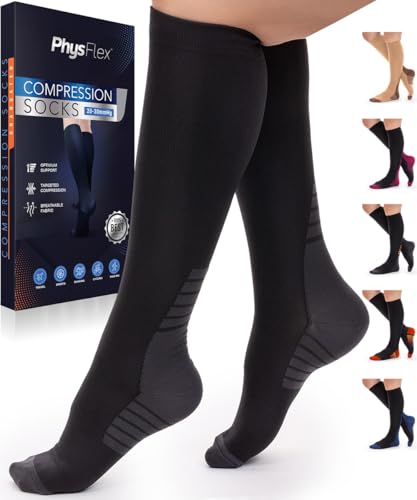
- Firmer 20-30 mmHg graduated compression
- Breathable, moisture-wicking nylon-spandex fabric
- Designed for travel, sports, and daily wear
Best For: Active adults seeking stronger support in a single pair
Flexible Everyday Support
ACTINPUT Copper Compression Socks

- 15–20 mmHg support for everyday wear
- Sizes S/M through 4XL
- Four-pair, breathable nylon blend
Best For: Travel, work, standing, and wider calves
Active Comfort Pick
CHARMKING 15–20 mmHg Compression Socks
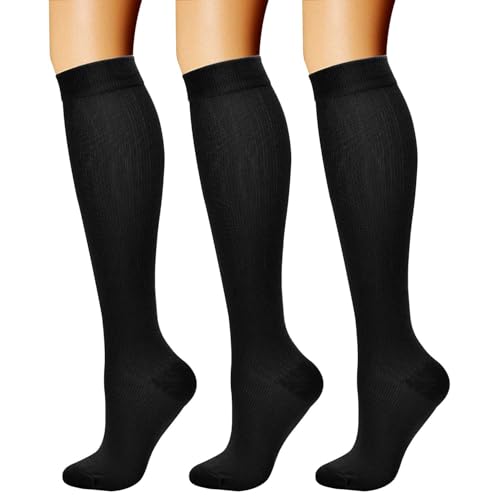
- Flexible 85% nylon, 15% spandex blend
- Breathable fabric for active wear
- Three-pair unisex set
Best For: Running, cycling, work, and travel
All-Day Variety Set
4-Pair Compression Socks for Women & Men

- Four assorted colors in one set
- Wide top band helps prevent rolling
- Graduated compression and flexible nylon blend
Best For: Work, travel, sports, and daily wear
All-Day Active Support – Physix Gear Compression Socks
For shoppers comparing compression socks for restless legs syndrome, the Physix Gear pair offers 20–30 mmHg support in a knee-high design intended for long work shifts, travel, running, and everyday wear. Its nylon-spandex construction and machine-washable care make it a practical option for regular use.
Best For: Active adults, travelers, runners, and workers who want firm compression for extended periods on their feet.
Pros:
- 20–30 mmHg compression is designed to support circulation and reduce swelling.
- Versatile enough for running, work shifts, flights, and daily wear.
- Nylon-spandex fabric is machine washable and tumble-dry compatible.
- Includes a runners eGuide with the socks.
Cons:
- The listed size is Large/X-Large, so fit options may be limited for some shoppers.
- Only black, gradient-patterned socks are specified in the supplied details.
This is a solid pick when you want firm, multipurpose compression in a conventional sock rather than a specialized nighttime garment. Check the sizing carefully, since proper fit is especially important with 20–30 mmHg compression.
Footless Flexibility – CAMBIVO Calf Compression Sleeves
For those seeking compression socks for restless legs syndrome but preferring an open-foot design, these CAMBIVO sleeves target the calf without covering the feet. The three-pair set uses breathable nylon, elastane, and spandex fabric for running, travel, exercise, and long periods of standing.
Best For: Runners, travelers, and people who want calf compression while wearing their own socks or footwear.
Pros:
- Footless design leaves the feet uncovered and works with separate socks or shoes.
- Three-pair package provides convenient rotation between uses.
- Lightweight, moisture-wicking fabric is designed to help keep calves dry.
- Made for activities including running, walking, cycling, hiking, and gym workouts.
Cons:
- These are calf sleeves, not full compression socks, so they do not support the feet.
- The listed Large-X-Large size may not suit every calf measurement.
- Hand-wash-only care is less convenient than machine-washable alternatives.
Choose this set if calf-focused compression and footwear flexibility matter more than full-leg coverage. It may be particularly convenient for exercise or travel, but shoppers wanting foot and ankle compression should consider a traditional sock instead.
Everyday Cushioned Support – FITRELL 20–30 mmHg Compression Socks
These FITRELL compression socks combine 20–30 mmHg support with cushioning and a seamless toe, making them a practical candidate among compression socks for restless legs syndrome for daily activity. The three-pair set is designed for running, travel, work, pregnancy, and other situations involving swelling or prolonged standing.
Best For: Adults wanting cushioned knee-high compression socks for running, travel, work, or everyday circulation support.
Pros:
- Five-zone graduated compression is designed to support circulation and reduce swelling.
- Seamless toe helps reduce friction, while padded soles provide shock protection.
- Moisture-wicking fabric and calf mesh are intended to improve breathability.
- Three-pack includes black, white, and gray socks.
Cons:
- The available sizing is based heavily on calf measurements, which should be checked before ordering.
- 20–30 mmHg compression may feel firm for first-time compression-sock users.
FITRELL stands out for shoppers who prioritize foot comfort along with compression. Its padded sole and seamless toe make it more activity-oriented than a minimal compression sock, while the three-color pack adds useful variety.
Warm Copper-Infused Comfort – FuelMeFoot Copper Compression Socks
For shoppers considering compression socks for restless legs syndrome, FuelMeFoot offers a three-pack designed to balance compression, warmth, and everyday comfort. The nylon socks are positioned for circulation support, athletic use, work, travel, and people who spend long periods on their feet.
Best For: Adults seeking a three-pair, machine-washable option for daily wear, exercise, work, or travel.
Pros:
- Copper-infused nylon is designed to provide warmth and help prevent odors.
- Three-pair bundle supports regular wear and rotation.
- Ventilated nylon construction is intended to keep feet warm and dry.
- Machine washable and quick drying for convenient maintenance.
Cons:
- The supplied details do not specify a compression level in mmHg.
- The listed size is Large-X-Large, limiting fit flexibility for some users.
- Only solid black is specified.
This set makes sense if you value a multipack and odor-conscious fabric features. Because the notes do not provide an exact compression rating, confirm the level and fit before purchasing if you need a particular degree of support.
Best Overall Value – Everyday 15-20 mmHg Compression Socks
For shoppers comparing compression socks for restless legs syndrome, this three-pair set offers moderate 15-20 mmHg graduated support, with the strongest compression at the ankles. Its moisture-wicking fabric, anatomical foot labels, and broad S-XL sizing make it a practical option for everyday wear, travel, standing, walking, and post-activity recovery.
Best For: Adults seeking moderate, versatile compression and multiple pairs for daily use.
Pros:
- Graduated 15-20 mmHg compression supports the legs while helping reduce fatigue and post-activity swelling.
- Available in S-XL sizes with calf measurements and shoe-size guidance.
- Seamless toe, elastic arch, mesh airflow panels, and moisture-wicking fabric support all-day comfort.
- Three-pair set is suited to running, cycling, work shifts, travel, and pregnancy.
Cons:
- Moderate compression may not meet preferences for firmer support.
- Users between sizes may need to choose the larger size, which could affect compression feel.
This is a balanced everyday choice when you want moderate graduated compression, practical comfort features, and three pairs in one purchase. Follow the included sizing guidance, especially if your calf measurement falls near a size boundary.
Best Budget Multipack – 6-Pack Copper Compression Socks
These six-pair compression socks are a practical pick for shoppers seeking compression socks for restless legs syndrome in a larger, value-oriented bundle. They provide graduated support for people who sit or stand for long periods, with a breathable copper-infused fabric, wide top band, and machine-washable construction.
Best For: Buyers who want six pairs for frequent rotation during work, travel, nursing, running, or everyday wear.
Pros:
- Six-pair bundle offers convenient rotation and value.
- Graduated compression is designed to support circulation and reduce leg fatigue, soreness, and swelling.
- Copper-infused, moisture-breathable fabric helps manage comfort across changing temperatures.
- Wide top band provides stretch and is designed to resist rolling.
Cons:
- The supplied listing specifies Large-X-Large only, limiting sizing flexibility.
- The listing does not provide a compression strength in mmHg.
- Color and cartoon-pattern assortment may not suit shoppers seeking a plain appearance.
This set makes the most sense if quantity and everyday convenience matter more than precisely specified compression strength. Check the available size and assortment carefully before ordering.
Best for Firmer Support – 20-30 mmHg Compression Socks
For shoppers considering compression socks for restless legs syndrome who prefer firmer support, this pair provides 20-30 mmHg graduated compression. The lightweight nylon-and-spandex design is moisture-wicking and breathable, making it suitable for travel, flights, nursing, running, cycling, skiing, and everyday wear.
Best For: Adults looking for a single pair with stronger graduated compression for active days, travel, or extended wear.
Pros:
- 20-30 mmHg graduated compression offers firmer support than moderate-compression options.
- Moisture-wicking, breathable fabric helps keep feet and legs dry.
- Lightweight construction is designed for all-day wear and a close, second-skin feel.
- Versatile design suits travel, flights, running, cycling, skiing, and daily activities.
Cons:
- The listing includes one pair, so it offers less rotation than multipacks.
- The supplied details specify only Large/X-Large sizing.
- Firmer compression may feel less comfortable for shoppers accustomed to lighter support.
This option stands out for its higher stated compression range and lightweight active-use design. Confirm the Large/X-Large fit and consider whether firmer compression matches your comfort preferences before purchasing.
Flexible Everyday Support – ACTINPUT Copper Compression Socks
For shoppers comparing compression socks for restless legs syndrome, the ACTINPUT set offers moderate 15–20 mmHg support in a practical four-pair bundle. Its breathable nylon-based fabric, knee-high coverage, and broad size range make it suited to daily routines, travel, and extended time on your feet.
Best For: Everyday wear, travel, nursing, office work, and people who need more size flexibility, including wider calves.
Pros:
- Moderate 15–20 mmHg compression provides support without being described as overly tight.
- Available in S/M, L/XL, 2XL, 3XL, and 4XL for a wider range of leg shapes.
- Breathable 85% nylon and 15% polyester fabric supports comfortable movement.
- Four-pair bundle and machine-washable construction are convenient for regular use.
Cons:
- The supplied details list the compression level but do not specify graduated compression.
- The listed color and pattern are limited to solid black in the provided details.
Choose this set if fit flexibility and repeat daily wear matter most. The moderate compression and knee-high design make it a practical general-purpose option, though shoppers seeking a medically prescribed level should confirm their requirements separately.
Active Comfort Pick – CHARMKING 15–20 mmHg Compression Socks
These CHARMKING compression socks for restless legs syndrome combine 15–20 mmHg support with a lightweight, flexible fabric blend. The three-pair set is designed for active and workday use, with breathable construction intended to support comfort during running, cycling, travel, or long periods on your feet.
Best For: Athletes, runners, cyclists, teachers, office workers, flight crew, and anyone wanting a compact three-pair unisex set.
Pros:
- 85% nylon and 15% spandex fabric offers 360-degree stretch and flexibility.
- Breathable material is designed to help maintain a comfortable temperature.
- 15–20 mmHg compression is presented for support, circulation, and muscle recovery.
- Unisex design works for both men and women and is machine washable.
Cons:
- Only two size options are noted, offering less sizing flexibility than some alternatives.
- The set includes three pairs, which may be less convenient for shoppers wanting a larger rotation.
This is a sensible choice for active users who value stretch and a lightweight feel. Its sizing is less extensive, so check the available size options carefully before ordering.
All-Day Variety Set – 4-Pair Compression Socks for Women & Men
For those seeking compression socks for restless legs syndrome across work, travel, and exercise, this four-pair set emphasizes all-day comfort and versatility. The nylon blend is soft, breathable, and flexible, while the wide top band is designed to stay in place without pinching or rolling down.
Best For: Nurses, athletes, travelers, runners, and people who alternate between sitting, standing, and active routines.
Pros:
- Four-pair assortment includes black, grey, white, and pink options.
- Wide comfort band is designed to reduce pinching and rolling.
- Graduated compression is specified to support a snug, comfortable fit.
- 85% nylon and 15% polyester fabric is machine washable and designed to retain shape.
Cons:
- The supplied details do not state a specific mmHg compression rating.
- The listed product details show L/XL, so shoppers should verify available sizing before purchase.
This set stands out for its color variety, comfort-focused top band, and stated graduated compression. It is a good everyday option when a four-pair rotation matters, but buyers needing a precise compression strength should confirm the rating first.
How We Picked the Best Compression Socks for Restless Legs Syndrome
We focused on practical features that affect daily wear: stated compression level, sizing availability, fabric construction, toe and calf comfort, durability, and versatility. The selection includes 15–20 mmHg and 20–30 mmHg options, multipacks, copper-infused fabrics, and footless sleeves. Because restless legs syndrome can have different causes and symptoms, these products should be viewed as comfort and circulation-support options—not as a substitute for medical evaluation or treatment.
Always check the manufacturer’s size chart rather than relying on shoe size alone. If you have diagnosed circulation problems, diabetes, arterial disease, unexplained swelling, skin changes, or significant leg pain, ask a healthcare professional before using firm compression.
Quick Comparison
| Option | Best suited to | Key consideration |
|---|---|---|
| 15–20 mmHg socks | Light everyday support | Generally easier to put on and tolerate |
| 20–30 mmHg socks | Stronger support for active or extended wear | May feel tighter and require careful sizing |
| Footless calf sleeves | Running or targeted calf support | Do not support the foot or ankle |
| Copper-fiber multipacks | Frequent wear and rotation | Material claims do not replace proper fit |
Key Buying Factors for Compression Socks for Restless Legs Syndrome
Compression Level
Lower compression, such as 15–20 mmHg, is often a practical starting point for casual wear, travel, or people new to compression. A 20–30 mmHg pair provides firmer support but can be harder to pull on. Do not assume higher pressure is better; comfort determines whether you will wear the socks consistently.
Fit and Graduated Design
Look for a snug, even fit that does not bunch behind the knee, pinch the calf, or leave deep marks. Graduated compression should feel strongest around the ankle and gradually lessen up the leg. Measure when swelling is minimal, and replace socks that have become loose or stretched.
Fabric and Construction
Breathable blends, cushioned soles, flat seams, and reinforced heels can improve comfort during long shifts or workouts. Copper or moisture-wicking claims may appeal to some buyers, but they should not outweigh accurate sizing, ventilation, and fabric feel.
Length and Intended Use
Knee-high socks are the most versatile choice for travel, nursing, desk work, and everyday use. Footless sleeves work well when you already prefer a separate sock or want calf coverage for running, but they leave the foot unsupported.
Who Should Buy Which Compression Socks for Restless Legs Syndrome?
Choose a 15–20 mmHg multipack if you want light support for occasional travel, standing, or daily routines. Choose 20–30 mmHg socks if you need firmer coverage for active schedules or prolonged wear and can comfortably manage a tighter fit. Runners may prefer footless calf sleeves for targeted support, while frequent travelers and shift workers will benefit from several pairs for rotation. If symptoms are new, worsening, one-sided, painful, or accompanied by swelling, discuss them with a clinician before relying on compression socks.