Choosing a mountaineering watch with oxygen sensor features is really about finding the right balance of altitude tools, battery life, durability, and navigation confidence.
In this roundup, we focus on rugged outdoor watches that suit serious mountain use, from solar-assisted models to premium GPS smartwatches with advanced tracking and long-lasting power.
Best 10 Mountaineering Watch with Oxygen Sensor Picks for 2026
Premium Solar Multisport

- Pulse Ox helps with altitude acclimation.
- Solar lens supports weeks of battery life.
- Built-in flashlight improves outdoor visibility.
Best For: Serious mountaineers who want premium GPS and altitude health tracking.
Classic Triple-Sensor Trekker

- Triple sensor covers altitude, pressure, and compass readings.
- Tough Solar and atomic timekeeping reduce maintenance.
- 200 m water resistance suits rugged outdoor use.
Best For: Hikers and climbers who want a simple, durable sensor watch.
Rugged AMOLED Explorer

- Pulse Ox supports altitude-aware tracking.
- Up to 18 days of battery life.
- Compass, altimeter, and multi-band GPS aid navigation.
Best For: Rugged outdoor users who want Pulse Ox and a smaller AMOLED watch.
Solar Hiking Essential
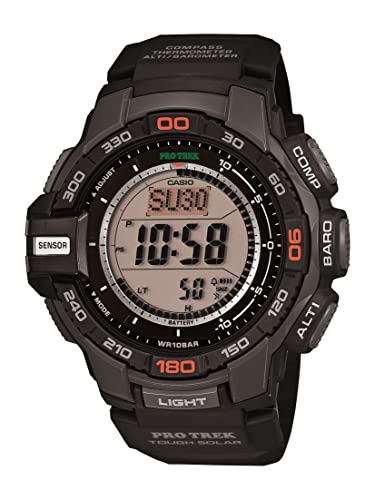
- Tough Solar power reduces charging concerns.
- Altimeter, compass, barometer, and thermometer add trail utility.
- Low-temperature resistance suits colder conditions.
Best For: Value buyers who want a basic, durable outdoor sensor watch.
Premium GPS Multisport Pick

- Pulse Ox and respiration tracking
- Multi-band GPS with altimeter and compass
- Up to 29-day smartwatch battery
Best For: Serious mountaineers wanting premium navigation and oxygen tracking
Solar Altimeter Classic

- Triple Sensor with compass and altimeter
- Tough Solar plus atomic timekeeping
- 100m water resistance for outdoor use
Best For: Climbers who want a rugged solar ABC watch
High-End Training Choice
Garmin epix Pro Gen 2 Sapphire

- Pulse Ox and HRV status tracking
- Multi-band navigation with detailed maps
- Built-in flashlight for night visibility
Best For: Athletes and mountaineers who want premium health data and mapping
Trail Navigator Pick
Casio PRO Trek PRG340B-3 Solar Outdoor Watch
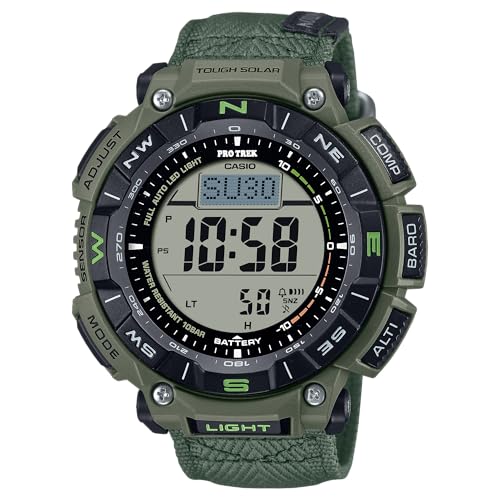
- Triple Sensor for compass, altitude, pressure, and temperature
- Tough Solar power with no battery replacements
- 100M water resistance and cold-weather durability
Best For: Hikers and mountaineers who want rugged, low-maintenance navigation tools
Endurance Power Pick
Garmin Enduro 3 Ultra GPS Smartwatch

- Solar-assisted battery life for long mountain efforts
- TopoActive maps and dynamic round-trip routing
- Lightweight titanium build with LED flashlight
Best For: Ultra-endurance athletes and hikers who value battery life and mapping
Connected Expedition Pick
Garmin fēnix 8 Pro 51mm AMOLED
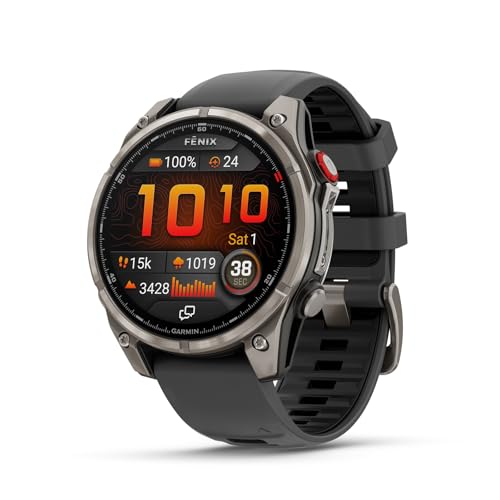
- Pulse Ox plus heart rate, sleep, and HRV tracking
- inReach LTE and satellite SOS messaging
- AMOLED screen with titanium and sapphire build
Best For: Mountaineers who want premium safety, connectivity, and health tracking
Premium Solar Multisport – Garmin fēnix 7X Pro Solar
If you want a mountaineering watch with oxygen sensor features for high-altitude trips, the Garmin fēnix 7X Pro Solar is built for long days in the mountains. It combines a large 1.4-inch display, rugged 51 mm construction, solar charging, and Pulse Ox health monitoring to help you track acclimation and stay aware during demanding ascents.
Best For: Mountaineers and serious outdoor athletes who want a premium solar GPS watch with altitude-focused health tracking.
Pros:
- Pulse Ox monitoring helps with altitude acclimation.
- Solar charging lens supports weeks of battery life in smartwatch mode.
- Built-in LED flashlight adds useful visibility on night hikes or camps.
- Advanced navigation sensors plus multi-band GPS with SatIQ improve positioning.
Cons:
- 51 mm case may feel large on smaller wrists.
- Pulse Ox is not available in all countries.
- Premium feature set may be more than casual users need.
Overall, this is the most feature-rich option here for climbers who want navigation, battery endurance, and wellness tracking in one watch. It’s especially compelling if you value solar charging and altitude-oriented metrics over simplicity.
Classic Triple-Sensor Trekker – Casio Pro Trek PRW3500
Casio Men's Pro Trek PRW-3500T-7CR Tough Solar Triple Sensor Digital Sport Watch
Check Price On AmazonFor buyers looking for a mountaineering watch with oxygen sensor-style altitude awareness, the Casio Pro Trek PRW3500 focuses on the mountain basics: altimeter, barometer, thermometer, digital compass, and tough solar power. It does not include Pulse Ox, but it does deliver the core tools many hikers and climbers need for route planning and changing weather.
Best For: Hikers and budget-minded mountaineers who want dependable sensor readouts and solar power without smartwatch complexity.
Pros:
- Triple sensor adds compass, altimeter, barometer, and thermometer functions.
- Tough Solar and atomic timekeeping support low-maintenance use.
- 200 m water resistance and low-temperature resistance suit rough conditions.
- World time, alarms, stopwatch, and countdown timer add everyday utility.
Cons:
- No Pulse Ox or true oxygen sensor feature.
- Large 56 mm case may wear big on some wrists.
- Display is functional rather than modern or high-resolution.
This is a practical mountain watch for users who prioritize proven outdoor tools over connected features. If you mainly need altitude, pressure, and compass data, it remains a straightforward and capable choice.
Rugged AMOLED Explorer – Garmin Instinct 3 45mm
The Garmin Instinct 3 45mm is a strong pick if you want a mountaineering watch with oxygen sensor-related wellness tracking in a compact rugged design. It includes Pulse Ox, a 3-axis compass, a barometric altimeter, and multi-band GPS, so it covers the core information climbers often want on the trail and at elevation.
Best For: Outdoor users who want a smaller rugged GPS watch with Pulse Ox, long battery life, and a bright AMOLED display.
Pros:
- Pulse Ox adds altitude-aware health monitoring.
- Up to 18 days of battery life helps on longer trips.
- Built-in flashlight improves visibility outdoors.
- Multi-band GPS, compass, and barometric altimeter support navigation.
Cons:
- 45 mm case is still rugged, but some may prefer an even larger screen for maps.
- Pulse Ox is not available in all countries.
- Feature set is outdoor-focused rather than highly specialized for mountaineering metrics.
For most hikers and climbers, this balances size, battery, and useful mountain tools very well. It is a particularly appealing choice if you want modern display quality without giving up ruggedness.
Solar Hiking Essential – Casio Pro Trek PRG-270
Casio Men's Pro Trek PRG-270-1 Tough Solar Triple Sensor Multifunction Digital Sport Watch
Check Price On AmazonIf you’re shopping for a mountaineering watch with oxygen sensor features in the broader sense of altitude readiness, the Casio Pro Trek PRG-270 focuses on the fundamentals. It offers Tough Solar power, a digital compass, altimeter, barometer, and thermometer, which makes it a practical tool for hikers who need reliable environmental data in the backcountry.
Best For: Value-focused hikers and climbers who want a solar-powered outdoor watch with core sensor tools.
Pros:
- Tough Solar power supports long-term use with minimal charging hassle.
- Altimeter, compass, barometer, and thermometer cover key trail data.
- Low-temperature resistance is useful in colder mountain conditions.
- World time, alarms, stopwatch, and countdown timer add versatility.
Cons:
- No Pulse Ox or oxygen sensor feature.
- 80? Actually 100M water resistance is good, but less than some higher-rated outdoor watches.
- Digital display and button-heavy design are more utilitarian than modern.
The PRG-270 is best viewed as a reliable trail watch rather than a full-featured smartwatch. It’s a solid choice when you want essential mountain sensors and solar charging without paying for extras.
Premium GPS Multisport Pick – Garmin fēnix 8 51mm AMOLED
If you want a mountaineering watch with oxygen sensor features plus serious navigation and battery life, the Garmin fēnix 8 is built for demanding days in the mountains. It combines multi-band GPS, a barometric altimeter, a compass, and Pulse Ox monitoring with a rugged titanium/sapphire build, making it a strong choice for long alpine pushes and off-grid use.
Best For: Mountain athletes who want premium mapping, long battery life, and wrist-based oxygen tracking.
Pros:
- Pulse Ox, heart rate, advanced sleep tracking, and respiration monitoring for broader altitude-aware wellness data.
- Multi-band GPS with SatIQ plus built-in compass, gyroscope, and barometric altimeter for outdoor navigation.
- Very strong battery life, rated up to 29 days in smartwatch mode and up to 84 hours in GPS mode.
- Durable 51 mm titanium build with sapphire lens, LED flashlight, and dive-ready 100-meter water resistance.
Cons:
- Large 51 mm case may feel oversized for smaller wrists.
- Premium feature set likely puts it at the high end of the price range.
- Pulse Ox availability varies by country.
This is the most feature-packed option here for serious outdoor training, especially if you value long battery life, advanced navigation, and oxygen-related metrics in one watch.
Solar Altimeter Classic – Casio Pro Trek PRW6600Y
For buyers searching for a mountaineering watch with oxygen sensor, the Casio Pro Trek PRW6600Y is more about proven trail tools than wellness sensors. It focuses on the essentials you actually use in the backcountry: digital compass, altimeter, barometer, thermometer, and Tough Solar power, all wrapped in a tough 100-meter water-resistant package.
Best For: Hikers and climbers who want a dependable solar outdoor watch with classic expedition tools.
Pros:
- Triple Sensor features compass, altimeter, barometer, and thermometer for mountain navigation.
- Tough Solar and Multi Band 6 atomic timekeeping help reduce battery and time-setting hassles.
- 100-meter water resistance is suitable for swimming and snorkeling.
- Useful extras include world time, 1/100-sec stopwatch, countdown timer, and five daily alarms.
Cons:
- Does not list Pulse Ox or oxygen sensor capability in the supplied notes.
- Quartz analog-digital layout is less advanced than full smartwatch rivals.
- No mapping or smartwatch-style training features.
If you prioritize rugged ABC sensors and solar reliability over smart features, this Pro Trek is a practical mountain tool. It is a strong traditional outdoors watch, but not the right pick if oxygen monitoring is a must-have.
High-End Training Choice – Garmin epix Pro Gen 2 Sapphire
If you’re shopping for a mountaineering watch with oxygen sensor features and premium training tools, the Garmin epix Pro (Gen 2) is an excellent fit. It pairs Pulse Ox, HRV status, and advanced sleep tracking with multi-band reception, SatIQ, and detailed navigation sensors, so it can handle demanding outdoor routes while still giving you broad recovery data.
Best For: Mountaineers and multisport athletes who want an AMOLED smartwatch with advanced health tracking and navigation.
Pros:
- Pulse Ox, HRV status, and sleep monitoring provide a fuller picture of recovery and oxygen-related metrics.
- Multi-band reception and advanced navigation sensors improve positioning in challenging environments.
- Built-in LED flashlight with variable intensities and strobe modes adds practical visibility at night.
- TopoActive maps, ski resort maps, and Up Ahead prompts support route planning and exploration.
Cons:
- At 47 mm, it may still feel substantial on smaller wrists.
- Like most premium Garmin models, it is feature-rich enough to be more than a simple hiking watch.
- Pulse Ox availability is not universal.
This model stands out for combining serious mountain navigation with one of the stronger health-tracking toolkits in the lineup. If you want a watch that can support high-output training and altitude-aware monitoring, it is a very compelling option.
Trail Navigator Pick – Casio PRO Trek PRG340B-3 Solar Outdoor Watch
If you want a mountaineering watch with oxygen sensor-style utility centered on outdoor navigation, the Casio PRO Trek PRG340B-3 is built around trail essentials rather than smart features. Its triple sensor setup gives you compass bearings, barometric pressure, altitude tracking, and temperature readings, while Tough Solar keeps it running without battery swaps.
Best For: Hikers and mountaineers who want a rugged, solar-powered trail watch with environmental readings.
Pros:
- Triple Sensor provides compass, altitude, pressure, and temperature data for mountain travel.
- Tough Solar power reduces maintenance and supports long trips.
- 100M water resistance and -10°C temperature resistance add cold-weather and wet-condition durability.
- Dual-layer LCD and rotating direction bezel improve readability and navigation.
Cons:
- Does not include a true oxygen sensor or smart health suite.
- More focused on expedition basics than connected smartwatch features.
- Large 51.7 mm case may feel bulky on smaller wrists.
As a practical outdoor watch, this model is strongest when you want reliable trail data and low-maintenance power in a tough package. It is a better fit for navigation-minded climbers than for users expecting advanced medical-style sensing.
Endurance Power Pick – Garmin Enduro 3 Ultra GPS Smartwatch
For buyers comparing a mountaineering watch with oxygen sensor features, the Garmin Enduro 3 stands out more for endurance and mapping than for a built-in oxygen sensor. It brings solar-assisted battery life, detailed topographic maps, and a lightweight titanium build that is suited to long alpine training blocks and backcountry days.
Best For: Ultra-endurance athletes and mountain hikers who need extreme battery life and navigation tools.
Pros:
- Solar charging supports very long battery life in smartwatch and GPS modes.
- Preloaded TopoActive maps and round-trip routing help with route planning.
- Light 63 g design with titanium bezel and sapphire lens suits hard use.
- Built-in LED flashlight adds practical visibility in low light.
Cons:
- No oxygen sensor is listed in the supplied features.
- Feature set is broad, which may be more than casual hikers need.
- Premium price class is implied by the materials and capability set.
This is the strongest pick if your priority is staying powered, navigating confidently, and tracking training over very long efforts. It is less about specialized oxygen sensing and more about all-day mountain endurance.
Connected Expedition Pick – Garmin fēnix 8 Pro 51mm AMOLED
If you want a mountaineering watch with oxygen sensor-style health tracking and far more communication capability, the Garmin fēnix 8 Pro is the most connected option here. It combines a bright AMOLED display, sapphire and titanium construction, built-in maps, Pulse Ox, and inReach LTE plus satellite messaging for off-grid trips.
Best For: Mountaineers and backcountry users who want premium safety, connectivity, and health tracking features.
Pros:
- Pulse Ox is included alongside wrist heart rate, sleep, and HRV tracking.
- inReach LTE and satellite messaging support off-grid communication and SOS.
- TopoActive maps with relief shading help with route awareness.
- Titanium bezel, sapphire lens, and built-in flashlight add durability and utility.
Cons:
- Satellite and LTE features require an active subscription.
- Coverage limitations and jurisdiction rules may affect communication use.
- High feature count may be more than users who only need basic mountain data.
For demanding alpine users, this model offers the most complete mix of health, mapping, and emergency connectivity. If you want oxygen-related monitoring plus serious expedition tools, it is the most capable fit in this group.
How We Picked the Best Mountaineering Watch with Oxygen Sensor
We prioritized mountain-ready build quality, reliable GPS or navigation tools, long battery performance, weather resistance, and sensor suites that help with altitude and performance tracking. Since true oxygen sensing is not standard on every outdoor watch, we also favored models that support the broader needs of a Mountaineering Watch with Oxygen Sensor use cases: high-altitude planning, endurance monitoring, and fast access to key expedition data.
Quick Comparison
Choose solar-first Casio Pro Trek models if you want simple, dependable mountain tools with fewer distractions. Choose Garmin fēnix, epix Pro, Instinct, or Enduro models if you want richer mapping, smarter training metrics, brighter displays, and more advanced navigation support.
Key Buying Factors for a Mountaineering Watch with Oxygen Sensor
Altitude and Environment Tools
Look for an altimeter, barometer, and compass at minimum. These help you interpret elevation gain, pressure changes, and direction when trails are exposed or visibility drops. For technical mountain travel, these are often more useful than app-heavy extras.
Battery Life and Charging
In the mountains, battery anxiety is a real problem. Solar charging can extend runtime on long trips, while premium Garmin models often offer much longer GPS endurance and more aggressive power-management options. Pick based on how many days you spend away from power.
Navigation and Visibility
Detailed maps, breadcrumb trails, waypoint support, and a readable display matter a lot when weather turns. A bright AMOLED screen is easy to read, but solar and transflective displays can be better for all-day efficiency in bright alpine conditions.
Durability and Comfort
For alpine use, check case strength, sapphire crystal, water resistance, and bezel design. Also consider weight and fit; a large watch may be excellent for visibility but tiring on technical climbs or while wearing gloves and layers.
Sensor Expectations
If you specifically want oxygen-related functionality, confirm whether the model includes pulse oximetry or another relevant health sensor. Not every rugged watch in this category has that feature, so match the spec sheet carefully to your intended use.
Who Should Buy Which Mountaineering Watch with Oxygen Sensor?
If you want the most expedition-ready option, look at Garmin fēnix, Enduro, or premium epix models. If you want straightforward mountain tools, solar power, and lower complexity, Casio Pro Trek watches are a strong fit. If you want a balanced everyday outdoor watch that still handles hard conditions, Garmin Instinct is often the best middle ground.
For most buyers, the best Mountaineering Watch with Oxygen Sensor features is the one that gives you dependable altitude data, enough battery to finish the trip, and a display you can trust when conditions get difficult.