If you need a reliable way to check button cells and quartz watch power without guesswork, the right watch battery load tester can save time and bad replacements.
This roundup focuses on practical testers for watchmakers, hobbyists, and anyone who wants faster diagnosis before opening a case.
Best 10 Watch Battery Load Tester Picks for 2026
Professional Quartz Diagnosis
GEMORO WBT21 Watch & Battery Tester

- Non-invasive quartz watch diagnosis
- Tests silver oxide, alkaline, and lithium cells
- LED, beep, and face-up/down sensing
Best For: watchmakers and jewelry pros needing load-based watch testing
Compact Button Cell Check

- Fits 7mm, 10mm, and 20mm cells
- Compact and lightweight design
- Ohmmeter-style measurement
Best For: people who need a simple checker for common watch button cells
Universal Household Check
AKIELO+ Digital Battery Tester

- Checks AA, AAA, C, D, 9V, and button cells
- Self-powered from the battery being tested
- 18-level digital display with easy slide arm
Best For: general users who want one tester for everyday household batteries
Quartz Watch Analyzer
Button Cell Battery Tester with Impulse Test
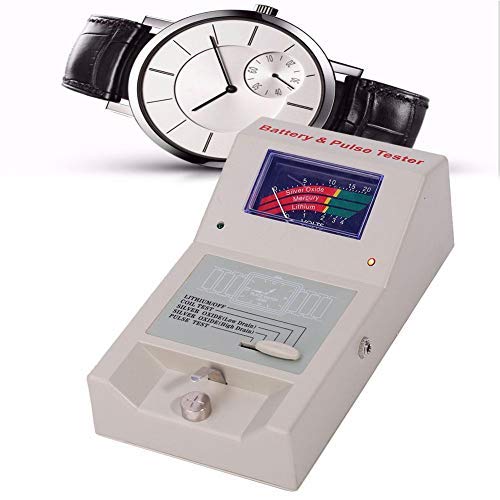
- Impulse test checks watches without opening the back
- Beep and flash indicators for battery/circuit status
- Includes detachable cords for coil testing
Best For: watchmakers and repair workers needing compact quartz diagnostics
Universal Battery Checker
Dlyfull LCD Battery Tester for Common Cells

- Tests AA, AAA, C, D, 9V, and button cells
- LCD screen shows good, weak, or poor condition
- Compact design with AAA battery included
Best For: Home users who want one small tester for watch batteries plus many other common cells
Quartz Watch Repair Tester
Impulse Checker for Watch Batteries

- Tests watch batteries without opening the watch
- Pulse test supports quartz watch battery checks
- Also checks lithium batteries and coils
Best For: Watch repairers who want a dedicated impulse-style tester for in-watch battery checks
Circular Watch Battery Tester
Pulse Analyzer for Button Cells

- Checks watch batteries and 1.5V/3V button cells
- Pulse tester works without opening the watch back
- Tiny circular design is easy to carry
Best For: Users who want a small, watch-focused battery analyzer for button cells and quartz watches
Universal Household Battery Checker
BT-168 Battery Tester for AA, AAA, C, D, 9V
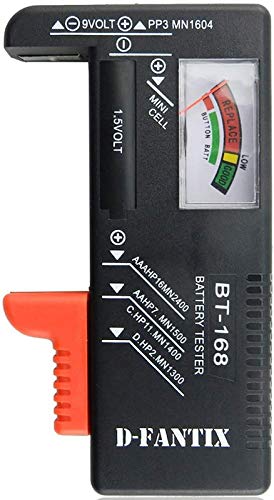
- No battery required for operation
- Color-coded analog good/low/replace scale
- Works with AA, AAA, C, D, 9V, and button cells
Best For: Routine home battery checks across common household sizes
Watch Pulse Analyzer
Quartz Watch Battery Tester for 1.5V and 3V Cells
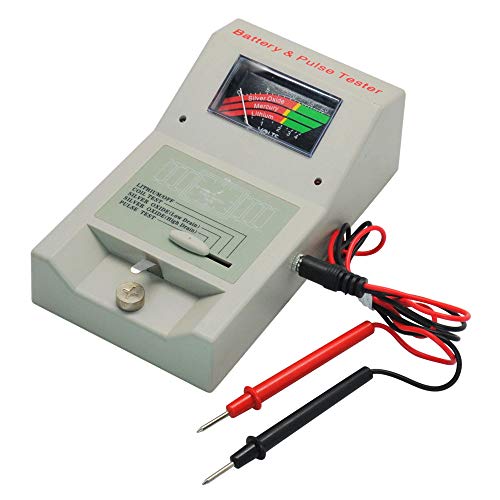
- Pulse tester for quartz watches
- Checks watch batteries without opening the back
- Works with 1.5V and 3V button cells
Best For: Quartz watch and button-cell testing
Compact Universal Checker
BT-168 Battery Tester for Everyday Batteries
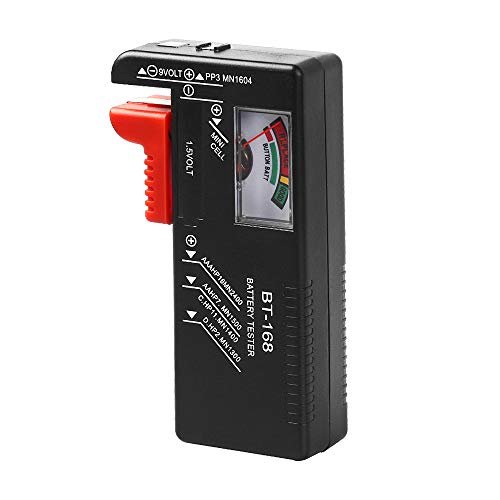
- No battery required to operate
- Analog good/low/replace display
- Checks AA, AAA, C, D, 9V, and button cells
Best For: Quick, portable checks of common household batteries
Professional Quartz Diagnosis – GEMORO WBT21 Watch & Battery Tester
If you want a watch battery load tester for professional quartz diagnosis, the GEMORO WBT21 is built for checking an analog quartz watch without opening the case. It tests silver oxide, alkaline, and lithium batteries under load, and its slim design even lets you use the watch test function without first removing the strap.
Best For: watchmakers, jewelry professionals, and repair shops that need fast non-invasive battery and watch movement checks.
Pros:
- Tests watch batteries under appropriate load conditions, including 1.55V silver oxide, 1.5V alkaline, and 3.0V lithium.
- Bright LED light and loud beep make results easy to notice in a busy workspace.
- Extra-sensitive pulse sensor works with the watch positioned face up or face down.
- Auto-off after 2 minutes helps conserve the replaceable CR2430 watch-test battery.
Cons:
- Watch test function requires a consumer-replaceable CR2430 battery, which is not included.
- More specialized than a basic household battery checker.
This is the most feature-rich option here if you need a purpose-built tool for diagnosing quartz watches rather than just checking battery voltage. The detailed instructions and training video link also make it easier to adopt in a professional setting.
Compact Button Cell Check – Watch Button Cell Tester
This watch battery load tester is a simple compact checker made for button cells in watches. It’s designed for 7mm, 10mm, and 20mm batteries, making it a straightforward pick when you want a quick read on small watch batteries without extra setup.
Best For: users who need a tiny, simple tester for common watch button cells.
Pros:
- Made specifically for watch button cells in 7mm, 10mm, and 20mm sizes.
- Very lightweight and compact for drawer storage or travel.
- Uses an ohmmeter-style measurement approach.
- Simple tool for quick checks on small watch batteries.
Cons:
- Far less versatile than universal battery testers.
- Limited to the listed button-cell sizes.
If you only need a basic watch battery checker for small cells, this is the simplest option in the group. It’s best viewed as a narrow-purpose tool rather than a full-featured analyzer.
Universal Household Check – AKIELO+ Digital Battery Tester
Although it is not a dedicated watch battery load tester, the AKIELO+ is a practical universal battery checker for household cells and button cells. It uses the battery being tested for power, so you can quickly check AA, AAA, C, D, 9V, and 1.5V cells with an easy-read 18-level display.
Best For: families and general users who want one easy tester for everyday household batteries.
Pros:
- Works with AA, AAA, C, D, 9V, 1.5V, and button cells.
- Self-powered design needs no charging or internal battery.
- Colour-coded 18-level digital display makes results easy to read.
- Top-loading layout and non-slip grips support quick one-handed testing.
Cons:
- Designed as a general battery checker, not a quartz watch diagnostic tool.
- Best suited to household batteries rather than specialized watch service work.
This is the most versatile choice if your priority is checking lots of battery types around the house. For dedicated watch service, though, a purpose-built quartz analyzer will be more relevant.
Quartz Watch Analyzer – Button Cell Battery Tester with Impulse Test
If you need a watch battery load tester aimed at repair work, this quartz watch analyzer adds impulse testing so you can check a watch without opening the back. It also includes detachable two-wire cords for coil testing, making it more service-oriented than a basic battery-only checker.
Best For: watchmakers and repair workers who want a compact analyzer for button cells and quartz diagnostics.
Pros:
- Performs impulse testing to evaluate the watch without opening the case back.
- Includes a beep and flash indicator to show whether the battery and circuit are working properly.
- Can test coils with detachable two-wire cords.
- Designed for button cells used in watches, calculators, and small electronics.
Cons:
- Extremely small listed dimensions make the product details less straightforward to interpret.
- More specialized than a simple universal battery tester.
This model is a strong fit if you want a compact quartz analyzer with extra repair-focused functions. Its impulse test and coil-check capability make it useful when basic battery voltage checks are not enough.
Universal Battery Checker – Dlyfull LCD Battery Tester for Common Cells
If you need a watch battery load tester in a compact, everyday tool, this Dlyfull unit is built for quick checks across a wide range of cells. It reads AA, AAA, C, D, 9V, button cells, and several watch-related batteries, then gives a simple good/weak/poor result on its LCD screen.
Best For: Home users who want one small tester for watch batteries plus many other common cells.
Pros:
- Checks a broad mix of battery types, including button cells and 1.5V/3V cells
- LCD display shows battery health in an easy-to-read format
- Compact, lightweight design makes it easy to keep in a drawer or toolbox
- Includes one AAA battery and an 18-month warranty
Cons:
- Not designed to power rechargeable batteries or test them
- Uses a basic pass/fail-style readout rather than advanced diagnostics
For general battery checking, this is the most flexible option in the group. It is a practical pick if you want a simple tester that handles watch-related button cells without adding much size or complexity.
Quartz Watch Repair Tester – Impulse Checker for Watch Batteries
This quartz watch battery load tester is aimed at watch repairers and hobbyists who want to check batteries without opening the watch. It uses a pulse test and is described as a regular watch battery tester that can also check lithium, silver oxidized low-drain and high-drain batteries, plus the coils.
Best For: Watch repairers who want a dedicated impulse-style tester for in-watch battery checks.
Pros:
- Tests watch batteries without opening the watch
- Pulse test approach is suited to quartz watch battery checks
- Can check lithium, silver oxidized low-drain, and high-drain batteries
- Also tests coils, adding useful repair functionality
Cons:
- More specialized than a general-purpose battery tester
- Product notes provide limited detail on display or operation
If your main need is watch-specific diagnosis, this model is more targeted than a universal checker. It makes sense for repair benches where the goal is fast battery and coil testing in a watch-focused workflow.
Circular Watch Battery Tester – Pulse Analyzer for Button Cells
Circular Type Watch Battery Pulse Tester and 1.5V 3V Button Cell Battery Analyzer
Check Price On AmazonFor a watch battery load tester that stays focused on compact watch and button-cell work, this circular model is built around pulse testing. It checks watch batteries plus 1.5V and 3V button cells, and it is designed to test watches without opening the back.
Best For: Users who want a small, watch-focused battery analyzer for button cells and quartz watches.
Pros:
- Checks watch batteries and 1.5V/3V button cells
- Impulse tester design supports testing watches without opening the back
- Very small and portable circular form factor
- Battery-powered with stated UL, CE, ETL, and NIST traceable specifications
Cons:
- Uses a 23A 12V battery, which is less common than standard AA/AAA power
- More specialized than universal battery checkers
This is a strong fit if your priority is watch-specific testing rather than whole-house battery coverage. The compact size and pulse-test approach make it a practical bench or carry tool for checking quartz watches and button cells.
Universal Household Battery Checker – BT-168 Battery Tester for AA, AAA, C, D, 9V
If you want a simple watch battery load tester alternative for everyday use, this universal battery checker is built for quick at-home battery checks. It works with common household cells and button batteries, using an analog needle scale to show good, low, or replace/recharge status without needing its own battery.
Best For: Home users who need a compact, no-battery-needed tester for AA, AAA, C, D, 9V, and button cells.
Pros:
- Requires no battery to operate, since it is activated by the battery being checked.
- Clear analog display with color-coded good, low, and replace/recharge zones.
- Supports AA, AAA, C, D, 1.5V, 9V, and button cell batteries.
- Small, lightweight, and easy to carry around the house.
Cons:
- Measures voltage status rather than precise battery capacity.
- Designed for household batteries, not specialized watch-only testing.
This is a practical pick if you want a basic, easy-to-read tester for sorting everyday batteries and avoiding premature replacements. It is straightforward rather than advanced, which suits routine household use well.
Watch Pulse Analyzer – Quartz Watch Battery Tester for 1.5V and 3V Cells
Quartz Watch Battery Tester 1.5V 3V Button Cell Coil Watch Pulse Tester Analyzer Battery Tool
Check Price On AmazonFor a watch battery load tester style check, this quartz watch battery tester is aimed at button cells and small electronics. It uses pulse testing for lithium and silver oxide batteries, and it can check watch batteries without opening the back, which makes it a more targeted tool than a general household battery checker.
Best For: Watch owners and hobbyists who want to test 1.5V or 3V button cells in watches, calculators, and small electronics.
Pros:
- Designed for quartz watch testing with pulse-style analysis.
- Can test watch batteries without opening the watch back.
- Handles 1.5V and 3V button cell batteries.
- Also useful for calculators and other small electronics.
Cons:
- More specialized than a general battery checker.
- Not intended for AA, AAA, C, D, or 9V batteries.
If your main goal is checking watch cells, this model is better aligned with that job than a universal tester. Its focused design makes it a sensible choice for small battery diagnostics rather than general household testing.
Compact Universal Checker – BT-168 Battery Tester for Everyday Batteries
If you need a simple watch battery load tester substitute for general battery checks, this BT-168 universal checker keeps things easy. It is activated by the battery being tested, needs no separate power source, and uses an analog needle to show whether a battery is good, low, or ready to replace or recharge.
Best For: Users who want a portable, no-battery-needed tester for common household cells and button batteries.
Pros:
- Works with AA, AAA, C, D, 9V, 1.5V, and button cell batteries.
- No battery needed for operation.
- Compact, lightweight, and portable for quick checks.
- Easy-to-read analog display with color-coded status zones.
Cons:
- Only indicates voltage condition, not exact battery capacity.
- Test times should be kept short to avoid unnecessary battery drain.
This is a practical, low-friction tool for checking everyday batteries before you toss them or put them back into rotation. It is best viewed as a quick status checker rather than a precision analyzer.
How We Picked the Best Watch Battery Load Tester
We prioritized testers that are easy to use, give useful load-style feedback, and cover the battery types most commonly found in watches and small electronics. Build quality, display clarity, and the ability to test 1.5V and 3V cells were key considerations.
We also favored models suited to different skill levels, from simple button-cell checkers to more advanced quartz diagnosis tools.
Quick Comparison
If you mainly want fast household battery checks, a universal digital tester is usually enough. If your goal is watch repair, choose a Watch Battery Load Tester or quartz analyzer that can better simulate real working conditions. For occasional users, simplicity matters most; for repair work, accuracy and diagnostic detail matter more.
Key Buying Factors for a Watch Battery Load Tester
Battery Compatibility
Make sure the tester supports the cells you actually use, especially silver oxide, alkaline, lithium button cells, and common watch batteries such as SR and LR types. Some testers also handle AA, AAA, C, D, and 9V batteries, which is helpful if you want one tool for the workshop.
Load Testing Vs. Simple Voltage Checking
A basic voltage reading can look fine even when a battery fails under demand. A true load-style tester is more useful for watch batteries because it shows whether the cell can deliver power under working conditions.
Display and Ease of Reading
Clear analog or LCD feedback helps you make faster decisions. If you work in a shop or service bench, readability matters as much as raw accuracy.
Size and Workflow
Compact testers are best for quick checks at the bench or on the go. If you repair watches regularly, a dedicated analyzer can speed up diagnosis and reduce unnecessary battery swaps.
Who Should Buy Which Watch Battery Load Tester?
Watchmakers and repair professionals should look for a dedicated Watch Battery Load Tester or quartz analyzer with better diagnostic depth. Hobbyists and general users may prefer a universal battery checker that can handle both watch cells and household batteries. If you only need occasional confirmation that a button cell still has usable power, a simple, budget-friendly tester is usually the best fit.
For most buyers, the best choice is the one that matches your battery types, your workspace, and how often you need fast, trustworthy results.