If you need consistent, reliable watch diagnostics, the right tester can save time and reduce guesswork. A good watch movement amplitude tester helps you evaluate timing performance, beat error, and overall movement health with far more confidence.
This roundup focuses on practical tools for watchmakers, repair techs, and serious hobbyists who want dependable results without overpaying for features they may never use.
Best 10 Watch Movement Amplitude Tester Picks for 2026
Professional Mechanical Timegrapher
SWANSOFT No.1000 Mechanical Watch Tester
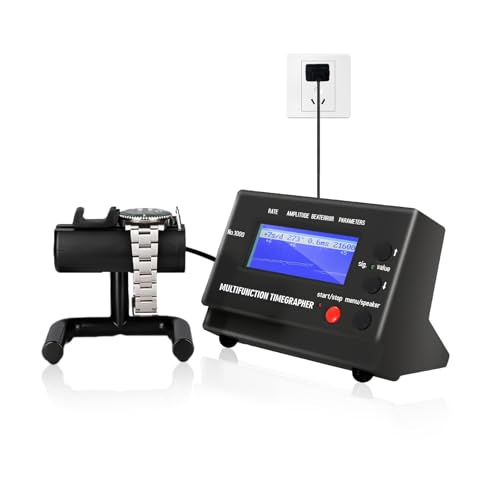
- Reads rate, amplitude, beat error, and lift angle
- Auto-detects standard beats with manual mode available
- Color LCD shows live graphs and six test positions
Best For: Mechanical watchmakers needing detailed timing diagnostics
Quartz Battery Diagnostic
GEMORO WBT21 Quartz Watch & Battery Tester

- Tests quartz watches without opening the case
- Checks silver oxide, alkaline, and lithium batteries
- Uses an extra-sensitive pulse sensor with LED and beep
Best For: Quartz watch pros who need fast battery diagnostics
Mechanical Timing Graph Tester
HAGSCTA Timegrapher with Microphone Sensor
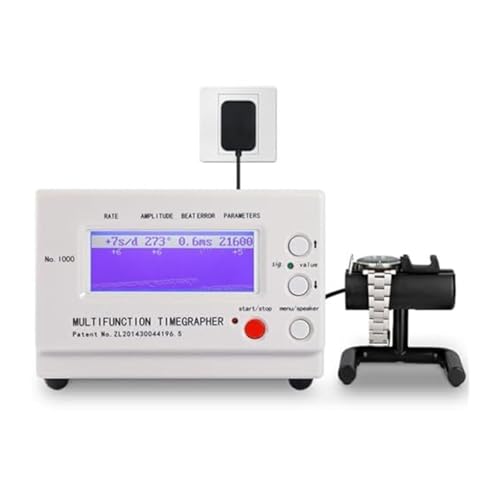
- Measures rate deviation, amplitude, and beat error
- Microphone sensor feeds real-time LCD graphs
- Six preset positions compare wear-angle performance
Best For: Repair techs and students checking serviced mechanical watches
Compact Quartz Analyzer
Button Cell Battery Tester with Quartz Analyzer
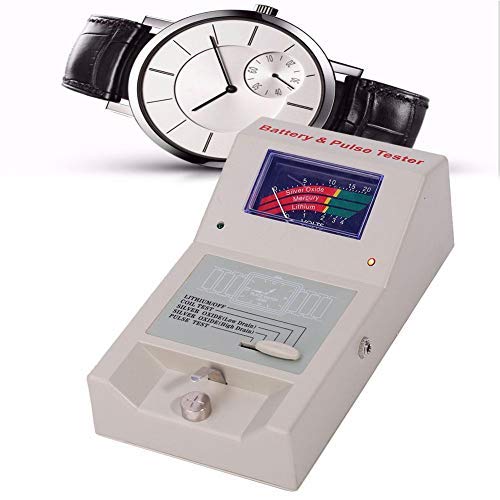
- Tests button cells without opening the watch case
- Beep and flash indicator show battery/circuit status
- Includes detachable two-wire cords for coil testing
Best For: Quick quartz battery and coil checks
Professional Timegrapher
Compact Mechanical Watch Analyzer
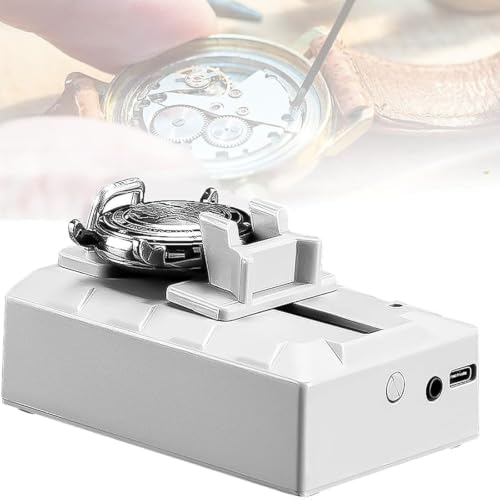
- Soft iron acoustic guide track for cleaner signal conduction
- Sliding clip and indicator light simplify setup
- Displays beat rate line, waveform, and lift angle
Best For: Watchmakers needing portable mechanical watch diagnostics
Coaxial MTG
Large-Screen Multi-Function Timegrapher

- Bigger LCD screen for easier viewing
- Works with mechanical and coaxial watches
- Corded power with broad voltage support
Best For: Bench users who want an easy-to-read timegrapher
Quartz Tester
Dual-Check Battery and Movement Tool

- Tests quartz watch movements and button batteries
- Sound and multi-color light indicators aid diagnosis
- Compact lightweight design for workshop use
Best For: Quartz repair and battery testing in a compact tool
6-Position Diagnostic Pick
BINGOX Professional Timegrapher Machine

- Measures rate, amplitude, beat error, and timing curves
- Supports 6-position testing for broader movement checks
- Compatible with common mechanical beat frequencies
Best For: mechanical watch users who need multi-position diagnostics
Large-Display Calibration Tool

- High-resolution color screen with backlight
- Shows rate, amplitude, beat error, beat, and lift angle
- Includes sensor, adapter, and manual
Best For: users who want a larger, easier-to-read mechanical tester
Entry-Level Timing Tester
TICFROG Watch Timegrapher No.1000

- Shows live rate, amplitude, beat error, beat, and lift angel
- Built for mechanical watch calibration
- Includes sensor, adapter, manual, and cloth
Best For: amateur watchmakers needing a simple mechanical tester
Professional Mechanical Timegrapher – SWANSOFT No.1000 Mechanical Watch Tester
If you need a watch movement amplitude tester for mechanical service work, the SWANSOFT No.1000 is built to show the core timing data that matters. It targets mechanical movements only, with live readings for rate, amplitude, beat error, and timing curves so you can diagnose and regulate a watch on the bench.
Best For: Watchmakers and technicians who need a detailed mechanical timing machine for calibration and diagnostics.
Pros:
- Measures rate, amplitude, beat error, and lift angle in real time.
- Auto-detects standard beats and supports manual mode for special frequencies.
- Color LCD displays live graphs and multiple test positions for varied watch types.
- High-precision timing claims and wide measurement ranges suit advanced and older movements.
Cons:
- Works only with mechanical movement watches, not quartz.
- More specialized than a simple battery or pulse tester.
- Designed for bench use, so it is not a quick pocket tool.
For buyers comparing a watch movement amplitude tester, this model stands out as a full-featured diagnostic tool rather than a basic checker. It is best chosen when you want detailed timing analysis and position testing for servicing work.
Quartz Battery Diagnostic – GEMORO WBT21 Quartz Watch & Battery Tester
If you want a practical watch movement amplitude tester alternative for quartz service work, the GEMORO WBT21 focuses on diagnosing battery-related problems without opening the case. It can test common silver oxide, alkaline, and lithium batteries under load, while the watch test function uses a sensitive pulse sensor, bright LED light, and loud beep to help identify whether the watch needs a new battery or further service.
Best For: Watch and jewelry professionals who need quick quartz battery and watch diagnostics without opening the case.
Pros:
- Tests quartz watches without opening the case or removing the strap first.
- Works with silver oxide, alkaline, and lithium batteries under proper load conditions.
- Extra-sensitive pulse sensor supports face-up or face-down testing.
- Includes LED light, loud beep, auto-off, and a one-year warranty.
Cons:
- Not intended for mechanical movement timing measurements.
- Watch test battery is not included.
- Focuses on quartz battery diagnosis rather than full movement analysis.
This is the right pick when your priority is fast quartz troubleshooting instead of amplitude testing on mechanical watches. It is compact, professional, and built for day-to-day shop use.
Mechanical Timing Graph Tester – HAGSCTA Timegrapher with Microphone Sensor
For buyers looking for a watch movement amplitude tester with clear live feedback, this HAGSCTA timing machine focuses on the essentials for mechanical and automatic watches. It measures rate deviation, amplitude, and beat error, while the built-in microphone sensor converts escapement ticks into real-time graphs and numeric readings on the LCD.
Best For: Watch repair technicians, hobbyists, and horology students checking mechanical movement health after servicing.
Pros:
- Shows rate deviation, amplitude, and beat error with 0.1-second resolution.
- Built-in microphone sensor captures escapement ticks through a clip-on stand.
- Six preset positions help compare performance across wearing angles.
- LCD displays graphs and numeric data side by side during a timing run.
Cons:
- Limited to mechanical and automatic watches.
- Maximum displayed deviation range is narrower than some higher-end analyzers.
- Best suited to bench testing rather than casual at-home use.
This model offers a straightforward route into timing analysis if you want readable amplitude and rate data without a connected computer. It is a practical choice for post-service checking and regulation.
Compact Quartz Analyzer – Button Cell Battery Tester with Quartz Analyzer
If you mainly need a simple watch movement amplitude tester substitute for quartz checks, this button cell analyzer keeps the job focused on battery and pulse testing. It can test button cells without opening the watch case, and its pulse-test function uses a beep and flash indicator to show whether the battery and circuit are working properly.
Best For: Watchmakers and repair workers who want a lightweight button cell tester for quick quartz diagnostics.
Pros:
- Tests watch batteries without opening the case using pulse test.
- Beep and flash indicator help confirm battery and circuit status.
- Includes detachable two-wire cords to test watch coils.
- Designed for button cells used in watches, calculators, and small electronics.
Cons:
- Does not provide mechanical amplitude or timing measurements.
- Very small, basic unit compared with full watch analyzers.
- Focused on battery and pulse checks rather than deeper movement diagnosis.
This is a budget-friendly diagnostic tool when you only need quick quartz battery and circuit checks. It is useful in repair settings, but it does not replace a true mechanical timegrapher.
Professional Timegrapher – Compact Mechanical Watch Analyzer
If you want a watch movement amplitude tester for routine mechanical watch diagnostics, this professional timegrapher is built for clear, accurate readings. It uses a soft iron acoustic guide track to improve signal conduction and help isolate outside noise, while the sliding clip and indicator light make setup easier for day-to-day bench work.
Best For: Watchmakers and enthusiasts who want a portable timegrapher for precise mechanical watch analysis on desktops or tablets.
Pros:
- Soft iron acoustic guide track supports stable signal capture and better noise isolation.
- Sliding clip helps secure different watch sizes without damage.
- Indicator light and intuitive display make operation easier to follow.
- Shows beat rate line, acoustic waveform, and adjustable lift angle data.
Cons:
- Designed for mechanical watch analysis, not quartz movement checks.
- Needs a PC desktop or tablet connection for use.
Overall, this is a practical pick if you need a compact timegrapher with professional-style readouts and simple handling. Its main strength is combining portability with the core measurement tools expected from a serious watch movement tester.
Coaxial MTG – Large-Screen Multi-Function Timegrapher
OTOOLWORLD New Coaxial MTG Watch Tester Timing Multifunction Timegrapher LCD Screen NO.1900
Check Price On AmazonThis watch movement amplitude tester is aimed at mechanical watch timing, with a larger LCD screen that makes readings easier to see at the bench. It is also noted for working better with coaxial watches, and its multi-purpose design has made it popular with professional watchmakers and collectors.
Best For: Users who want a straightforward corded timegrapher with a larger display for mechanical and coaxial watches.
Pros:
- Larger LCD screen improves visibility over smaller-display models.
- Compatible with mechanical watches and coaxial watches.
- Multi-purpose design suits both professional watchmakers and collectors.
- Supports 100V-240V power and includes mini exchange plugs for several regions.
Cons:
- Corded electric power means it is not a battery-powered portable option.
- Feature set is more basic than newer models with extra workflow aids.
If display clarity matters most, this model is a sensible choice among timegrapher-style testers. The larger LCD and broad power support make it easy to fit into a workshop setup without much fuss.
Quartz Tester – Dual-Check Battery and Movement Tool
If you need a watch movement amplitude tester for quartz repair work, this compact tester is built for quick diagnosis of both watch movements and button batteries. It uses sound and light indicators, including audible tones and multi-color LED feedback, to help you spot faults fast in a workshop setting.
Best For: Watch repair users who want a compact tool for checking quartz watch health and battery voltage.
Pros:
- Dual-purpose design checks quartz watch movements and button battery voltage.
- Sound and light indicators provide quick diagnostic feedback.
- Compact, lightweight plastic body is easy to handle.
- Small size fits well in a repair bench or tool kit.
Cons:
- Built for quartz testing rather than mechanical timegrapher-style analysis.
- Battery powered design may not suit users who prefer corded tools.
This is a practical diagnostic helper when you want fast results without a larger bench instrument. Its strengths are simplicity, portability, and the ability to test both movement health and battery condition from one compact device.
6-Position Diagnostic Pick – BINGOX Professional Timegrapher Machine
If you want a watch movement amplitude tester for diagnosing mechanical watches, this BINGOX timegrapher is built around the core readouts most watchmakers need: rate, amplitude, beat error, and timing curves. It’s aimed at real-world movement checks, with multi-position testing to help you see how a watch performs as orientation changes.
Best For: Watchmakers, collectors, and mechanical watch enthusiasts who want multi-position diagnostics.
Pros:
- Measures rate, amplitude, beat error, and timing curves in real time
- Supports 6 positions: dial up, dial down, crown up/down/left/right
- Works with common mechanical beat frequencies including 18000, 21600, 28800, and 36000 BPH
- LCD display makes the diagnostics easy to read
Cons:
- Not designed for quartz watches
- Focused on mechanical diagnostics rather than general watch use
This is a practical pick if you need position-by-position movement checks and want a straightforward display for quick evaluation. It fits well in a repair setup or collector bench where consistent mechanical watch testing matters.
Large-Display Calibration Tool – SWANSOFT Timegrapher No.1900
For buyers comparing a watch movement amplitude tester, the SWANSOFT No.1900 focuses on clear live readings and an upgraded color screen. It’s made only for mechanical movement watches, and the display shows rate, amplitude, beat error, beat, and lift angle for direct calibration work.
Best For: Watchmakers, technicians, and collectors who want a larger, easier-to-read display.
Pros:
- High-resolution color screen with backlight for easier reading
- Displays rate, amplitude, beat error, beat, and lift angle
- Made for mechanical watches and described as easy to operate
- Includes sensor, US adapter, and professional manual
Cons:
- Does not support quartz watches
- Requires corded power
The No.1900 is a sensible choice if screen readability is a priority and you want a dedicated mechanical watch tester. It trades broad watch compatibility for a more user-friendly interface and a full set of live timing readouts.
Entry-Level Timing Tester – TICFROG Watch Timegrapher No.1000
If you’re shopping for a watch movement amplitude tester for mechanical watches, the TICFROG No.1000 covers the essential timing data in a simple format. Its LCD screen shows live rate, amplitude, beat error, beat, and lift angel, making it a practical bench tool for checking whether a watch is running well.
Best For: Amateur watchmakers and budget-minded buyers who need basic mechanical watch calibration.
Pros:
- Shows live rate, amplitude, beat error, beat, and lift angel
- Made as a precise tester for mechanical watches
- Useful for amateur watchmakers, manufacturers, and watch technicians
- Includes sensor, US adapter, manual, and cleaning cloth
Cons:
- Only for mechanical watches, not quartz
- Display and features are simpler than higher-end models
The No.1000 is a straightforward entry point if you mainly need the core diagnostics without extras. It makes sense for first-time users who want a dedicated timing machine for mechanical watch calibration.
How We Picked the Best Watch Movement Amplitude Tester
We looked for models that balance measurement usefulness, ease of setup, display clarity, and workshop practicality. For a Watch Movement Amplitude Tester, the most important question is not just whether it works, but whether it gives stable readings you can trust across different watch types and positions.
We also considered whether the tool supports mechanical timing, quartz testing, or both, since many buyers want one device that can handle more than a single task.
Quick Comparison
In simple terms, choose based on your main job: mechanical timing and amplitude analysis, quartz diagnosis without opening the case, or a hybrid tool that can cover both. Some testers are built for traditional timegrapher-style use, while others add battery testing, sound-based diagnosis, or light indicators for faster workflow.
Key Buying Factors for a Watch Movement Amplitude Tester
Measurement Functions
Look for the features you will actually use: rate, beat error, amplitude, and stable line display for mechanical watches. If you also service quartz pieces, make sure the unit includes quartz-specific diagnostics rather than assuming one machine does everything well.
Sensor Type and Readability
Microphone sensitivity, clamp stability, and screen quality all affect results. A clear LCD or indicator system makes it easier to verify readings quickly, especially in busy repair settings.
Supported Watch Types
Some testers are better for automatic and manual mechanical movements, while others focus on quartz battery and circuit checks. Match the device to the majority of watches you service, then treat extra modes as a bonus.
Ease of Calibration
A reliable tester should be simple to calibrate and easy to reposition for different watch cases and dial orientations. If setup is awkward, you will spend more time adjusting than evaluating.
Workshop Durability
For daily use, choose a model with solid construction, dependable clips or holders, and controls that are easy to operate with bench tools nearby.
Who Should Buy Which Watch Movement Amplitude Tester?
Professional watchmakers and repair shops should prioritize accuracy, multiple modes, and repeatable readings. Enthusiasts who mainly service mechanical watches may be best served by a straightforward timegrapher-style unit with a clean display and easy operation. If you frequently handle quartz watches or battery-related issues, a hybrid tester with battery and impulse functions is the smarter buy.
In short, the best Watch Movement Amplitude Tester is the one that matches your repair workload, not the one with the longest feature list.