The best lightweight sleeping pads make backpacking more comfortable without adding unnecessary bulk to your pack. The right choice depends on insulation, sleeping style, packed size, and how much convenience you want at camp.
We compared 10 options ranging from compact closed-cell foam pads to insulated inflatable models, including versatile choices for summer camping, shoulder-season trips, and colder conditions.
Best 10 Lightweight Sleeping Pads Picks for 2026
Best Insulated Comfort

- 22-ounce inflatable design with 3.2-inch thickness
- Includes pump sack, repair kits, and valve needle
- Packs down to about 8.5 by 3 inches
Best For: Backpackers wanting cushioned, insulated inflatable comfort
Best Foam Value

- 14-ounce closed-cell foam construction
- Folds accordion-style for easy packing
- No inflation required; R-value 1.7
Best For: Hikers wanting durable, simple, economical trail comfort
Best Built-In Pump
MOXILS Ultralight Inflatable Pad

- Built-in foot pump inflates in about 20 seconds
- Wide design measures up to 78 by 25 inches
- Side buttons connect two pads together
Best For: Campers wanting a roomy pad with fast, self-contained inflation
Best Year-Round Ultralight
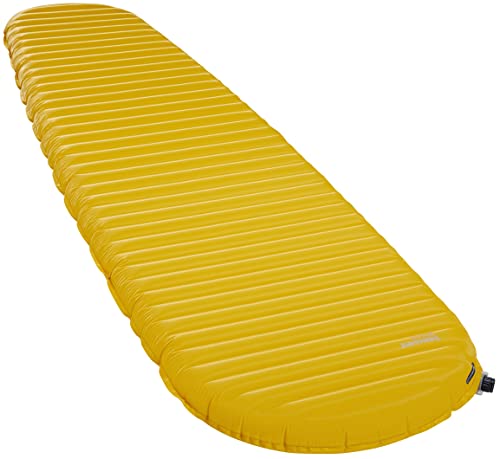
- 13-ounce regular-size pad with 4.5 R-value
- 3-inch thickness supports comfortable sleeping
- Includes pump sack, stuff sack, and patch kit
Best For: Ultralight backpackers needing warmth across multiple seasons
Warmth-Focused Pick

- 7.2 R-value for all-season insulation
- 4-inch thick, 24-inch-wide sleeping surface
- 2 pounds and packs about as small as a water bottle
Best For: Campers wanting generous cushioning and warmth
Lightweight Value Pick

- 18.6-ounce packed weight
- Packs to about 3 by 8 inches
- V-chambers support the body and limit air movement
Best For: Hikers prioritizing low weight and compact packing
Maintenance-Free Pick

- 10.56-ounce closed-cell foam design
- Does not deflate and resists moisture
- Folds to 23.6 by 5.6 by 4.9 inches
Best For: Minimalists wanting simple, puncture-free cushioning
Best Built-In Pump Comfort

- 1.5-pound pad with compact storage bag
- Built-in foot pump and raised pillow
- Ergonomic 2.6-inch air cushion
Best For: Backpackers wanting integrated inflation and pillow support
Best Ultralight Packability

- Just 17.5 ounces and bottle-sized when packed
- Detachable pump sack and anti-leak valve
- 2-R insulation for spring and summer
Best For: Weight-conscious backpackers and warm-season campers
Best Extra-Wide Sleeping Surface

- Up to 27 inches wide and 3 inches thick
- Built-in pillow and 30–60-second foot pump
- Side buttons connect two pads
Best For: Campers wanting extra room or a connectable double setup
Best Insulated Comfort – Gear Doctors ApolloAir 5.2
The Gear Doctors ApolloAir 5.2 is a lightweight sleeping pad for backpackers who want inflatable comfort without a bulky packed size. It weighs 22 ounces, measures 3.2 inches thick, and includes a pump sack for inflation in under two minutes.
Best For: Backpackers and campers seeking a thick, insulated inflatable pad with a compact pack size and included pump sack.
Pros:
- 3.2-inch thickness and horizontal air chambers provide cushioning and support.
- Includes a matched-valve pump sack, repair kits, and airflow-adjustment needle.
- 40D nylon fabric with E-LAST coating is designed for water resistance and durability.
- Packs to approximately 8.5 inches by 3 inches.
Cons:
- At 22 ounces, it is heavier than the lightest pad in this roundup.
- Requires inflation rather than self-inflating.
The ApolloAir balances comfort, insulation, and portability well. Its pump sack and repair supplies add practical trail value, while the thicker profile suits sleepers who prefer more separation from the ground.
Best Foam Value – Therm-a-Rest Z Lite Original
The Therm-a-Rest Z Lite Original is a dependable choice among lightweight sleeping pads for hikers who prefer simple closed-cell foam. Its accordion-fold design needs no inflation, weighs 14 ounces, and provides basic insulation with an R-value of 1.7.
Best For: Backpackers and mountaineers who prioritize low weight, durability, quick setup, and an economical foam design.
Pros:
- Weighs 14 ounces and folds into a compact 20-by-5-by-5.5-inch package.
- Closed-cell foam is durable, water resistant, and ready to use without inflation.
- Dual-density construction combines a softer top with a denser, protective bottom.
- Accordion folds make packing and handling straightforward.
Cons:
- Its 0.75-inch thickness offers less cushioning than inflatable alternatives.
- R-value 1.7 is intended for less demanding insulation needs than higher-rated pads.
The Z Lite Original favors reliability over plushness. It is a strong fit for rough trips, quick camps, or anyone who does not want to worry about leaks or inflation.
Best Built-In Pump – MOXILS Ultralight Inflatable Pad
The MOXILS inflatable pad is a roomy option for campers comparing lightweight sleeping pads with convenient inflation. Its built-in foot pump takes about 20 seconds, and the waterproof nylon-and-TPU pad measures up to 78 by 25 inches while weighing 1.9 pounds.
Best For: Car campers, casual backpackers, and sleepers who want a wide pad with built-in inflation and the option to connect two pads.
Pros:
- Built-in foot pump avoids blowing up the pad by mouth or carrying a separate pump.
- Wide rectangular design provides up to 25 inches of sleeping surface.
- Side buttons allow two pads to be attached as a double bed.
- Includes a storage bag, user manual, and six repair patches.
Cons:
- At 1.9 pounds, it is considerably heavier than ultralight backpacking pads.
- The built-in pump requires foot pressure to inflate.
- The listed manufacturer warranty is six months.
This pad emphasizes roominess and convenience rather than minimum trail weight. The fast foot pump and attachment buttons make it especially practical for relaxed camping and shared sleeping setups.
Best Year-Round Ultralight – Therm-a-Rest NeoAir XLite NXT
Therm-a-Rest NeoAir Xlite NXT Ultralight Camping and Backpacking Sleeping Pad, Solar Flare, Regular
Check Price On AmazonThe Therm-a-Rest NeoAir XLite NXT is a standout among lightweight sleeping pads for year-round backpacking. The regular size weighs 13 ounces, is 3 inches thick, packs to roughly the size of a 1-liter bottle, and provides an R-value of 4.5.
Best For: Ultralight backpackers who need substantial insulation, cushioning, and compact packing for three-season or year-round adventures.
Pros:
- 13-ounce weight keeps pack load low.
- 3-inch profile and baffled structure provide support and stability.
- Reflective ThermaCapture and Triangular Core Matrix construction deliver a 4.5 R-value.
- Includes pump sack, stuff sack, and patch kit, with a WingLock valve for fast deflation.
Cons:
- The 20-inch regular width may feel narrow for some sleepers.
- Inflation is required, even though the included pump sack simplifies the process.
The XLite NXT is the strongest choice here for weight-conscious sleepers who still need meaningful insulation. Its low weight, 3-inch cushioning, and 4.5 R-value make it well suited to demanding backpacking itineraries.
Warmth-Focused Pick – Trekology UL R7
If you want lightweight sleeping pads with substantial cushioning and insulation, the Trekology UL R7 is a strong all-season option. It weighs 2 pounds, packs to about the size of a water bottle, and inflates to a supportive 4-inch thickness.
Best For: Backpackers and campers who prioritize warmth, cushioning, and a spacious surface.
Pros:
- 7.2 R-value provides insulation for year-round use.
- 4-inch thickness helps prevent bottoming out for side and back sleepers.
- 40D ripstop nylon with TPU coating is water-resistant and tear-resistant.
- Supports up to 330 pounds.
Cons:
- At 2 pounds, it is heavier than some minimalist pads.
- Inflation requires mouth inflation or a separate pump bag, which is not included.
- The 70.8-inch length is best suited to sleepers up to 5 feet 11 inches.
The UL R7 makes a sensible choice when insulation and comfort matter more than achieving the lowest possible packed weight. Its roomy, thick design is particularly appealing for three-season and colder-weather camping.
Lightweight Value Pick – Klymit Static V
The Klymit Static V is a practical choice among lightweight sleeping pads for hikers who want a compact inflatable mattress without a complicated setup. Its V-chamber design is intended to limit air movement and heat loss, while the packed pad weighs just 18.6 ounces.
Best For: Backpackers and hikers seeking a light, compact, and easy-to-inflate sleeping pad.
Pros:
- 18.6-ounce packed weight keeps pack load low.
- Packs to approximately 3 by 8 inches.
- V-chamber construction provides support while limiting air movement.
- Inflates in about 10 to 15 breaths and includes a stuff sack.
Cons:
- At 2.5 inches thick, it offers less cushioning than thicker pads.
- The supplied notes do not provide an R-value for comparing insulation directly.
- Its 75D polyester construction is durable, but the pad still requires care to avoid punctures.
With a very low packed weight and straightforward inflation, the Static V is well suited to weight-conscious trips. Choose it when portability and value are more important than maximum thickness or a specified high insulation rating.
Maintenance-Free Pick – Ultralight XPE Foam Pad
This closed-cell foam pad stands out among lightweight sleeping pads for its simple, puncture-free design. The XPE construction does not deflate, folds for transport, and weighs just 10.56 ounces per pack.
Best For: Campers and hikers who prefer dependable foam insulation and zero inflation maintenance.
Pros:
- Weighs only 0.7 pounds and folds to a compact size.
- Closed-cell foam does not deflate during the night.
- Water-resistant XPE material helps protect against damp ground.
- Raised nodes and reflective aluminum film provide support and help retain warmth.
Cons:
- At 0.36 inches thick, it provides less cushioning than inflatable pads.
- The 2.1 insulation rating is lower than the Trekology pad’s listed 7.2 R-value.
- Its folded shape may be less convenient to pack inside some backpacks.
The foam pad is a reliable minimalist option for users who would rather sacrifice plushness than deal with leaks or inflation. It works especially well as a simple, moisture-resistant layer for hiking and camping.
Best Built-In Pump Comfort – Naturehike FC01
For campers who want lightweight sleeping pads with a built-in inflation system, the Naturehike FC01 combines a 2.6-inch air cushion, integrated pillow, and ergonomic air-bag layout. At 1.5 pounds, it packs down for backpacking, hiking, travel, and car camping while offering a relatively simple foot-pump setup.
Best For: Backpackers and campers who prioritize an integrated pump, built-in pillow, and ergonomic support.
Pros:
- Built-in foot pump can inflate the pad in about a minute without blowing it up by mouth.
- Ergonomic air-bag contours and raised pillow are designed to support the back, shoulders, and neck.
- At 1.5 pounds, it is easy to carry, and the included storage bag measures about 11 by 4.33 inches.
- 40D nylon with TPU construction is described as waterproof, wear-resistant, and designed to reduce noise.
Cons:
- The 2.6-inch thickness is less substantial than some thicker camping pads.
- The built-in pump requires repeated foot presses rather than a separate powered pump.
- Its 60-centimeter width may feel narrow for sleepers who prefer extra room.
The FC01 is a practical lightweight sleeping pad for users who want to leave a separate pump and pillow at home. Its strongest advantages are the integrated setup and ergonomic design, while the moderate width and thickness may matter to larger or side-sleeping campers.
Best Ultralight Packability – Gear Doctors Ether
The Gear Doctors Ether stands out among lightweight sleeping pads for its 17.5-ounce weight and compact 8.6-by-3.1-inch packed size. It uses a detachable pump sack, contoured air chambers, and a 2-R-value insulation rating for spring and summer backpacking, hiking, tent camping, and travel.
Best For: Weight-conscious backpackers who want a compact pad with contoured support and a detachable pump sack.
Pros:
- At 17.5 ounces, it is the lightest option in this roundup and packs about as small as a water bottle.
- The ErgoCushion design varies from 3.35 inches at the edges to 2.36 inches in the center for a hugging feel.
- Includes a detachable foot pump sack, anti-leak valve system, carry pouch, and repair kit.
- Its 440-pound stated capacity and 20D nylon with water-resistant TPU coating add versatility for outdoor use.
Cons:
- The 2-R-value insulation is intended for spring and summer rather than colder-season camping.
- Its 25-inch width may not provide as much space as an extra-wide pad.
- The detachable pump sack is an additional piece to keep track of in your kit.
The Ether is the clearest choice when pack weight and packed volume are the main priorities. It offers useful contouring and a pump sack without much carried weight, but its two-season insulation makes it less suitable for cold-weather trips.
Best Extra-Wide Sleeping Surface – FUN PAC Camping Pad
For shoppers seeking lightweight sleeping pads with more elbow room, the FUN PAC camping pad measures up to 78 by 27 inches and inflates to about 3 inches thick. Its built-in foot pump, pillow, egg-shaped air cells, and side buttons for connecting a second pad make it suited to comfortable camping and shared setups.
Best For: Campers who want an extra-wide pad, built-in pillow, and the option to connect two pads.
Pros:
- The 27-inch-wide surface provides more room than many compact backpacking pads.
- Built-in pumping takes about 30 to 60 seconds, while the two-layer valve is designed for quick deflation and reduced air leakage.
- Egg-shaped air cells and the built-in pillow are designed to ease back and neck pressure.
- Side buttons allow two pads to be joined into a wider sleeping surface.
Cons:
- Although listed at 1.5 pounds, the extra-wide format may take more pack space than narrower pads.
- The built-in pump requires manual foot pumping.
- The supplied specifications vary between roughly 6.7 and 8 inches in listed inflated dimensions, so buyers should confirm the exact size.
The FUN PAC is a strong fit for campers who value sleeping space more than the smallest possible packed size. Its connection buttons are particularly useful for couples or families, while the manual pump and larger footprint may be less appealing to minimalist backpackers.
How We Picked These Lightweight Sleeping Pads
We focused on the features that matter most when carrying sleep gear outdoors: weight, packed size, insulation, thickness, durability, inflation design, and overall versatility. The selection includes both inflatable and closed-cell foam designs because each type solves a different camping problem.
We also considered practical details such as built-in pumps, repair kits, integrated pillows, surface stability, and whether a pad is suitable for three-season or colder-weather use. Product specifications can vary by size, so verify the listed dimensions, weight, and R-value before ordering.
Quick Comparison
| Pad type | Best for | Main advantage | Trade-off |
|---|---|---|---|
| Insulated inflatable | Three-season backpacking | High comfort-to-weight ratio | Needs careful handling |
| Thick inflatable | Side sleepers and comfort | More cushioning from uneven ground | Larger packed size or higher weight |
| Closed-cell foam | Reliability and minimalism | No puncture risk and instant setup | Less compact and less plush |
| Built-in pump model | Convenient camp setup | Does not require a separate pump | May take more effort to inflate |
Key Buying Factors for Lightweight Sleeping Pads
Weight and Packed Size
For backpacking, compare total packed weight rather than the advertised pad weight alone. A repair kit, pump sack, or storage bag can add a little extra. Also check the packed shape: a narrow cylinder is easier to fit inside a pack, while a foam pad may need to be carried externally.
R-Value and Season
R-value measures resistance to heat loss through the ground. Lower values can work for warm summer nights, while insulated, higher-R-value pads are better for cool shoulder-season trips. If you camp across multiple seasons, choose a pad with more insulation rather than relying only on a warm sleeping bag.
Thickness, Width, and Sleep Position
Side sleepers usually benefit from a thicker inflatable pad that keeps hips from touching the ground. Back and stomach sleepers may prefer a lower-profile design for stability and reduced weight. Check shoulder and hip width, not just the overall length, especially if you move around at night.
Durability and Inflation
Inflatable pads offer excellent comfort but should be used on a cleared surface and stored according to the manufacturer’s directions. Built-in pumps are convenient, while a separate pump sack may inflate a pad faster and keep moisture away from its interior. Closed-cell foam is the simplest option when reliability matters most.
Who Should Buy Which Lightweight Sleeping Pads?
Choose an insulated inflatable pad if you want the best balance of low weight, comfort, and cold-ground protection for backpacking. Choose a thick inflatable model if comfort and side-sleeping support matter more than achieving the smallest possible packed size.
Choose a closed-cell foam pad for dependable performance, quick setup, or trips where punctures are a concern. It is also useful as a sit pad or supplemental insulation under an inflatable mattress. Choose a built-in-pump design if you want an all-in-one setup and do not want to carry a separate inflation accessory.
Before buying, match the pad’s dimensions and R-value to your body, sleeping bag, and expected temperatures. A slightly heavier model can be the better value if it improves sleep, warmth, and durability on the trips you take most often.