Choosing binoculars for low-light viewing means balancing brightness, detail, stability, and carrying comfort. Larger objective lenses can help gather more light, while quality optics and a steady grip often matter just as much as magnification.
This roundup compares 10 options for wildlife watching, birding, hunting, travel, and other dawn-or-dusk viewing situations. Use the guide below to match optical performance and features to the way you plan to use your binoculars.
Best 10 Binoculars for Low Light Picks for 2026
Trail-Ready Brightness

- 50mm objectives support bright low-light views
- Waterproof, fog-resistant, rubber-armored build
- Tripod-adaptable with a wide 5.6° view
Best For: Wildlife viewing in changing outdoor conditions
Balanced HD Performance

- HD optics improve resolution and color fidelity
- Waterproof, fogproof, and shockproof construction
- Includes GlassPak harness and lifetime warranty
Best For: Hiking, birdwatching, hunting, and general outdoor use
Portable High-Power Pick
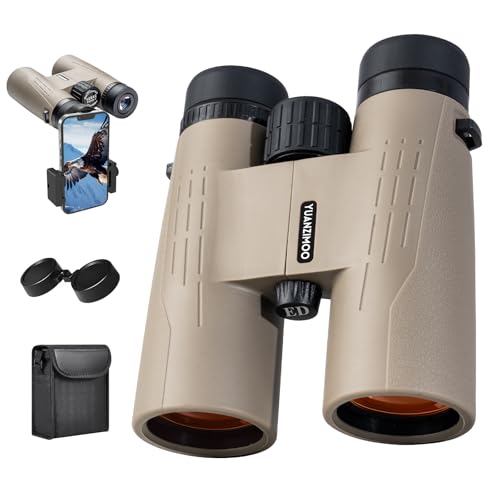
- 12x magnification for distant subjects
- Fully multi-coated optics and BaK-4 prisms
- Foldable design with included smartphone adapter
Best For: Travel, casual birdwatching, and dawn or dusk viewing
Rugged Everyday Value

- HD optics and fully multi-coated lenses
- Waterproof, fogproof, and shockproof
- Wide 325-foot field of view with lifetime warranty
Best For: Rugged everyday use for hunting, hiking, and birdwatching
High-Power Value Pick
FLYA 20x50 Low-Light Binoculars

- 20x magnification with 50mm objective lenses
- BAK4 prism and FMC/multilayer-coated optics
- Rubberized, daily waterproof body with tripod mount
Best For: Long-distance bird watching, hunting, camping, and stargazing
Weather-Ready Choice

- Fully multi-coated optics with BaK-4 prisms
- IPX7 waterproof and nitrogen-purged against fog
- Compact 709g build with case, strap, and covers
Best For: Hunting, boating, birdwatching, and travel in wet weather
Maximum Light-Gathering Pick

- Large 70mm objectives for low-light viewing
- 20x magnification with BAK4 and FMC optics
- Heavy 2.8lb build and not water resistant
Best For: Stargazing and supported long-distance viewing in dim conditions
Twilight Detail Pick

- 52mm lenses for dawn and dusk viewing
- 15x magnification with large eyepieces
- Universal smartphone adapter included
Best For: Low-light hunting and long-distance nature observation
High-Power Light Gatherer

- Large 56mm lenses for dim conditions
- 20x power for distant targets
- Waterproof body with BAK4 and FMC optics
Best For: Long-distance outdoor viewing and stargazing
Portable All-Rounder
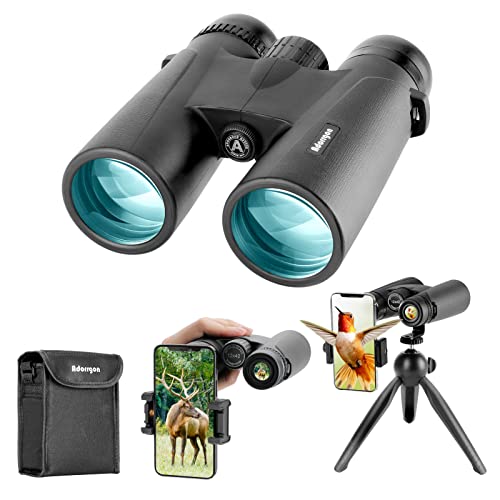
- Portable 42mm design with low-light optics
- Wide 367-foot field of view
- Phone adapter and tripod included
Best For: Travel, bird watching, and general outdoor use
Trail-Ready Brightness – Celestron Outland X 10×50
For shoppers seeking binoculars for low light, the Celestron Outland X combines 10x magnification with large 50mm objective lenses to provide bright, detailed views during wildlife watching, hiking, and other outdoor activities.
Best For: Wildlife viewers who want enhanced low-light performance, weather protection, and tripod compatibility.
Pros:
- Large 50mm objectives and BaK-4 prisms support bright, color-accurate images.
- Waterproof, nitrogen-purged, and rubber-armored for changing outdoor conditions.
- Tripod-adaptable design and 5.6° field of view help with extended or moving-subject viewing.
Cons:
- At 0.76 kg, it is heavier than many compact 42mm binoculars.
- A tripod adapter is not included.
The Outland X is a strong choice when low-light brightness and rugged outdoor construction matter more than minimizing carry weight.
Balanced HD Performance – Vortex Triumph HD 10×42
The Vortex Triumph HD is a practical option for binoculars for low light, using fully multi-coated lenses and an HD optical system to improve resolution, color fidelity, edge-to-edge sharpness, and light transmission in a compact full-size design.
Best For: Birdwatchers, hunters, and hikers who want balanced image quality, portability, and strong weather protection.
Pros:
- HD optics and fully multi-coated lenses support clear, color-accurate images.
- Waterproof, fogproof, shockproof, and covered by an unlimited, unconditional lifetime warranty.
- Includes a GlassPak harness and offers tripod adaptability.
Cons:
- The 42mm objectives gather less light than larger 50mm models.
- Its 4.2mm exit pupil is more modest for very dim conditions.
The Triumph HD offers a well-rounded mix of low-light-capable optics, carrying convenience, and durable construction for general outdoor use.
Portable High-Power Pick – YUANZIMOO 12×42 Binoculars
These compact binoculars for low light pair 12x magnification with 42mm objective lenses, BaK-4 prisms, and fully multi-coated optics for dawn hunting, dusk birdwatching, sporting events, and travel.
Best For: Casual outdoor observers who want high magnification, a foldable design, and smartphone photo capability.
Pros:
- 12x magnification provides detailed views of distant subjects.
- Fully multi-coated optics and BaK-4 prisms are designed for low-light viewing.
- Foldable, lightweight design includes a smartphone adapter for capturing photos and video.
Cons:
- The 3.5mm exit pupil is smaller than the exit pupil on several 10×42 alternatives.
- Supplied notes do not identify a brand warranty or included carrying accessories.
This model emphasizes reach and portability, making it appealing for users who value magnification and phone sharing over premium stabilization or maximum low-light brightness.
Rugged Everyday Value – Vortex Crossfire HD 10×42
The Vortex Crossfire HD is a dependable choice among binoculars for low light, with HD glass elements and fully multi-coated lenses designed to improve resolution, color fidelity, sharpness, and light transmission while keeping the body compact and durable.
Best For: Hunters, hikers, and birdwatchers who need a weatherproof, compact binocular with a forgiving field of view.
Pros:
- HD optics and multiple anti-reflective coatings support image clarity and light transmission.
- Waterproof, fogproof, shockproof, and tripod-adaptable.
- Includes a GlassPak case and carries Vortex’s unlimited, unconditional lifetime warranty.
- 325-foot field of view helps users scan landscapes and follow subjects.
Cons:
- Its 15mm eye relief may be less accommodating for some eyeglass wearers.
- 42mm objectives are less light-gathering than larger 50mm binoculars.
The Crossfire HD is a practical all-around option for outdoor users who want low-light capability, rugged protection, and long-term warranty coverage.
High-Power Value Pick – FLYA 20×50 Low-Light Binoculars
For shoppers seeking binoculars for low light, the FLYA 20×50 combines 20x magnification with 50mm objective lenses and multilayer-coated optics. Its BAK4 Porro prism and FMC anti-reflective coating are designed to improve brightness and clarity for activities such as bird watching, hunting, camping, and stargazing.
Best For: Long-distance outdoor viewing when high magnification and low-light capability matter.
Pros:
- 20x magnification and 50mm objective lenses support detailed, distant viewing.
- BAK4 prism and multilayer/FMC coatings are designed to improve light transmission and image clarity.
- Rubberized, impact-resistant body with a non-slip grip and daily waterproof construction.
- 26mm eyepiece and center focus wheel are designed for comfortable, precise viewing.
Cons:
- At approximately 0.89 kg, it may feel less convenient for extended handheld use.
- The 2.5mm exit pupil is relatively small compared with lower-magnification options.
- Waterproof construction is intended for daily conditions, but the binoculars should not be immersed.
The FLYA is a feature-rich choice for buyers prioritizing reach and low-light viewing over maximum portability. Its tripod mount may also help steady the powerful 20x image.
Weather-Ready Choice – Bushnell H2O Xtreme 10×42
The Bushnell H2O Xtreme is a practical option for binoculars for low light when reliable handling in changing weather is equally important. Its 10×42 configuration, BaK-4 prisms, fully multi-coated glass, and 4.2mm exit pupil are suited to hunting, birdwatching, boating, and general outdoor observation.
Best For: Outdoor users who need compact binoculars with strong waterproofing and anti-fog protection.
Pros:
- Fully multi-coated optics and BaK-4 prisms support clear, bright images.
- IPX7 waterproofing allows protection against accidental submersion.
- Nitrogen purging helps prevent internal fogging in changing weather.
- Compact 709g design includes a strap, carrying case, and lens covers.
Cons:
- 10x magnification offers less reach than the 20x models in this roundup.
- 17mm eye relief may be less accommodating for some eyeglass wearers.
- Its low-light performance is capable, but the 42mm objectives gather less light than 50mm or 70mm designs.
The H2O Xtreme is the balanced, weather-focused pick. It gives up some magnification and objective size, but its waterproof, fogproof construction and manageable weight make it well suited to mobile outdoor use.
Maximum Light-Gathering Pick – WOZEL 20×70 Binoculars
Among these binoculars for low light, the WOZEL 20×70 stands out for its large 70mm objective lenses. The combination of 20x magnification, BAK4 prisms, and fully multi-coated optics is intended to produce bright, detailed views for bird watching, hunting, sightseeing, sports, and stargazing.
Best For: Stationary or supported viewing in dim conditions where maximum objective size is a priority.
Pros:
- Large 70mm objective lenses are designed to maximize light transmission in low-light conditions.
- 20x magnification helps reveal details at long distances.
- BAK4 prisms and FMC optics support color reproduction, clarity, and glare reduction.
- Rubber-coated body, neck strap, carrying bag, and cleaning cloth are included.
Cons:
- At approximately 2.8 lb, it is substantially heavier than the compact alternatives.
- The binoculars are not water resistant, limiting use in wet conditions.
- High 20x magnification can make steady handheld viewing more challenging.
The WOZEL offers the strongest low-light specification of the three through its 70mm objectives, but its weight and lack of water resistance make it better for deliberate viewing than fast-moving, wet-weather adventures.
Twilight Detail Pick – 15×52 HD Binoculars
For shoppers seeking binoculars for low light, this 15×52 model emphasizes light-gathering performance, long-distance detail, and color fidelity. Its large objective lenses and coated optics suit dawn, dusk, overcast conditions, and observations beneath dense tree cover.
Best For: Low-light hunting, bird watching, and long-distance nature observation.
Pros:
- 52mm objective lenses, high-transmission glass, and BAK4 prisms are designed for low-light viewing.
- 15x magnification and large 22mm eyepieces support detailed, long-range observation.
- Includes an upgraded universal smartphone adapter with anti-slip padding and screw locks.
- Twist-down eyecups and long eye relief accommodate glasses wearers.
Cons:
- High 15x magnification can make handheld viewing less steady.
- The larger 52mm optics may be less compact than smaller binoculars.
This is the most specialized option here for extracting detail in dim outdoor conditions. Choose it when low-light reach and phone-digiscoping features matter more than maximum portability.
High-Power Light Gatherer – Pankoo 20×56 Binoculars
These Pankoo binoculars for low light pair very high 20x magnification with large 56mm lenses intended to capture abundant light at dawn and dusk. Fully multi-coated optics, BAK4 roof prisms, and a waterproof chassis make them a practical choice for demanding outdoor observation.
Best For: Long-distance landscapes, hunting, stargazing, and low-light outdoor viewing.
Pros:
- Large 56mm objective lenses are designed to provide bright images in dim conditions.
- 20x magnification supports long-range observation of landscapes and distant targets.
- BAK4 roof prisms and fully multi-coated lenses are specified for sharp, high-transmission views.
- Waterproof, shock-resistant construction weighs about 1.2 pounds and includes carrying accessories.
Cons:
- Very high magnification can make image steadiness more challenging when used handheld.
- 56mm lenses may be bulkier than more compact binocular designs.
If maximum reach and light-gathering capacity are your priorities, this is the strongest magnification-focused choice. Its waterproof build also suits users who expect changing weather on outdoor trips.
Portable All-Rounder – Adorrgon 12×42 Binoculars
For buyers who want binoculars for low light without carrying oversized optics, the Adorrgon 12×42 balances a portable design with BAK4 prisms, fully multi-coated lenses, and a wide field of view. It is built for daylight and improved visibility around dawn, dusk, and cloudy weather.
Best For: Travel, bird watching, wildlife viewing, sports, and general outdoor use.
Pros:
- 42mm objective lenses offer a practical balance between brightness and portability.
- 12x magnification and a 367-foot field of view help locate and follow distant subjects.
- BAK4 prisms, FMC optics, and 18.5mm eyepieces support sharp, comfortable viewing.
- Includes a universal phone adapter and compact rotatable tripod for steadier photos and video.
Cons:
- Its 42mm lenses are smaller than the 52mm and 56mm options, so light gathering may be more limited.
- The listed 10mm eye relief may be less generous for some glasses wearers.
This is the easiest option to recommend for mixed use because it combines low-light-oriented optics with a lighter, more portable format. Choose it for travel and wildlife viewing when a wide view and included tripod are useful.
How We Picked These Binoculars for Low Light
We focused on models with practical low-light potential, considering objective-lens size, magnification, optical design, weather protection, handling, and included accessories. A 42mm objective is a versatile baseline for portability, while 50mm and larger lenses can collect more light but usually add weight and bulk.
We also considered how useful each model is outside ideal conditions. Waterproofing, fog resistance, a comfortable focus mechanism, adjustable eyecups, and a secure grip can make a greater difference in the field than a high power rating alone. Phone adapters and tripod compatibility were treated as useful extras rather than substitutes for optical quality.
Quick Comparison
| Best For | What to Look For | Trade-Off |
|---|---|---|
| General wildlife and birding | 8x or 10x magnification with 42mm objectives | Less light gathering than larger models |
| Dawn, dusk, and overcast viewing | 10×50 or larger objective lenses | More weight and a larger body |
| Long-distance observation | 12x to 20x magnification | More visible shake and a narrower field of view |
| Travel and hiking | Compact 10×42 design with waterproofing | May be less bright at twilight |
Key Buying Factors for Binoculars for Low Light
Objective Size and Exit Pupil
The objective lenses are the front lenses, and larger diameters generally admit more light. Exit pupil is another useful comparison: divide objective size by magnification. For example, 10×50 binoculars produce a 5mm exit pupil, while 10×42 produces 4.2mm. Larger exit pupils can be helpful as daylight fades, although optical coatings and glass quality also affect the final view.
Magnification and Stability
Higher magnification is not automatically better. Models above 10x magnify hand movement and can make it harder to locate moving animals. If choosing 12x, 15x, or 20x binoculars, look for a firm grip and consider using a tripod when the design supports one.
Weather Protection and Comfort
For hunting, boating, camping, or damp trails, waterproof and fog-resistant construction is valuable. Check the focus wheel, eyecup adjustment, eye relief, and overall weight. Glasses wearers should pay particular attention to eye relief and adjustable eyecups.
Who Should Buy Which Binoculars for Low Light?
Choose a 10×42 model if you want an adaptable everyday pair for birding, wildlife, travel, and hiking. Select 10×50 binoculars if twilight brightness is more important than compact size. A 12×42 option can suit users who want extra reach while keeping the body manageable, but it benefits from steadier handling.
For distant subjects and open terrain, 15×52 or 20×56 models may provide more detail, especially with tripod support. Large 20×70 binoculars are best for stationary observation and users comfortable carrying substantial gear. If you frequently encounter rain, spray, or changing weather, prioritize waterproof construction. Finally, choose a phone-adapter model only if digiscoping is genuinely useful to you; the adapter should complement, not determine, your optical choice.