The best binoculars for wildlife viewing make it easier to spot animals, identify birds, and follow movement without carrying a bulky spotting scope. The right pair balances magnification, brightness, field of view, focus speed, and comfort.
This roundup includes dependable 8×42 and 10×42 designs, higher-power binoculars for longer distances, and budget-friendly options with phone adapters or tripods. Use the guide below to match the specifications to your habitat, viewing style, and experience level.
Best 10 Binoculars for Wildlife Viewing Picks for 2026
Rugged All-Weather Pick

- 10x42 HD optics for detailed wildlife views
- Waterproof, fogproof, and shockproof build
- Tripod adaptable with GlassPak harness
Best For: Wildlife viewing in varied outdoor conditions
Wide-View Starter

- Stable 8x power with a wide 7.4° view
- Phase-coated BaK-4 prisms and bright optics
- Waterproof, fogproof, rubber-armored housing
Best For: Birdwatching and general outdoor wildlife viewing
Accessible High-Power Option

- 10x42 HD optical system for distant subjects
- Waterproof, fogproof, and shockproof construction
- GlassPak harness and tripod adaptability included
Best For: Longer-range wildlife viewing and outdoor adventures
Color-Focused Value Pick
- ED glass helps reduce chromatic fringe
- Wide 8.1° field of view for tracking movement
- Argon-purged, waterproof, and fogproof design
Best For: Birding and color-conscious wildlife observation
High-Magnification Field Pick

- 12x magnification with bright 50mm objectives
- HD, fully multi-coated optics
- Waterproof, fogproof, tripod adaptable
Best For: Distant wildlife viewing, hunting, and hiking
Weather-Ready Everyday Choice

- IPX7 waterproof and nitrogen fogproof
- Fully multi-coated optics with BAK-4 prisms
- Lightweight aluminum chassis with non-slip grip
Best For: Birding, boating, hiking, and wet-weather use
Feature-Packed Value Option
- 12x magnification with a 367-foot field of view
- BAK4 and fully multi-coated optics
- Includes phone adapter and compact tripod
Best For: Traveling wildlife viewers who want to capture observations
Long-Range Detail Pick

- 20x magnification for distant subjects
- 50mm lens with coated BAK4 Porro optics
- Water-resistant, rubberized ergonomic body
Best For: Distant wildlife and low-light observation
Most Versatile Kit
- Lightweight 1.25-pound design
- Phone adapter and tripod included
- IPX7 waterproof and fog-proof build
Best For: Birding, travel, and casual wildlife photography
Low-Light Wildlife Pick

- 15x magnification for extended reach
- 52mm lens designed for low-light viewing
- Universal phone adapter with secure screw locks
Best For: Dawn, dusk, overcast, and tree-covered habitats
Rugged All-Weather Pick – Vortex Crossfire HD 10×42
The Vortex Crossfire HD 10×42 is a dependable choice among binoculars for wildlife viewing, combining 10x magnification with 42mm objective lenses for detailed views at distance. HD glass elements, fully multi-coated optics, and a waterproof, fogproof build make it well suited to changing outdoor conditions.
Best For: Wildlife observers, birders, hunters, and hikers who want higher magnification and rugged weather protection.
Pros:
- 10x magnification and 42mm objectives provide detailed, bright views.
- HD optics help improve resolution, color fidelity, and edge-to-edge sharpness.
- Waterproof, fogproof, shockproof construction with a secure rubber-armored grip.
- Includes tripod compatibility, adjustable eyecups, and a GlassPak harness.
Cons:
- 10x magnification can be less forgiving of hand movement than 8x models.
- Its 1.4-pound weight may be more noticeable during long walks.
Choose the Crossfire HD when distance detail and durability matter most. Its center focus, diopter adjustment, and lifetime VIP warranty add practical value for frequent outdoor use.
Wide-View Starter – Celestron Nature DX 8×42
The Celestron Nature DX 8×42 offers a stable, wide field of view for binoculars for wildlife viewing. Its 8x magnification is easier to hold steady, while fully multi-coated optics and phase-coated BaK-4 prisms support bright, detailed images for birding and outdoor exploration.
Best For: Birdwatchers and casual wildlife viewers who prioritize a broad view, portability, and easy handling.
Pros:
- 8x magnification balances detail with a steady handheld image.
- 7.4-degree field of view helps track birds and scan open landscapes.
- Phase-coated BaK-4 prisms and fully multi-coated lenses support contrast and brightness.
- Waterproof, nitrogen-purged, rubber-armored housing is built for outdoor use.
Cons:
- The tripod adapter is not included.
- At 1.8 pounds, it is heavier than some compact alternatives.
Nature DX is a practical all-around option when a wide viewing window and stable 8x power are more useful than maximum reach. Its 17.5mm eye relief can also accommodate many eyeglass wearers.
Accessible High-Power Option – Vortex Triumph HD 10×42
The Vortex Triumph HD 10×42 is a full-size option for binoculars for wildlife viewing when you want 10x reach without giving up practical outdoor durability. Its HD optical system and fully multi-coated lenses are designed for resolution, color fidelity, and light transmission.
Best For: Wildlife viewers and hunters who want 10x magnification, a durable chassis, and convenient carry accessories.
Pros:
- 10x magnification and 42mm objectives provide detailed views at distance.
- HD optics and fully multi-coated lenses support sharp, color-accurate images.
- Nitrogen purging and rubber armor provide waterproof, fogproof, and shockproof protection.
- Includes a GlassPak harness and offers tripod adaptability.
Cons:
- Its full-size 2.3-pound design is relatively heavy for extended handheld viewing.
- Higher magnification may require steadier handling than an 8x binocular.
The Triumph HD makes sense for buyers who value reach and included carrying support. Adjustable eyecups, a diopter, and an unlimited transferable lifetime warranty further support regular field use.
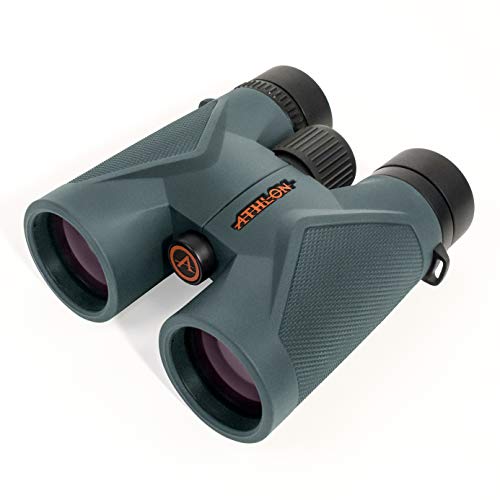
Color-Focused Value Pick – Athlon Midas UHD 8×42
The Athlon Optics Midas UHD 8×42 is a strong contender among binoculars for wildlife viewing for shoppers who want natural color and a broad field of view. ED glass helps reduce chromatic fringe, while dielectric prism coating and fully multi-coated lenses support bright, clear images.
Best For: Birders and wildlife viewers who value color accuracy, a wide view, and comfortable eye relief.
Pros:
- ED glass is designed to reduce chromatic fringe for sharper-looking images.
- 8.1-degree field of view makes scanning and following movement easier.
- 17.2mm eye relief can be useful for eyeglass wearers.
- Argon purging supports waterproofing and thermal stability.
Cons:
- At 1.6 pounds, it is not the lightest 8×42 option.
- The supplied notes identify the focus as close but do not specify a close-focus distance.
The Midas UHD is a sensible choice when image color and a broad viewing angle rank above maximum magnification. Its tripod mount, waterproof and fogproof design, and transferable lifetime warranty add flexibility for outdoor use.
High-Magnification Field Pick – Vortex Triumph HD 12×50
For wildlife viewing where extra reach and strong light transmission matter, the Vortex Triumph HD 12×50 pairs 12x magnification with large 50mm objective lenses. Its HD optical system, fully multi-coated lenses, and rugged weatherproof construction make it a capable choice for hunting, hiking, and extended outdoor observation.
Best For: Wildlife watchers who want high magnification, bright views, and a full-size binocular that can be tripod mounted.
Pros:
- HD optics and fully multi-coated lenses support sharp, color-accurate images with reduced chromatic aberration.
- Waterproof, fogproof, and shock-resistant construction is suited to changing outdoor conditions.
- Includes an adjustable GlassPak harness and offers tripod compatibility for steadier viewing.
- Backed by Vortex’s transferable unlimited, unconditional lifetime VIP Warranty.
Cons:
- At 1.6 pounds, this full-size model is heavier than more compact wildlife-viewing options.
- The 12x magnification can benefit from tripod support during prolonged observation.
The Triumph HD is a strong fit when image quality, reach, and durability take priority over minimum carry weight. Its included harness helps offset the bulk, while the tripod-ready design adds flexibility for distant or stationary subjects.
Weather-Ready Everyday Choice – Bushnell H2O 10×42
The Bushnell H2O is a practical option for binoculars for wildlife viewing in wet or unpredictable conditions. Its 10×42 configuration balances useful magnification with portability, while fully multi-coated optics, BAK-4 prisms, and an IPX7 waterproof rating support clear viewing on hikes, near water, and during changing weather.
Best For: Birdwatchers and outdoor users who need dependable waterproofing, comfortable handling, and all-day portability.
Pros:
- IPX7-rated waterproof construction can withstand submersion for up to 30 minutes.
- Nitrogen purging helps prevent internal fogging in changing conditions.
- Fully multi-coated optics and BAK-4 prisms support bright, sharp, high-contrast images.
- Soft-touch rubber armor and textured grip runners improve handling and drop protection.
Cons:
- The listed close-focus distance is 12 feet, which may be less suited to nearby subjects.
- Its 10x magnification offers less reach than the 12x models in this roundup.
Choose the H2O when weather resistance and straightforward field use are more important than maximum magnification. The compact aluminum chassis and secure grip make it a sensible companion for birding, camping, boating, and general wildlife outings.
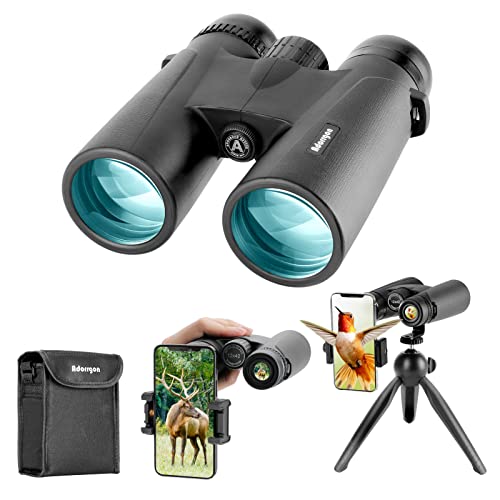
Feature-Packed Value Option – Adorrgon 12×42 Binoculars
For shoppers seeking binoculars for wildlife viewing with useful accessories, the Adorrgon 12×42 combines high magnification with a stated 367-foot field of view at 1,000 yards. Fully multi-coated optics, BAK4 prisms, waterproof construction, and the included smartphone adapter and tripod make it versatile for observing and recording distant subjects.
Best For: Wildlife viewers, travelers, and birdwatchers who want a lightweight setup for viewing, phone photography, and hands-free use.
Pros:
- 12x magnification and a wide field of view help bring distant subjects closer while making them easier to locate.
- BAK4 prisms and fully multi-coated lenses support bright, sharp, natural-looking views.
- Includes a universal smartphone adapter and compact rotatable tripod for recording and steadier viewing.
- Lightweight, waterproof, and rubber armored for portable outdoor use.
Cons:
- The 10mm eye relief may be less comfortable for some users during extended viewing.
- With a 3.5mm exit pupil, it may provide less low-light brightness than the 50mm-objective Vortex.
- Included accessories add versatility but may be less robust than dedicated camera or full-size tripod equipment.
The Adorrgon stands out as an accessible, versatile package rather than a specialist optic. It is particularly appealing if you want to share wildlife sightings through your phone, while its compact 1.1-pound design keeps it easy to carry on travel and hikes.
Long-Range Detail Pick – 20×50 High-Powered Binoculars
For shoppers comparing binoculars for wildlife viewing, this 20×50 model emphasizes high magnification and a large objective lens. Its 20x view, BAK4 Porro prism, multilayer-coated lenses, and low-light technology are suited to observing distant subjects, though the high magnification may be easier to use from a steady position.
Best For: Distant wildlife, bird watching, hunting, and low-light outdoor observation.
Pros:
- 20x magnification helps reveal detail at long distances.
- 50mm objective lens and coated optics support brighter, clearer views.
- Water-resistant rubberized construction provides a secure, impact-resistant grip.
- 26mm eyepiece and center focus are designed for comfortable viewing.
Cons:
- At 0.89 kg, it is heavier than lightweight compact options.
- The 2.5mm exit pupil may provide less brightness than lower-magnification models in dim conditions.
- It is water resistant for everyday use but should not be immersed.
This is a strong choice when reach matters most. For tracking moving wildlife by hand, shoppers may prefer a lower-magnification model with a wider field of view.
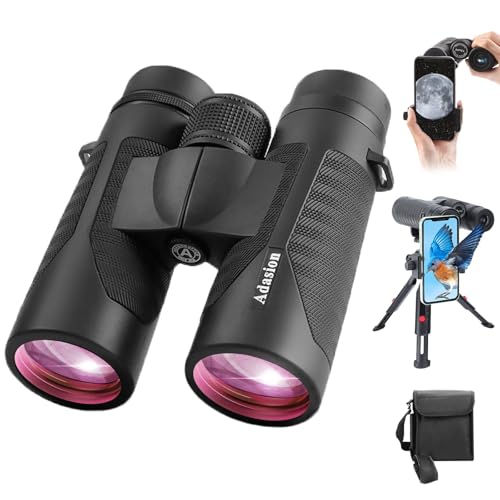
Most Versatile Kit – Adasion 12×42 Binoculars
These Adasion binoculars are a practical all-around option for binoculars for wildlife viewing, combining 12x magnification with a relatively light 1.25-pound body. The included phone adapter and tripod make it easier to steady the view or capture photos during birding, travel, and outdoor excursions.
Best For: Bird watchers and travelers who want a lightweight binocular kit with phone-recording accessories.
Pros:
- 12x magnification and a 367-yard field of view balance reach and scanning ability.
- Fully multi-coated optics and BAK4 prisms are designed for bright, vivid images.
- Includes a universal phone adapter and 2.2-inch tripod.
- IPX7 waterproof, fog-proof construction and twist-up eyecups support outdoor use.
Cons:
- The 13.6mm minimum eye relief may be less accommodating for some eyeglass wearers.
- The included compact tripod may be better suited to light phone or viewing use than heavy-duty support.
With useful accessories, weather protection, and a manageable weight, this model is the most flexible choice of the three for general wildlife trips and casual wildlife photography.
Low-Light Wildlife Pick – 15×52 HD Binoculars
For wildlife viewing around dawn, dusk, or under dense tree cover, this 15×52 model pairs substantial magnification with a large objective lens. Fully multi-coated optics, BAK4 roof prisms, and an upgraded phone adapter make it appealing to users who want detailed views and the option to record them.
Best For: Wildlife observation in overcast conditions, tree cover, daybreak, and twilight.
Pros:
- 15x magnification provides more reach than typical 10x or 12x binoculars.
- 52mm objective lens is designed to support low-light viewing.
- Fully multi-coated lenses and BAK4 roof prisms aim to preserve contrast and color fidelity.
- Upgraded universal phone adapter uses rubber padding and screw locks for a secure fit.
Cons:
- Higher magnification can make hand-held viewing more sensitive to movement.
- The larger 52mm objective lens may be less compact than a 42mm model.
- The supplied notes do not specify a tripod or waterproof rating.
This model suits patient observers who prioritize reach and low-light performance. If your wildlife viewing involves quickly following moving animals, a lower-power, wider-field design may be easier to handle.
How We Picked the Best Binoculars for Wildlife Viewing
We focused on the specifications that matter most outdoors: useful magnification, objective-lens size, optical clarity, weather resistance, focusing performance, ergonomics, and overall versatility. We included established models from Vortex, Celestron, Athlon, and Bushnell, along with feature-rich high-power options that appeal to casual users and content creators.
Because wildlife viewing conditions vary, the selection covers both steady all-purpose binoculars and higher-magnification designs. Features such as waterproof construction, ED glass, included adapters, and tripod compatibility were considered where they meaningfully improve field use.
Quick Comparison
| Type | Best For | Main Advantage | Potential Trade-Off |
|---|---|---|---|
| 8×42 | Birding and general nature observation | Wide, steady views and good brightness | Less reach at long distances |
| 10×42 | All-around wildlife viewing | Strong balance of reach and portability | More sensitive to hand shake |
| 12×50 or 15×52 | Distant animals and open terrain | Higher detail at distance | Narrower, less stable handheld views |
| 20×50 | Maximum reach on a budget | Very high magnification | Usually benefits from tripod support |
Key Buying Factors for Binoculars for Wildlife Viewing
Magnification and Objective Lens
Eight-power binoculars are generally easiest to hold steady and offer a generous field of view, making them excellent for tracking moving birds and animals in wooded areas. Ten-power models provide more reach without becoming excessively difficult to use. Twelve-power and higher options can reveal more distant detail in open landscapes, but hand shake becomes more noticeable.
The objective number indicates the front-lens diameter in millimeters. Larger lenses can gather more light, but they also add weight. A 42mm objective is a practical all-purpose choice; 50mm or larger lenses are more useful in low light when portability is less important.
Optical Quality and Low-Light Performance
Look for fully multi-coated optics, good edge-to-edge sharpness, and a bright image. ED glass can reduce color fringing and improve detail, particularly in high-contrast scenes. A larger exit pupil may make dawn and dusk viewing more comfortable, although no binocular can replace adequate ambient light.
Weather Protection, Focus, and Comfort
Waterproof and fogproof construction is valuable near wetlands, on rainy hikes, or during rapid temperature changes. Check that the center focus wheel turns smoothly and that the minimum focus distance suits close birding. Twist-up eyecups help users position their eyes correctly, while a rubberized exterior improves grip and durability.
Stability and Accessories
Higher magnification is easier to use with a tripod or harness. Phone adapters are convenient for recording occasional observations, but they can add setup time and may not align perfectly with every phone or eyepiece. Treat them as useful extras rather than a substitute for optical performance.
Who Should Buy Which Binoculars for Wildlife Viewing?
Choose an 8×42 model if you are new to wildlife watching, spend time in forests, or prioritize a wide and stable view. Choose 10×42 binoculars for the best general-purpose balance across birding, hiking, and open-country observation.
Choose 12×50 or 15×52 binoculars if you regularly watch wildlife across fields, shorelines, or mountain valleys and are comfortable managing extra weight and shake. Choose a 20×50 option when maximum magnification is the priority and you can use a tripod or another stable support.
Finally, prioritize waterproof construction for unpredictable weather, ED glass when fine detail and color fidelity matter, and a phone adapter only if documenting sightings is an important part of your outing.