The best sleeping bags for safe rooms provide dependable warmth, compact storage, and easy cleanup when you need extra bedding during an emergency. This roundup compares 10 options suited to different temperatures, users, and storage needs.
Because safe-room conditions can vary, focus on insulation, packed size, moisture resistance, and the number of people you may need to accommodate—not just the advertised temperature rating.
Best 10 Sleeping Bags for Safe Rooms Picks for 2026
Versatile Value Pick
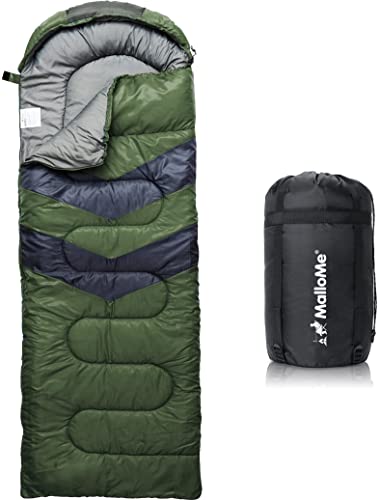
- 50°F–80°F comfort range
- Waterproof shell with synthetic fill
- Compression sack and machine washable
Best For: Three-season household safe rooms and family use
Cold-Weather Classic
Coleman Brazos 20°F Sleeping Bag

- Designed for temperatures as low as 20°F
- Draft tube helps reduce heat loss
- Machine washable with included stuff sack
Best For: Cool-weather safe rooms and stored emergency bedding
Big-and-Tall Cold-Weather Pick
HiZYNICE XXL Cold-Weather Sleeping Bag

- 30°F comfort rating with 0°F extreme rating
- 90-by-39-inch oversized design
- Flannel lining and water-resistant shell
Best For: Cold safe rooms and big-and-tall sleepers
Flexible Indoor Backup
Compact Lightweight Sleeping Bag

- Compression sack supports compact storage
- Draft collar and adjustable hood area
- Suitable for mild three-season conditions
Best For: Safe rooms, guest bedding, and vehicle emergency kits
Simple Household Reserve
Amazon Basics 3-Season Sleeping Bag

- Integrated hood for added comfort
- Unzips into a blanket
- Includes compression carry sack
Best For: Indoor safe rooms and household backup bedding
Versatile 3-Season Pick
Sportneer 3-Season Sleeping Bag

- 50–80°F comfort range
- Hood and two-way zipper
- 3.3-pound carry-bag design
Best For: General safe-room and camping storage
Easy-Care Comfort
PTEROMY Machine-Washable Sleeping Bag

- Machine washable
- Water-resistant and windproof
- Compression bag included
Best For: Low-maintenance emergency storage
Versatile Value Pick – MalloMe 3-Season Sleeping Bag
For households preparing sleeping bags for safe rooms, the MalloMe offers a practical balance of portability, easy care, and mild-to-moderate temperature coverage. Its waterproof outer shell, synthetic fill, and included compression sack make it convenient to store for occasional emergency use.
Best For: Spring, summer, and fall safe rooms, especially where compact storage and use by adults or children matter.
Pros:
- Rated for approximately 50°F to 80°F comfort and suitable for three-season use.
- Waterproof HEX-TECH outer shell and synthetic insulation help provide basic moisture protection and warmth.
- Compression sack, lightweight design, and machine-washable construction support easy storage and maintenance.
- Fits an adult up to about 6 feet and includes a hood drawstring and snag-resistant zipper design.
Cons:
- Its 50°F comfort rating makes it less suitable for very cold safe rooms.
- At around 3 pounds, it is portable but not the lightest emergency bedding option.
This is a sensible general-purpose choice when your safe-room plan focuses on three-season conditions, flexible household use, and straightforward cleanup rather than severe cold.
Cold-Weather Classic – Coleman Brazos 20°F Sleeping Bag
For sleeping bags for safe rooms where lower temperatures are a concern, the Coleman Brazos provides a warmer-rated option with features designed to limit heat loss. Its draft tube, cotton insulation, and included stuff sack make it suitable for organized emergency storage.
Best For: Cool-weather safe rooms needing a compact adult sleeping bag with a low temperature rating.
Pros:
- Designed to keep users warm in temperatures as low as 20°F.
- Thermolock draft tube helps reduce heat escaping through the zipper.
- Fiberlock construction helps keep insulation from shifting over time.
- Machine washable, includes a stuff sack, and can zip to a second bag for more room.
Cons:
- Fits campers only up to about 5 feet 11 inches.
- Weighs approximately 5.3 pounds, making it less convenient for frequent carrying.
The Brazos is a strong practical pick when warmth is more important than minimum weight. Its 20°F rating and heat-retention construction give it an advantage for colder emergency conditions.
Compact Household Option – Lightweight 3-Season Sleeping Bag
This lightweight model is a flexible choice for sleeping bags for safe rooms because it can serve adults, teens, guests, and children during a range of indoor or outdoor situations. Its water-resistant shell, hood, ventilation zipper, and compact compression sack support practical emergency storage.
Best For: Three-season safe rooms, guest supplies, and households that want one adaptable bag for multiple uses.
Pros:
- Provides approximately 50°F to 80°F comfort coverage, with a stated 41°F limit rating.
- Water-resistant polyester shell and machine-washable construction simplify storage and cleanup.
- Adjustable hood helps retain warmth, while the foot zipper allows ventilation.
- Measures 33 by 86.6 inches, weighs about 3 pounds, and packs into an included compression sack.
Cons:
- It is intended for three-season use and is not presented as a severe-cold sleeping bag.
- The stated maximum height recommendation is about 5 feet, which may limit adult fit.
This bag stands out for versatility and storage convenience. It is a useful option for moderate conditions, especially when the same emergency bedding may also be used for visitors, sleepovers, or vehicle kits.
Big-and-Tall Cold-Weather Pick – HiZYNICE XXL Cold-Weather Sleeping Bag
For larger adults or colder safe rooms, the HiZYNICE XXL is one of the more substantial sleeping bags for safe rooms in this selection. Its oversized dimensions, flannel lining, water-resistant shell, and cold-weather ratings prioritize warmth and comfort over low weight.
Best For: Big-and-tall sleepers and cold-weather safe rooms where extra room and insulation are priorities.
Pros:
- Oversized 90-by-39-inch design fits users up to about 6 feet 7 inches.
- Rated for 30°F comfort, with a 15°F limit rating and 0°F extreme rating.
- Soft 100% cotton flannel lining and a draft tube support a warmer, more comfortable sleep setup.
- Two-way zipper, blanket conversion, machine washing, and included compression sack add flexibility.
Cons:
- At about 7 pounds, it is considerably heavier than the lightweight alternatives.
- Its larger size requires more storage space and may be excessive for smaller sleepers.
This is the strongest comfort-oriented choice for cold conditions and larger users. Choose it when warmth and generous interior space matter more than portability or compact storage.
Flexible Indoor Backup – Compact Lightweight Sleeping Bag
For shoppers comparing sleeping bags for safe rooms, this lightweight rectangular option offers a practical balance of warmth, portability, and indoor versatility. Its compression sack, draft collar, hood drawstrings, and wipe-clean polyester shell make it convenient to store for unexpected overnight needs.
Best For: Safe rooms, guest bedding, vehicle emergency kits, sleepovers, and mild three-season use.
Pros:
- Includes a compression sack for compact storage and carrying.
- Draft collar and adjustable hood area help retain warmth around the neck and head.
- Two-way zipper allows separate foot ventilation and helps reduce snagging with its zipper guard.
- Machine-washable polyester design is practical for repeated use.
Cons:
- Its recommended limit temperature is 40°F, so it is not intended for severe cold.
- Fits users up to about 6 feet 1 inch, which may be limiting for taller adults.
This is a useful all-purpose backup sleeping bag when storage space matters and conditions are mild to cool. For a safe room, pair it with additional blankets if temperatures may fall below its stated range.
Simple Household Reserve – Amazon Basics 3-Season Sleeping Bag
For sleeping bags for safe rooms, this Amazon Basics model is a straightforward household reserve for adults. It includes synthetic fill, an integrated hood, a compression carry sack, and a machine-washable polyester construction suited to occasional emergency or guest use.
Best For: Indoor safe rooms, household backup bedding, guests, and camping in temperatures around 50°F and above.
Pros:
- Integrated hood adds warmth and comfort in milder conditions.
- Compression sack makes storage more convenient.
- Fully unzips to function as a blanket.
- Machine-washable recycled polyester construction is easy to maintain.
Cons:
- Designed for three-season use and temperatures of 50°F and above, limiting cold-weather protection.
- Adult one-person design may not suit families or users wanting extra room.
This is a sensible low-fuss choice for a safe-room supply closet when the priority is easy storage and flexible indoor use rather than deep-cold insulation. Its blanket configuration adds usefulness for guests or layered bedding.
Cold-Weather Comfort – REDCAMP Cotton Flannel Sleeping Bag
Among sleeping bags for safe rooms, this REDCAMP envelope-style bag stands out for its soft flannel lining and available heavier filling options. The waterproof polyester shell, cotton fiber fill, compressed sack, and temperature ranges make it a stronger option when a stored backup bag may face cooler conditions.
Best For: Cooler safe rooms, adults seeking a softer lining, and backup bedding where warmth and roominess matter.
Pros:
- Soft flannel lining and rebounded hollow cotton fiber add comfort and warmth.
- Available filling options cover conditions from mild weather down to a stated 32°F range for the 4-pound version.
- Waterproof 210T polyester ripstop shell is designed for durability.
- Two-way zipper can connect compatible sleeping bags, and a compressed sack is included.
Cons:
- At up to 4 pounds, heavier versions are less convenient to move than lightweight bags.
- The listed 75-inch length may be restrictive for adults taller than about 6 feet.
- Temperature performance depends on selecting the appropriate filling weight.
This is the most warmth-oriented choice in the group, especially in the thicker filling configuration. It makes sense for a cooler safe room, but buyers should select the fill level carefully and plan for its larger packed weight.
Versatile 3-Season Pick – Sportneer 3-Season Sleeping Bag
For anyone assembling sleeping bags for safe rooms, the Sportneer offers a practical balance of coverage, portability, and adjustable ventilation. Its rectangular 87-by-31.5-inch design suits users up to 7 feet, while the hood and two-way zipper add flexibility for changing conditions.
Best For: Safe-room storage, camping, and emergency use across spring, summer, and fall.
Pros:
- Comfort temperature range listed at 50–80°F.
- Adjustable hood, two-way zipper, and bottom zip provide useful ventilation and coverage options.
- Includes a carry bag and weighs 3.3 pounds for easier storage and transport.
- Polyester outer shell, pongee lining, and polyester filling are designed for regular use.
Cons:
- The listed comfort range is better suited to moderate conditions than severe cold.
- At 3.3 pounds, it is not the lightest option for compact emergency kits.
Choose this model when you want a full-size sleeping bag with a hood and adjustable foot ventilation. Its broad seasonal range and included carry bag make it a sensible general-purpose option for a safe room.
Easy-Care Comfort – PTEROMY Machine-Washable Sleeping Bag
The PTEROMY is a convenient choice for sleeping bags for safe rooms when simple maintenance and compact storage matter. Its water-resistant, windproof construction, machine-washable fill, and compression bag make it practical for occasional emergency use or regular travel.
Best For: Safe rooms, vehicle emergency supplies, offices, and users who prioritize washable gear.
Pros:
- Machine-washable construction is designed to retain thermal efficiency without clumping.
- Water-resistant and windproof design adds protection in damp or drafty conditions.
- Long 87-inch length accommodates adults up to 6–7 feet tall.
- Includes a compression bag and weighs about 3 pounds.
Cons:
- The listed comfort range of 50–80°F is intended primarily for spring, summer, and fall.
- Although described as a winter model in the specifications, its stated comfort range is not aimed at extreme cold.
This is a strong practical pick for a safe room where gear may need occasional cleaning or relocation. The washable construction and compression storage are especially useful for preparedness supplies that may sit unused between emergencies.
Budget-Friendly Compact Option – Lightweight Waterproof Sleeping Bag
This compact sleeping bag is a straightforward option for sleeping bags for safe rooms, especially when you need affordable backup bedding for adults or children. The waterproof, breathable polyester shell, hood drawstring, and compressed packing design provide useful features without an elaborate setup.
Best For: Budget-conscious safe-room kits, family emergency supplies, and occasional camping.
Pros:
- Waterproof and breathable outer fabric helps guard against dampness.
- Compact compressed size is listed at approximately 7.9–14.2 inches.
- Hood drawstring and foot zipper support warmth and ventilation adjustments.
- Designed for three-season use with a 50–68°F temperature rating.
Cons:
- Its 86.6-by-31.5-inch size is recommended for users up to about 5 feet 11 inches.
- The 50–68°F design range is narrower than some competing options in this roundup.
- At 3.3 pounds, it is moderately heavy for a compact emergency bag.
Consider this model when price, basic weather resistance, and compressed storage are more important than maximum cold-weather performance. It works well as an extra sleeping layer for a household safe-room kit.
How We Picked the Best Sleeping Bags for Safe Rooms
We focused on practical emergency-preparedness features rather than camping style alone. The selected bags represent a range of warmth levels, sizes, materials, and packed dimensions, including lightweight models for compact storage and roomier options for adults or colder conditions.
We also considered features that matter when bedding may be stored for long periods: compression or storage sacks, water-resistant shells, washable fabrics, snag-resistant zippers, and designs that work for both adults and children. Product temperature claims should be treated as general guidance, since comfort depends on clothing, humidity, drafts, and personal tolerance.
Quick Comparison
- Best for general preparedness: A three-season bag offers the most versatile balance of warmth, size, and cost.
- Best for colder rooms: Choose a generously insulated bag with a lower comfort rating and enough room for layered clothing.
- Best for children: Look for a manageable length, lightweight construction, and a zipper that is easy to operate.
- Best for limited storage: Prioritize a compact packed size and a dependable compression sack.
- Best for easy maintenance: Machine-washable materials and durable synthetic insulation simplify cleanup.
Key Buying Factors for Sleeping Bags for Safe Rooms
Temperature Rating
Choose based on the coldest conditions your safe room may realistically reach. A bag marketed for cool weather may be inadequate in an unheated basement during a winter outage. For uncertain conditions, select additional warmth rather than relying on the lowest advertised limit.
Insulation and Shell Materials
Synthetic insulation is generally practical for emergency storage because it dries faster and remains useful in moderately damp conditions. A water-resistant outer shell helps protect against condensation or minor spills, while cotton or flannel linings can feel warmer and softer but may add weight and dry more slowly.
Size, Shape, and Packed Storage
Rectangular bags provide more space for changing position and may suit safe-room use better than narrow backpacking designs. Check both the usable dimensions and packed size. Store each bag in a labeled, dry container where it can be reached quickly.
Durability and Maintenance
Inspect zipper quality, stitching, lining, and included storage equipment. Wash and dry the bag according to its care instructions, and avoid keeping it compressed indefinitely if the manufacturer recommends loose storage.
Who Should Buy Which Sleeping Bags for Safe Rooms?
Preparedness-minded households should choose versatile three-season bags that cover ordinary cool conditions and pack reasonably well. Cold-climate households should favor heavier insulation, larger dimensions, and a lower comfort rating. Families with children benefit from lighter bags that are easy to open and carry. Apartment or small-home residents should prioritize compact models that fit in an emergency bin. If several people may use the safe room, buy a mix of adult and youth sizes rather than expecting one oversized style to suit everyone.