Car camping is far more enjoyable when your sleep setup feels closer to a real bed than a thin ground mat. The right sleeping pad can cushion uneven vehicle floors, limit cold transfer, and make overnight trips more comfortable.
These 10 options include memory foam, self-inflating, and extra-thick double designs for solo campers, couples, and families. Use the guide below to match insulation, size, portability, and inflation style to your vehicle and travel plans.
Best 10 Sleeping Pads for Car Camping Picks for 2026
Memory Foam Comfort Pick
Portable Roll-Up Camping Mattress

- 3-inch memory foam for cushioned support
- Waterproof, non-slip bottom
- Rolls up with straps and storage bag
Best For: Solo car campers who prefer foam over air
Two-Person Plush Pick
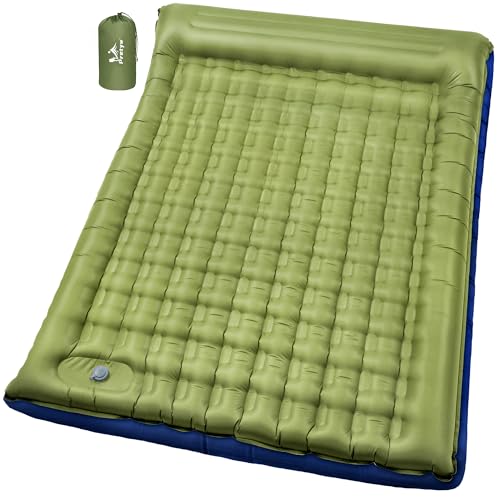
- 78-by-54-inch two-person surface
- 5.5-inch thickness for plush cushioning
- Built-in pillow and foot pump
Best For: Couples seeking a thick, spacious car-camping pad
Washable Foam Pick
HomeMate Roll-Up Car Sleeping Pad

- Memory foam with high-density support foam
- Removable, washable cover
- Velcro connectors join multiple pads
Best For: Frequent campers who value easy cleaning
Lightweight Double Pick
4-Inch Double Camping Sleeping Pad

- 78-by-54-inch two-person design
- Only 3 pounds with carry bag
- Built-in pillow and foot pump
Best For: Couples prioritizing lower carry weight
Plush Foam Pick
Kingfun 3-Inch Memory Foam Camping Mattress
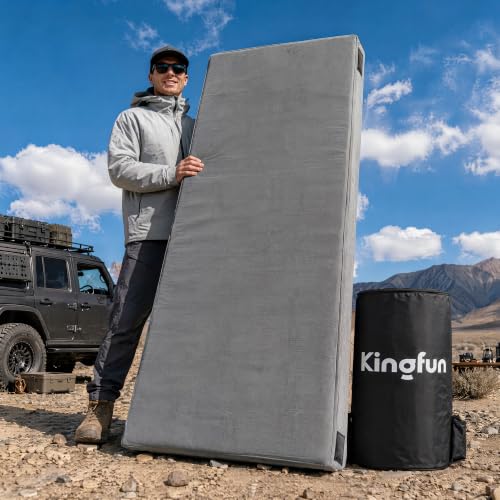
- Two-layer foam provides balanced comfort and support
- Water-resistant cover and anti-slip base
- Roll-up design includes a travel bag
Best For: Car campers who prefer a stable foam mattress
Fast-Setup Air Pick
FUN PAC Inflatable Pad with Built-In Pillow

- Built-in pump inflates in about 30–60 seconds
- Integrated pillow saves packing space
- Connects to a second pad for a wider bed
Best For: Campers seeking compact storage and quick setup
Hybrid Comfort Pick
OGERY 3-Inch Self-Inflating Foam Pad

- Foam-and-air design offers stable, less-bouncy support
- Built-in foot pump adjusts firmness
- Non-slip base and insulation suit car camping
Best For: Car campers wanting quiet, adjustable hybrid comfort
Maximum Cushion
Ultra-Thick Memory Foam Sleeping Pad

- 3.1-inch foam-and-air construction
- 9.5 R-value insulation
- Built-in pillow and 800-pound capacity
Best For: Comfort-focused car camping and four-season use
Powered Convenience
OGERY Memory Foam Sleeping Pad

- Built-in electric pump for inflation and deflation
- 3.15-inch adjustable memory foam support
- Integrated pillow and quiet sleeping surface
Best For: Easy-setup car camping, RV travel, and road trips
Memory Foam Comfort Pick – Portable Roll-Up Camping Mattress
For car campers who prefer a bed-like surface over an inflatable pad, this 3-inch memory foam mattress offers cushioned support in a portable roll-up design. Its waterproof, non-slip bottom and included travel bag make it practical for vehicle sleeping and tent use.
Best For: Car campers wanting stable, foam-based comfort for one sleeper.
Pros:
- Memory foam adapts to body shape and provides cushioning.
- Fiberglass-free, OEKO-TEX certified materials add a safety-oriented design feature.
- Waterproof, non-slip bottom helps on damp or uneven surfaces.
- Roll-up design, straps, and storage bag simplify transport.
Cons:
- At 3 inches thick, it may provide less cushioning than a thick air mattress.
- Foam requires approximately 24–72 hours to fully rebound after vacuum packaging.
- The listed 72-by-24-inch size is relatively narrow for adults.
This is a sensible choice when comfort, simplicity, and a stable sleeping surface matter more than compact packed size. Check the available dimensions carefully before using it in your vehicle.
Two-Person Plush Pick – 5.5-Inch Double Camping Pad
This double camping pad is designed for car campers who want generous space and a plush sleeping feel. Measuring 78 by 54 inches and 5.5 inches thick, it includes a built-in pillow and foot pump for convenient setup.
Best For: Couples or two-person car-camping setups that prioritize thickness and room.
Pros:
- 5.5-inch thickness provides substantial cushioning and ground clearance.
- Full-size surface accommodates two adults.
- Built-in pillow and foot pump reduce the need for extra gear.
- 40D nylon with multi-layer TPU construction is waterproof and designed for durability.
Cons:
- At 4.5 pounds, it is heavier than the other double pad listed here.
- The two-person size may be difficult to fit in smaller vehicles or tents.
- It requires foot-pump inflation before use.
Among these sleeping pads for car camping, this model stands out for maximum thickness and a two-person layout. It is a strong option for spacious vehicle interiors, provided its packed size and weight suit your setup.
Washable Foam Pick – HomeMate Roll-Up Car Sleeping Pad
The HomeMate camping mattress combines memory foam with high-density support foam for a stable, bed-like surface in a car, SUV, van, truck, or tent. Its removable washable cover, waterproof base, and roll-up storage design make it practical for repeated trips.
Best For: Campers who want a reusable foam pad with an easy-clean cover.
Pros:
- Memory foam and support foam provide cushioning and shock absorption.
- Removable, washable cover helps simplify cleaning.
- Waterproof, anti-slip design suits damp or uneven ground.
- Velcro connectors allow multiple pads to be joined.
Cons:
- The 3-inch profile may feel less plush than a thicker inflatable pad.
- At 7.8 pounds, it is relatively heavy for a portable mattress.
- It needs about 72 hours to expand fully after unpacking.
This model favors everyday practicality over ultralight portability. The washable cover and connector system are particularly useful for frequent car trips, shared sleeping spaces, or larger group arrangements.
Lightweight Double Pick – 4-Inch Double Camping Sleeping Pad
This double inflatable pad offers a 78-by-54-inch sleeping surface while weighing only 3 pounds. For car campers who want two-person coverage without carrying a bulky mattress, it combines a built-in pillow, foot pump, and compact storage bag.
Best For: Two-person campers who want a lighter inflatable pad for car travel and other trips.
Pros:
- 4-inch thickness provides elevated support away from the ground.
- Built-in foot pump inflates the pad in approximately 1–3 minutes.
- Built-in pillow adds convenience without separate bedding.
- 40D nylon with TPU coating is water resistant and designed for outdoor use.
Cons:
- It still requires inflation and deflation at each campsite.
- The full two-person dimensions may not suit compact vehicle interiors.
- It is water resistant rather than explicitly described as fully waterproof.
This is a well-balanced option for shoppers comparing sleeping pads for car camping by weight and capacity. Its two-person footprint and 3-pound carry weight make it appealing when portability matters alongside shared sleeping space.
Plush Foam Pick – Kingfun 3-Inch Memory Foam Camping Mattress
For car campers who prioritize a mattress-like feel, this 3-inch Kingfun pad is a comfortable option among sleeping pads for car camping. Its two-layer foam construction combines gel-infused memory foam with high-density support foam, while the waterproof cover helps protect against moisture.
Best For: Car camping, truck beds, guest sleeping arrangements, and campers who prefer stable foam support over an air mattress.
Pros:
- Two-layer design balances memory-foam comfort with high-density support.
- Water-resistant TPU-coated cover and anti-slip bottom suit vehicle and floor use.
- Rolls for storage and includes a water-resistant travel bag with side pockets.
- CertiPUR-US certified foam and removable cover add practical convenience.
Cons:
- At 3 inches thick, it is less compact than an ultralight inflatable pad.
- The foam needs up to 72 hours to fully expand after unpacking.
- The listed 30-inch width may feel narrow for some sleepers.
This is a sensible choice when comfort, stability, and a familiar foam feel matter more than minimizing packed size. Plan ahead for the initial expansion time before taking it on a trip.
Fast-Setup Air Pick – FUN PAC Inflatable Pad with Built-In Pillow
The FUN PAC is a convenient choice for sleeping pads for car camping when quick setup and easy transport are priorities. Its built-in pump inflates the pad in roughly 30 to 60 seconds, and the inflatable design packs down to a compact, water-bottle-like size.
Best For: Campers who want a lightweight, compact pad with an integrated pillow and the option to connect two pads into a wider sleeping surface.
Pros:
- Built-in pump avoids mouth inflation and separate pump equipment.
- Integrated pillow adds head support without carrying an extra pillow.
- 40D nylon and TPU construction is designed to be durable, waterproof, and easy to clean.
- Side buttons allow two pads to connect into a twin bed.
Cons:
- Air-filled construction may feel less stable than a foam mattress.
- The listed dimensions vary between the product details, so confirm the size before ordering.
- Inflatable pads can require more care around rough surfaces than thick foam mats.
For vehicle-based trips that still involve limited storage space or carrying gear from the car to camp, this pad offers a useful balance of comfort features and portability. The built-in pump and pillow are especially convenient for streamlined packing.
Hybrid Comfort Pick – OGERY 3-Inch Self-Inflating Foam Pad
The OGERY combines foam support with adjustable air firmness, making it a versatile contender among sleeping pads for car camping. Its self-inflating design, built-in foot pump, non-slip base, and insulated interior are aimed at comfortable nights in tents, trunks, and other vehicle-based setups.
Best For: Car campers who want quieter, more stable support than an air-only pad and the ability to fine-tune firmness.
Pros:
- 3-inch hybrid foam-and-air construction reduces the bouncy feel of traditional air pads.
- Self-inflates after opening the valve, with a foot pump for firmness adjustments.
- Textured bottom helps reduce sliding on car trunks, tent floors, and cots.
- Foam interior provides insulation and helps minimize movement noise.
Cons:
- At 6 pounds, it is relatively heavy for a sleeping pad.
- Its 3.15-inch thickness may require more storage space than a compact air pad.
- Self-inflation and fine-tuning still require setup time.
This pad is well suited to relaxed car camping, where packed weight matters less than quiet, insulated, and predictable support. It is a strong middle ground between a traditional foam mattress and a fully air-filled pad.
Maximum Cushion – Ultra-Thick Memory Foam Sleeping Pad
For car campers who prioritize a roomy, cushioned sleep surface, this 3.1-inch self-inflating memory foam mattress offers substantial padding and insulation. Its 9.5 R-value, built-in pillow, quiet stretch-knit fabric, and 800-pound stated capacity make it a comfort-focused choice among sleeping pads for car camping.
Best For: Car campers seeking a thick, supportive, four-season sleeping pad with a generous weight capacity.
Pros:
- 3.1-inch foam-and-air construction helps cushion against hard ground.
- 9.5 R-value is designed for insulation across seasons.
- Built-in pillow, quiet 50D knit surface, and included shoulder bag add convenience.
- Self-inflates quickly with a short foot-assisted inflation process.
Cons:
- At 6.59 pounds, it is better suited to car camping than weight-conscious backpacking.
- Its thicker construction may require more storage space than compact pads.
This pad is a strong fit when sleeping comfort and insulation matter more than minimizing packed size. The dual-use valve is intended to simplify deflation and storage, but the mattress remains a substantial piece of camping gear.
Powered Convenience – OGERY Memory Foam Sleeping Pad
The OGERY combines a 3.15-inch memory foam sleeping surface with an integrated electric pump for easier setup and deflation. For sleeping pads for car camping, it is designed around convenience: adjust the firmness, inflate without manual pumping, and use the built-in pillow for a simpler sleep system.
Best For: Car campers, road trippers, and RV travelers who want powered inflation and adjustable cushioning.
Pros:
- Built-in electric pump supports both inflation and deflation.
- Adjustable air pressure lets users tailor the firmness.
- 3.15-inch thickness and integrated pillow provide cushioned support.
- Quiet surface is designed to reduce crinkling and rubbing noise.
Cons:
- Power is required to use the integrated electric pump.
- At 6 pounds, it is intended more for vehicle-based camping than ultralight travel.
- The product is listed as not water resistant.
This is a practical choice for campers who value low-effort setup and powered storage over minimal weight. Its 600-pound stated capacity and plush memory foam construction make it especially suitable for tents, vehicles, and guest use.
Compact Comfort – Foldable Memory Foam Camping Pad
This foldable memory foam pad is a more portable option for campers who still want substantial cushioning. It packs to approximately 12.5 by 8.5 inches and weighs 3.85 pounds, while its 9.5 R-value, quiet fabric, and built-in inflation system make it a versatile choice among sleeping pads for car camping.
Best For: Campers who need a compact pad for car travel, occasional backpacking, RV trips, or guest use.
Pros:
- Folds into a compact 12.5-by-8.5-inch package.
- 3.1-inch memory foam construction is designed to reduce pressure points.
- 9.5 R-value provides strong stated insulation.
- Quiet, skin-friendly 50D stretch-knit fabric has a waterproof TPU coating.
Cons:
- The supplied notes do not specify the fully inflated dimensions.
- Inflation still involves a short foot-pump step after self-expansion.
- Its comfort-oriented foam construction may be bulkier than ultralight air pads.
Choose this model when packed portability is important but you do not want to give up foam cushioning and insulation. Its foldable design and 3.85-pound weight make it easier to transport than many thick traditional camping mattresses.
How We Picked the Best Sleeping Pads for Car Camping
We focused on the features that matter most in a vehicle-based sleep system: usable thickness, insulation, packed size, sleeping surface, inflation method, and durability. The selection includes foam and inflatable designs so you can compare cushioning and convenience rather than choosing from one style only.
We also considered whether each pad suits solo or shared sleeping, how easily it can be transported, and whether details such as built-in pillows, pumps, washable covers, or waterproof surfaces add practical value. Product specifications should always be checked against your vehicle’s interior dimensions before purchase.
Quick Comparison
| Pad type | Best for | Main advantage | Potential trade-off |
|---|---|---|---|
| Memory foam | Maximum cushioning | Bedlike comfort and quiet sleep | Usually bulkier when packed |
| Self-inflating | Balanced comfort and setup | Less manual effort with reliable padding | May still need topping off |
| Inflatable double | Couples or larger vehicles | Wide sleeping area and compact storage | More dependent on pump and air retention |
| Ultralight inflatable | Portable camp setups | Small packed footprint | Often less supportive than thick foam |
Key Buying Factors for Sleeping Pads for Car Camping
Fit and Sleeping Area
Measure the flat portion of your cargo area with the seats folded. A pad that is too wide can buckle against doors or wheel wells, while a short pad may leave your feet unsupported. Double models are useful for couples but can be excessive in a compact vehicle.
Thickness and Support
For uneven floors, look for roughly 3 inches or more of cushioning, especially if you sleep on your side. Thicker pads can improve comfort but usually weigh more and take up additional storage space.
Insulation
Insulation helps prevent heat loss through the vehicle floor. A higher R-value is useful during cool-weather trips, while summer campers may prioritize ventilation and a lighter packed design. Remember that insulation does not replace a warm sleeping bag or blanket.
Inflation and Packability
Built-in or electric pumps simplify setup, but confirm whether the pump requires batteries, USB power, or an outlet. Foam pads avoid puncture concerns but are typically harder to compress. Choose the option you can realistically store and deploy in your vehicle.
Materials and Maintenance
Water-resistant surfaces are easier to clean after spills or condensation. Removable, washable covers are helpful for frequent use. For inflatable pads, inspect valves and seams, and carry a repair kit on longer trips.
Who Should Buy Which Sleeping Pads for Car Camping?
- Solo campers seeking bedlike comfort: Choose a thick memory foam pad with enough width for your sleeping position.
- Couples: A double camping pad can simplify setup, provided it fits the vehicle’s cargo area.
- Frequent road-trippers: A self-inflating model offers a practical balance of comfort, setup speed, and storage.
- Cold-weather campers: Prioritize a clearly stated, higher R-value and pair the pad with an insulated sleeping bag.
- Space-conscious buyers: Pick an inflatable or compact self-inflating design, and verify the packed dimensions before ordering.
- Occasional guests and sleepovers: A portable roll-up foam mattress may be worthwhile because it can work in the car, tent, or home.