Finding the right timing machine can make mechanical watch regulation faster, more repeatable, and easier to verify. The best watch timing machines under $300 provide core measurements such as daily rate, amplitude, beat error, and beat frequency without the cost of professional bench equipment.
This roundup compares 10 affordable timegraphers for watchmakers, hobbyists, repair technicians, and collectors. Use the buying guide below to match measurement features, pickup design, display quality, and watch compatibility to your needs.
Best 10 Watch Timing Machines Under 300 Picks for 2026
Best Value LCD Timegrapher
YaeTek No.1000 Watch Timing Machine
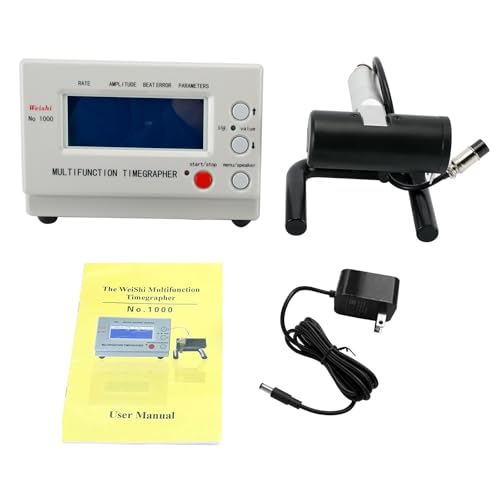
- Measures rate, amplitude, and beat error
- Six positions with 2-60 second sampling
- 110V-220V power and LCD display
Best For: Collectors and beginners testing mechanical watches
Most Precise Diagnostic Tool

- Claims ±0.1 s/d precision with 50-sample averaging
- Displays rate, amplitude, beat error, and lift angle
- Tests six positions with live timing curves
Best For: Watchmakers and advanced mechanical-watch enthusiasts
Best for Coaxial Watches
New Coaxial MTG No.1900 Timegrapher

- Works with mechanical and coaxial watches
- Larger LCD than the No.1000
- 100V-240V power with exchangeable plugs
Best For: Collectors and watchmakers testing coaxial movements
Best Beginner-Friendly Choice

- Measures beat rate, beat error, and amplitude
- Displays readings graphically and numerically
- Includes sensor, US adapter, manual, and cloth
Best For: Beginners learning mechanical-watch timing analysis
Compact Pocket-Watch Tester

- Designed for pocket watches
- Multifunction timegrapher
- Verify model and size before buying
Best For: Compatible pocket-watch testing
Large-Screen Diagnostic Pick

- Live rate and amplitude readings
- Supports coaxial watches
- One-year warranty included
Best For: Collectors and professionals needing detailed diagnostics
Proven Compact Tool

- Tests almost all mechanical watches
- Supports coaxial testing
- Compact corded design
Best For: Collectors and watchmakers wanting a straightforward tester
Best Color-Screen Precision
TICFROG No. 1900 Watch Timegrapher

- High-resolution color display with two trace colors
- Measures rate, amplitude, and beat error
- Supports one to six measuring positions
Best For: Detailed mechanical-watch calibration and troubleshooting
Best for Connected Workflows
Adjustable USB/RS232 Watch Timegrapher

- Supports USB/RS232 computer data transfer
- Adjustable sliding jaws fit varied dial sizes
- Displays multiple timing and waveform readings
Best For: Computer-assisted calibration and flexible watch positioning
Best Straightforward Mechanical Testing

- Large, high-resolution backlit LCD screen
- Shows live rate, amplitude, and beat error
- Includes sensor, adapter, and user manual
Best For: Easy mechanical-watch checks for collectors and hobbyists
Best Value LCD Timegrapher – YaeTek No.1000 Watch Timing Machine
If you are comparing watch timing machines under 300, the YaeTek No.1000 offers the core measurements needed for mechanical-watch testing in a straightforward desktop format. Its LCD reports rate, amplitude, and beat error, while automatic signal adjustment helps simplify setup.
Best For: Mechanical-watch collectors and beginners who want an accessible timing tester with adjustable sampling periods.
Pros:
- Measures rate, amplitude, and beat error automatically.
- Offers six testing positions and sampling periods from 2 to 60 seconds.
- LCD screen provides live readings and moving timing curves.
- Supports 110V-220V power with a US plug.
Cons:
- Designed for mechanical watches rather than quartz movements.
- Listed amplitude level range is 275 to 315, which may be limiting for some testing needs.
With its automatic signal adjustment, multiple positions, and selectable averaging periods, this YaeTek model is a practical entry-level choice for routine mechanical-watch checks.
Most Precise Diagnostic Tool – SWANSOFT No.1000 Timegrapher
Among watch timing machines under 300, the SWANSOFT No.1000 stands out for its stated precision and broader diagnostic readout. It displays rate, amplitude, beat error, lift angle, and timing curves, making it useful when basic accuracy checks are not enough.
Best For: Watchmakers, technicians, and advanced enthusiasts who need detailed mechanical-movement analysis.
Pros:
- Claims ±0.1 seconds per day accuracy with a 50-sample average.
- Measures amplitude, beat error, lift angle, and rate deviation.
- Supports six positions and 2-60 second sampling cycles.
- Includes a 12-month satisfaction guarantee and support.
Cons:
- Only suitable for mechanical movements and does not support quartz watches.
- Its advanced measurement options may be more than beginners need.
The color LCD and live graphs make this a strong option for diagnosing movement behavior, particularly if you value precision and adjustable lift-angle testing.
Best for Coaxial Watches – New Coaxial MTG No.1900 Timegrapher
OTOOLWORLD New Coaxial MTG Watch Tester Timing Multifunction Timegrapher LCD Screen NO.1900
Check Price On AmazonFor shoppers seeking watch timing machines under 300 that can handle coaxial movements, the New Coaxial MTG No.1900 is worth a close look. It has a larger LCD screen than the No.1000 and is described as working particularly well with coaxial watches.
Best For: Professional watchmakers and collectors testing mechanical watches, especially coaxial models.
Pros:
- Designed for almost all mechanical watches and better performance with coaxial watches.
- Uses a larger LCD screen than the No.1000 for easier viewing.
- Supports 100V-240V power.
- Includes exchangeable mini plugs for EU, AU, US, and Asia configurations.
Cons:
- The supplied notes do not specify measurement ranges or sampling options.
- It is corded electric, so it requires access to a suitable power outlet.
The No.1900’s larger display and coaxial-watch compatibility make it a targeted choice for users who want easier viewing and broader international power-plug flexibility.
Best Beginner-Friendly Choice – TICFROG No.1000 Timegrapher
If you want watch timing machines under 300 with the essential readings presented simply, the TICFROG No.1000 is aimed at beginners. It measures beat rate, beat error, and amplitude, then presents the results numerically and graphically for easier interpretation.
Best For: Novice watchmakers and mechanical-watch owners learning to evaluate timekeeping accuracy.
Pros:
- Measures and displays beat rate, beat error, and amplitude.
- Shows results in both graphical and numerical formats.
- Includes a timegrapher sensor, US adapter, manual, and cleaning cloth.
- Offers an 18-month satisfaction guarantee from TICFROG.
Cons:
- Intended for mechanical watches rather than quartz models.
- The supplied notes do not list selectable positions or sampling intervals.
Its essential feature set and included accessories make the TICFROG a sensible starting point for learning how rate, amplitude, and beat error relate to mechanical-watch performance.
Compact Pocket-Watch Tester – Ewatchparts Timegrapher 1000
Ewatchparts Watch Timing Machine Multifunction Timegrapher 1000 Compatible With Pocket Watch
Check Price On AmazonIf you are comparing watch timing machines under 300 for pocket-watch work, this Ewatchparts multifunction timegrapher is designed specifically for pocket watches. Check your watch’s model and measurements carefully before ordering, since compatibility and size are product-specific.
Best For: Hobbyists who need a timing machine for compatible pocket watches.
Pros:
- Designed for pocket-watch compatibility.
- Multifunction timegrapher format.
- Aftermarket product made to original factory specifications.
Cons:
- Compatibility and fit must be verified before purchase.
- The supplied details do not specify display features, power source, or warranty.
This is a focused option rather than a broadly specified tester. Confirm the watch size and model first, especially if you need a precise fit for a particular pocket watch.
Large-Screen Diagnostic Pick – No.1900 Watch Timegrapher
Among watch timing machines under 300, the No.1900 stands out for its larger LCD screen and broad mechanical-watch support. It displays live rate, amplitude, beat error, beat, and lift angle readings, making it useful for setup, checking, and calibration.
Best For: Watch collectors, hobbyists, and professionals who want detailed live readings, including support for coaxial watches.
Pros:
- LCD screen displays rate, amplitude, beat error, beat, and lift angle.
- Works with almost all mechanical watches and coaxial watches.
- Designed for easy use out of the box.
- Includes a one-year warranty and customer service support.
Cons:
- Uses AC power, so it is intended for a corded setup.
- The supplied details do not specify a battery option.
The No.1900 is the strongest all-around choice here when readable diagnostics and coaxial-watch compatibility matter. Its extra display information makes it more versatile than a basic timing tool.
Proven Compact Tool – No.1000 Watch Timegrapher
For shoppers seeking watch timing machines under 300, the No.1000 is a compact, corded tester for almost all mechanical watches. It measures beats per unit time and is positioned for both professional watchmakers and watch collectors.
Best For: Watchmakers and collectors who want a compact mechanical-watch timing tool.
Pros:
- Compatible with almost all mechanical watches.
- Supports coaxial testing.
- Compact modern design measuring about 6.77 by 1.57 by 4.49 inches.
- CE specification listed.
Cons:
- Requires corded electric power with a listed minimum operating voltage of 100 volts.
- The supplied details do not list amplitude, beat-error, or lift-angle readings.
The No.1000 offers a straightforward, compact setup for mechanical-watch testing. Choose it when broad compatibility and small dimensions are more important than a more detailed feature list.
Best Color-Screen Precision – TICFROG No. 1900 Watch Timegrapher
If you’re comparing watch timing machines under 300, the TICFROG No. 1900 stands out for its high-resolution color display and expanded diagnostic information. It measures rate deviation, amplitude, and beat error while showing beat number and lift angle for mechanical and coaxial watches.
Best For: Hobbyists, collectors, and watchmakers who want clearer trace readings for calibration and troubleshooting.
Pros:
- High-resolution color screen displays entrance and exit traces in different colors.
- Measures rate deviation, amplitude, and beat error, with live beat and lift-angle data.
- Supports one to six measuring positions and includes an AC 100V–240V power range.
- Includes a sensor, US adapter, manual, and cleaning cloth.
Cons:
- Designed for mechanical and coaxial watches rather than quartz models.
- The feature set may be more than casual users need for occasional checks.
With its color-coded traces and broad measurement range, this is a practical choice for users who want more detail during watch regulation and fault diagnosis.
Best for Connected Workflows – Adjustable USB/RS232 Watch Timegrapher
Among watch timing machines under 300, this adjustable timegrapher is suited to users who want measurement flexibility and computer-based data handling. It supports daily rate, amplitude-related analysis, beat-error style readings, waveform display, frequency settings, and ascending-angle adjustments.
Best For: Watch enthusiasts and technicians who want adjustable jaws and the option to transfer calibration data to a computer.
Pros:
- Offers multiple analysis functions, including signal value, daily rate, polarisation, oscillation, frequency, and waveform display.
- Supports PC data transfer through USB/RS232 connections.
- Removable sliding jaws adjust to accommodate different dial sizes.
- A red indicator light provides a clear power-status signal.
Cons:
- The supplied notes do not specify a display size or included accessories.
- Computer compatibility and transfer setup may require additional configuration.
This model is a useful fit when adjustable watch positioning and digital data transfer matter as much as basic timing measurements.
Best Straightforward Mechanical Testing – SWANSOFT No. 1900 Timegrapher
For shoppers seeking watch timing machines under 300, the SWANSOFT No. 1900 offers a straightforward mechanical-watch testing setup with a larger, high-resolution backlit LCD screen. It shows rate, amplitude, beat error, beat, and lift angle in real time.
Best For: Watch collectors, hobbyists, and technicians who need an easy-to-read tester for mechanical or automatic movements.
Pros:
- Larger high-resolution LCD screen improves readability during testing.
- Displays live rate, amplitude, beat error, beat, and lift-angle readings.
- Designed for simple operation with a backlit interface.
- Package includes the timegrapher, sensor, US adapter, and professional manual.
Cons:
- Only suitable for mechanical movement watches and does not support quartz watches.
- The supplied notes list a plastic case and plastic strap components.
This is a sensible choice for users who prioritize clear live readings and uncomplicated operation over broader watch-type compatibility.
How We Picked the Best Watch Timing Machines Under 300
We focused on affordable timegraphers designed for mechanical and automatic watches, prioritizing the measurements that matter during regulation: daily rate, amplitude, beat error, beat frequency, and lift angle. We also considered multifunction operation, LCD readability, acoustic pickup design, pocket-watch compatibility, and the practical needs of home users and small repair benches.
Models in this price range can share similar specifications, so buyers should confirm the exact included accessories, supported beat rates, power requirements, and software or display functions before ordering. A lower price is useful only if the machine can reliably detect the movements you intend to test.
Quick Comparison
| What to compare | Why it matters |
|---|---|
| Core measurements | Rate, amplitude, beat error, and beat frequency help diagnose and regulate a movement. |
| Pickup and holder | A stable acoustic pickup improves signal quality and keeps readings consistent. |
| Display and controls | A clear LCD and simple controls make repeated checks quicker. |
| Compatibility | Some units are better suited to wristwatches, while others may support pocket watches. |
| Configuration | Adjustable beat rate and lift angle settings help produce more meaningful readings. |
Key Buying Factors for Watch Timing Machines Under 300
Measurement Range and Accuracy
Look for a machine that reports daily rate, amplitude, and beat error clearly. These readings are more useful than a basic “running fast or slow” indication because they help distinguish regulation issues from broader mechanical problems.
Beat-Rate and Lift-Angle Settings
Mechanical movements use different beat frequencies and lift angles. A unit with adjustable settings is more versatile, particularly if you work on watches from multiple brands or eras. Incorrect settings can make otherwise healthy readings misleading.
Signal Quality and Positioning
Acoustic timegraphers depend on detecting escapement sounds. A secure holder, responsive pickup, and quiet work area can improve stability. Position the watch consistently and allow the display to average readings before making adjustments.
Ease of Use
For occasional hobby work, straightforward controls may be preferable to a feature-heavy interface. If you regulate watches regularly, prioritize quick mode changes, readable numbers, multiple test positions, and a design that is easy to use at the bench.
Who Should Buy Which Watch Timing Machines Under 300?
Choose a basic multifunction timegrapher if you need an affordable way to check rate, amplitude, and beat error during occasional servicing. These models suit collectors and beginning hobbyists.
Choose a model with an LCD and broader configuration options if you work on several mechanical movements or want more control over beat-rate and lift-angle settings. This is the better direction for frequent home regulation.
Choose a pocket-watch-compatible option if your collection includes larger or nonstandard movements. Confirm the holder and pickup arrangement before purchase, since physical positioning affects signal quality.
Whichever model you select, treat the displayed results as a diagnostic aid rather than a substitute for cleaning, lubrication, inspection, or professional service. Consistent positioning and correct settings are essential for useful comparisons.