Finding the right digital watch timing machine depends on whether you need professional mechanical-watch calibration, portable timing checks, or general stopwatch and countdown functions.
This roundup compares 10 selected tools and watches, from multifunction timegraphers and demagnetizers to rugged digital sports watches, so you can match features to your workshop or daily timing needs.
Best 10 Digital Watch Timing Machines Picks for 2026
Mechanical Watch Testing Value
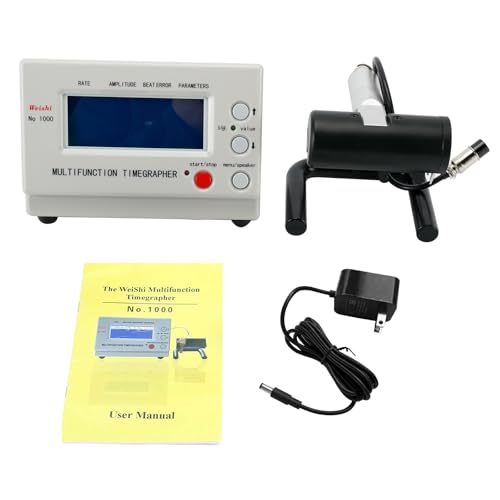
- Measures rate, amplitude, and beat error
- LCD shows live readings and sound visualization
- Six positions and 2–60-second sampling options
Best For: Mechanical watch collectors seeking an accessible timing tool
Printed Event Timing
Seiko 300-Lap Memory Stopwatch

- Stores data for multiple events
- Records split and lap times
- Prints 13 digits per line clearly
Best For: Users needing printed lap and split-time records
Comprehensive Watch Calibration

- Displays five key mechanical-watch measurements
- Supports automatic and manual beat settings
- Includes sensor, US adapter, manual, and cloth
Best For: Watchmakers and technicians testing mechanical movements
Professional Coaxial Testing

- Larger LCD display than the No.1000
- Works with mechanical and coaxial watches
- 100V–240V power with regional plug options
Best For: Watchmakers and collectors testing mechanical watches
On-the-Go Timing

- Stopwatch, countdown, and split timing
- Enlarged backlit digital display
- 50-meter water resistance for active use
Best For: Sports, training, refereeing, and daily timing
Hobbyist Calibration

- Shows rate, amplitude, and beat error
- Supports mechanical and coaxial watches
- Includes one-year warranty support
Best For: Collectors and professionals calibrating mechanical watches
Best Multifunction Pick
Compact Quartz Tester and Demagnetizer

- Tests quartz movements and battery capacity
- Includes pulse testing and adjustable demagnetization
- Battery powered and lightweight
Best For: Multi-purpose watch repair benches
Best Connected Timegrapher
USB-C Mechanical Watch Calibrator
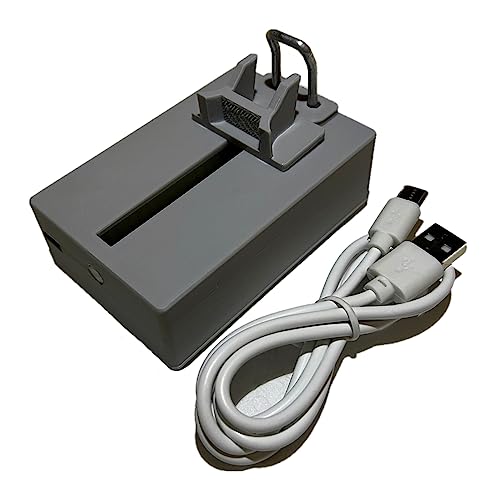
- Measures timing, amplitude, frequency, and waveform
- Works with compatible Windows and Android devices
- Battery-free compact design
Best For: Portable software-assisted mechanical-watch testing
Best Simple Calibration Tool
Mechanical Watch Timegrapher Tester

- Measures core mechanical-watch timing data
- Includes noise and shock-reduction components
- Lightweight hard-plastic housing
Best For: Amateur mechanical-watch calibration
Mechanical Watch Testing Value – YaeTek No.1000 Timegrapher
For shoppers comparing digital watch timing machines, the YaeTek No.1000 provides a straightforward way to evaluate mechanical watches. It automatically calculates rate, amplitude, and beat error, while the LCD displays live readings and a visual representation of the watch’s sound.
Best For: Mechanical watch collectors who want an accessible timing and calibration tool.
Pros:
- Measures rate, amplitude, and beat error automatically.
- LCD screen provides real-time readings and moving visual indicators.
- Offers six adjustable testing positions and selectable sampling periods from 2 to 60 seconds.
- Supports a rate deviation range of ±999 seconds per day with ±1-second-per-day precision.
Cons:
- The supplied notes identify the unit as a 110V–220V model with a US plug.
- The listed amplitude level range is 275 to 315, which may not suit every testing preference.
With automatic signal adjustment and several sampling options, this YaeTek model is a practical choice for routine mechanical-watch checks without an especially complicated workflow.
Printed Event Timing – Seiko 300-Lap Memory Stopwatch
Although it is not a watch-testing instrument, the Seiko 300 Lap Memory Stopwatch is a useful timing option alongside digital watch timing machines when your priority is recording events, laps, and splits. Its integrated printer provides an immediate paper record of results.
Best For: Coaches, officials, and users who need printed lap or split-time records.
Pros:
- Stores results for multiple events.
- Provides memory for up to 300 laps.
- Measures split and lap times.
- Prints 13 digits per line in a large, clear format.
Cons:
- It is a stopwatch and printer system rather than a mechanical-watch timegrapher.
- The supplied details list five settings but do not specify the printer’s paper requirements.
This Seiko is best considered a dedicated event-timing recorder, especially where a physical printout is more useful than watch-rate analysis.
Comprehensive Watch Calibration – No.1000 Digital Timegrapher
Among digital watch timing machines, this No.1000 timegrapher is designed specifically for mechanical-watch performance testing. Its LCD presents rate, amplitude, beat error, beat, and lift angle in real time, giving watchmakers several key measurements in one display.
Best For: Amateur watchmakers, technicians, and manufacturers testing mechanical movements.
Pros:
- Displays rate, amplitude, beat error, beat, and lift angle digitally.
- Supports automatic beat settings from 12,000 to 43,200 and extensive manual settings.
- Includes the timegrapher, sensor, US adapter, English manual, and cleaning cloth.
- Designed as both a testing and calibration instrument for mechanical watches.
Cons:
- It is intended for mechanical watches and is not described as a general-purpose digital watch tester.
- Power is supplied through AC, so it is not a cordless testing solution.
The broad beat-setting support and included sensor make this a well-equipped option for a dedicated watchmaking bench, particularly when movement analysis requires more than basic rate readings.
Everyday Sports Timing – Casio W735H Digital Watch
The Casio W735H is a wearable alternative for everyday timing tasks rather than a bench instrument among digital watch timing machines. It combines a 1/100-second stopwatch, countdown timer, dual time, vibration alert, and strong water resistance in a rugged resin design.
Best For: Athletes, coaches, swimmers, and users who need portable timing features.
Pros:
- 1/100-second stopwatch supports split and first-to-second-place timing.
- Countdown timer covers periods from 1 second to 24 hours and includes auto-repeat.
- Vibration alert and Super Illuminator LED improve usability in quiet or dark settings.
- 100-meter water resistance and an approximate 10-year battery life support everyday sports use.
Cons:
- It does not measure mechanical-watch rate, amplitude, or beat error.
- The 44-millimeter case and 15-millimeter thickness may feel substantial on smaller wrists.
Choose the W735H when you need timing on your wrist rather than watch-movement diagnostics. Its combination of vibration alerts, countdown functions, and water resistance makes it particularly practical for active routines.
Professional Coaxial Testing – No.1900 LCD Timegrapher
OTOOLWORLD New Coaxial MTG Watch Tester Timing Multifunction Timegrapher LCD Screen NO.1900
Check Price On AmazonFor watchmakers comparing digital watch timing machines, the No.1900 offers a larger LCD display and multifunction testing for nearly all mechanical watches, including coaxial models. Its corded design and 100V–240V power support make it suitable for workshop or collection use.
Best For: Professional watchmakers, collectors, and users who need clearer readings when testing mechanical or coaxial watches.
Pros:
- Larger LCD screen than the No.1000 for easier viewing.
- Designed to work with almost all mechanical watches and coaxial watches.
- Multifunction design suited to professional and enthusiast use.
- Includes compatible plug options for several regions with 100V–240V power.
Cons:
- Corded electric operation limits portability.
- May be more equipment than casual users need.
The No.1900 is a practical choice when display size, coaxial-watch compatibility, and broad power support matter more than compact battery operation.
On-the-Go Timing – Beeasy Digital Sports Watch
Although it is a wearable rather than a bench tester, this Beeasy model belongs in a roundup of digital watch timing machines for users who need stopwatch, countdown, and split-timing functions during activity. Its enlarged backlit display and 50-meter water resistance support everyday sports use.
Best For: Runners, swimmers, referees, gym users, and anyone needing portable timing functions on the wrist.
Pros:
- Includes stopwatch, countdown timer, and split-timing functions.
- Enlarged numerals and EL backlight support quick time checks.
- 50-meter water resistance suits rain, sweat, and shallow swimming.
- Offers dual time, alarms, snooze, and 12/24-hour formats.
Cons:
- Not a mechanical-watch calibration or measurement instrument.
- Hot water and steam should be avoided for long-term reliability.
- Its 49mm case may feel large on smaller wrists.
The Beeasy is best viewed as a practical timing watch for active users, not as a replacement for a professional timegrapher used to regulate watch movements.
Hobbyist Calibration – No.1900 Watch Timing Machine
This No.1900 is one of the more focused digital watch timing machines for measuring mechanical-watch performance. Its LCD screen displays rate, amplitude, beat error, beat, and lift angle, while the simple controls are intended for use straight out of the box.
Best For: Watch collectors, hobbyists, and professionals calibrating mechanical hand-wind or coaxial watches.
Pros:
- Displays live rate, amplitude, beat error, beat, and lift angle readings.
- Designed for nearly all mechanical watches, including coaxial watches.
- Larger and more precise than the No.1000 according to the supplied product notes.
- Includes a one-year warranty and customer service support.
Cons:
- Requires AC power rather than battery operation.
- Not water resistant.
- Its specialized purpose may not suit users seeking a wearable digital watch.
With its live performance readings and coaxial-watch support, this No.1900 offers a straightforward route to timing checks for both serious collectors and working professionals.
Best Multifunction Pick – Compact Quartz Tester and Demagnetizer
For shoppers comparing digital watch timing machines, this battery-powered tester stands out as a compact multifunction option. It combines quartz movement testing, battery-capacity checks, pulse testing, and adjustable-speed demagnetization in one portable unit.
Best For: Watchmakers and repair users who want several basic testing and demagnetization functions in a small tool.
Pros:
- Combines quartz, battery, pulse, and demagnetizer functions.
- Adjustable demagnetization speed supports more practical use.
- Compact, lightweight design at about 151 g.
- Pulse testing can check batteries without opening the watch case.
Cons:
- Requires two AA batteries, which are not included.
- Its listed functions are broader than dedicated mechanical-watch timegraphing.
This is a useful choice when versatility matters more than advanced mechanical-watch calibration. Its compact format and multiple testing modes make it a practical bench accessory for routine watch service.
Best Connected Timegrapher – USB-C Mechanical Watch Calibrator
This connected timegrapher is a strong contender among digital watch timing machines for mechanical-watch owners who want computer or mobile analysis. Its vibration sensor and software can measure time difference, polarization, amplitude, frequency, waveform, dashed lines, and rising-angle settings.
Best For: Hobbyists and technicians seeking portable mechanical-watch analysis through Windows computers or supported Android devices.
Pros:
- Supports six-way measurement and multiple timing-analysis readings.
- Type-C connection works with compatible Windows devices and Android phones or tablets.
- Battery-free design simplifies operation.
- Noise-reduction cavity and sensitive vibration pickup support clear signal monitoring.
Cons:
- Suitable only for mechanical watches, not electronic smartwatches.
- Requires a compatible device and software connection for operation.
- The supplied notes do not specify a warranty length beyond a limited warranty listing.
Choose this model if you prefer software-assisted readings and a compact setup instead of a standalone dedicated machine. Its broad measurement list and USB-C connectivity give it flexibility for home or workshop use.
Best Simple Calibration Tool – Mechanical Watch Timegrapher Tester
For buyers seeking digital watch timing machines focused on mechanical-watch calibration, this timegrapher offers a dedicated analysis setup. It is designed to measure day difference, polarization, amplitude, frequency, dotted lines, waveform graphs, and rising-angle settings.
Best For: Amateur watch enthusiasts who want a purpose-built calibration instrument with a rugged plastic housing.
Pros:
- Provides several key mechanical-watch timing measurements.
- Uses ceramic filter capacitors, signal-processing chips, and foam for noise and shock reduction.
- Hard-plastic housing is described as rugged and reliable.
- Compact, lightweight construction weighs about 109 g.
Cons:
- Designed for mechanical-watch testing rather than general-purpose watch diagnostics.
- No warranty is listed in the supplied details.
- The notes do not specify the connection method or included accessories.
This model makes sense for users who want core timegrapher readings without adding unrelated functions. Its measurement range and noise-control design are well suited to learning and routine mechanical-watch adjustment.
How We Picked These Digital Watch Timing Machines
We selected products across the main use cases represented by this category: mechanical watch rate testing, beat-error and amplitude checking, calibration support, quartz and battery-related service, and everyday timing. The list includes dedicated timegraphers, watch repair tools, demagnetizing equipment, and digital watches with stopwatch or countdown functions.
Because specifications and included accessories can vary by seller, confirm the current listing for display type, power source, sensor or microphone setup, timing modes, measurement range, printer compatibility, and warranty before buying. A professional-looking name does not always mean a machine offers laboratory-level accuracy.
Quick Comparison
- Best for mechanical watch diagnostics: Multifunction timegraphers such as the YaeTek, No.1000, and No.1900 models.
- Best for workshop timing records: The Seiko stopwatch system with lap memory and printer support.
- Best for quartz or battery service: A quartz tester with pulse, battery, and demagnetization functions.
- Best for compact repair setups: Desktop timegrapher tools designed for use with a laptop or mobile phone.
- Best for everyday timing: Casio and Beeasy digital watches with stopwatch, countdown, alarm, and water-resistance features.
Key Buying Factors for Digital Watch Timing Machines
Measurement Capabilities
For mechanical watches, look for rate, amplitude, beat error, beat frequency, and multiple lift-angle settings. More measurement options are useful when comparing positions or regulating different movements, but they can add setup complexity.
Sensor and Display Design
Built-in microphones, acoustic sensors, LCD screens, and phone-connected interfaces each suit different workspaces. A clear display is important when diagnosing small changes, while a computer or mobile interface may provide better data storage and visualization.
Power and Portability
Check whether the unit uses AC power, batteries, USB, or a combination. A compact tool is convenient for field service, but a larger benchtop machine may offer better stability and easier controls.
Workshop Features
Printer support, memory, automatic position switching, demagnetization, and battery testing can save time in a repair business. If you only regulate one or two watches occasionally, these extras may not justify a higher price.
Build Quality and Support
Look for stable watch holders, responsive controls, readable screens, replacement accessories, clear instructions, and seller support. Also verify compatibility with your movement types and local power standards.
Who Should Buy Which Digital Watch Timing Machines?
Choose a dedicated multifunction timegrapher if you service mechanical watches and need repeatable readings for regulation or diagnosis. Choose a printer-equipped timing system if you document results for customers or need physical records. Choose a quartz tester or demagnetizer if your work includes battery-powered watches or magnetization problems.
For casual timing rather than watch repair, a digital sports watch is the more practical choice. Casio suits buyers who prioritize established everyday durability and water resistance, while Beeasy may appeal to shoppers seeking a large, feature-rich sports-watch design at a lower cost. Match the tool to the work: Digital Watch Timing Machines are specialized diagnostic equipment, not substitutes for a normal wristwatch.