The right sleeping pad can make the difference between waking up refreshed and spending the night counting every rock beneath your tent. This roundup compares 10 strong options under $300, from ultralight inflatable pads to roomy self-inflating and foam designs.
We focus on warmth, cushioning, packed size, weight, setup, and overall versatility so you can choose a pad that matches your camping style and sleeping preferences.
Best 10 Sleeping Pads Under 300 Picks for 2026
Best Ultralight Insulation
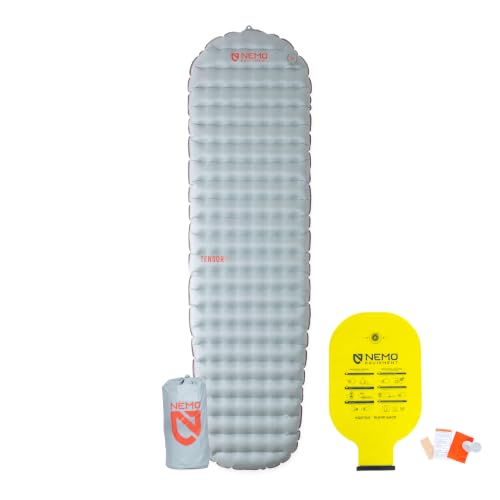
- 400-gram inflatable design
- 5.4 R-value for strong insulation
- Quiet, stable 3.5-inch loft
Best For: Lightweight backpacking and thru-hiking
Best Pressure-Mapped Comfort

- Self-inflating foam construction
- 6 R-value for year-round insulation
- Pressure-mapped support zones
Best For: Comfort-focused camping and car camping
Best Wide Ultralight Pad

- 25.6-inch-wide sleeping surface
- 3.5 inches of cushioning
- Pumpbag and repair kit included
Best For: Three-season backpacking and bikepacking
Best Frontcountry Luxury

- Large 25-by-77-inch format
- 6 R-value for year-round insulation
- Fast WingLock valve system
Best For: Spacious car camping and frontcountry trips
Best All-Season Insulation

- 7.2 R-value for year-round insulation
- 4-inch thickness with 330-pound capacity
- 2 pounds and packs compactly
Best For: Backpackers wanting warmth, cushioning, and portability
Best Ultralight Foam Pad

- Weighs just 14 ounces
- Folds compactly with no inflation needed
- Durable closed-cell foam construction
Best For: Minimalist backpackers prioritizing low weight and simplicity
Best for Car Camping
Cymla Memory Foam Camping Mattress

- 3-inch high-density memory foam
- Waterproof, non-slip bottom
- Rolls up with bag and straps
Best For: Car campers, guests, and floor-sleeping use
Extra-Thick Comfort Pick
Overmont Ultralight Camping Sleeping Pad

- 4.7-inch-thick ergonomic inflatable design
- Built-in foot pump inflates in 30–60 seconds
- 1.98-pound packable design supports up to 300 pounds
Best For: Campers seeking thick cushioning and convenient inflation
No-Pump Foam Pick
Foam Camping Mattress with Washable Cover
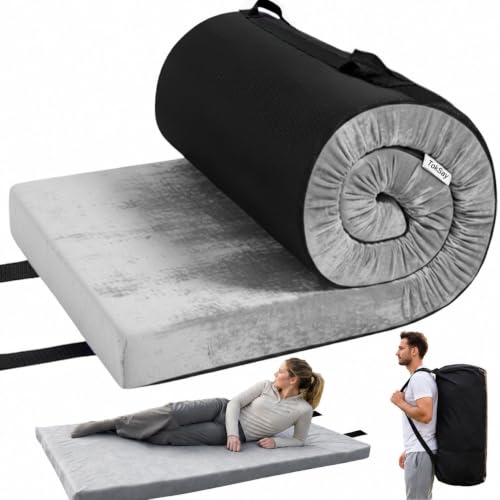
- 30D high-density foam needs no inflation
- Machine-washable plush cover and waterproof bottom
- Rolls up with straps and a carry bag
Best For: Users wanting low-maintenance foam comfort for camping or guests
Lightweight High-Capacity Pick
WANNTS Ultralight Inflatable Sleeping Pad

- Built-in foot pump inflates in about 20 seconds
- Approximately 30 ounces with waterproof nylon construction
- Side buttons connect two pads into a double bed
Best For: Backpackers wanting a lightweight, quickly inflated pad
Best Ultralight Insulation – NEMO Tensor All-Season
For shoppers comparing sleeping pads under 300, the NEMO Tensor All-Season stands out as a lightweight inflatable option with a 5.4 R-value and 3.5 inches of cushioning. Its 400-gram weight makes it particularly appealing for backpacking and thru-hiking.
Best For: Backpackers and thru-hikers who prioritize low weight, warmth, and quiet sleep.
Pros:
- Two layers of Thermal Mirror metallized film provide an impressive weight-to-warmth ratio.
- Spaceframe baffles improve stability and weight distribution while reducing springiness.
- Includes a pump and is backed by NEMO’s lifetime warranty against workmanship and material defects.
Cons:
- The regular mummy size is only 20 inches wide, which may feel narrow for some sleepers.
- It is inflatable and listed as not water resistant, so careful campsite setup is important.
The Tensor All-Season is a strong choice when pack weight and insulation matter more than extra width. Its quiet construction and substantial loft add comfort without a heavy self-inflating design.
Best Pressure-Mapped Comfort – Therm-a-Rest LuxuryMap
Therm-a-Rest LuxuryMap Self-Inflating Foam Camping Sleeping Pad, Regular - 20 x 72 Inches
Check Price On AmazonAmong sleeping pads under 300, the Therm-a-Rest LuxuryMap is a comfort-focused self-inflating model with pressure-mapped foam and a 6 R-value. Its 3-inch profile provides supportive cushioning for camping across the seasons.
Best For: Campers who want a supportive, self-inflating pad for year-round use.
Pros:
- Pressure mapping places more supportive or plusher foam in key areas.
- A 6 R-value provides year-round insulation for camping.
- TwinLock valves support fast inflation and deflation, and a stuff sack is included.
Cons:
- At 2.8 pounds, it is substantially heavier than ultralight backpacking pads.
- The regular 20-inch width may not suit sleepers who prefer a wider surface.
The LuxuryMap favors cushioning and ease of use over minimal packed weight. It is a practical pick for campers who value foam-backed support and dependable insulation.
Best Wide Ultralight Pad – Exped Ultra 3R
For three-season shoppers seeking sleeping pads under 300, the Exped Ultra 3R combines a 3.2 R-value with a spacious 25.6-inch width and 3.5 inches of cushioning. Its recycled microfiber insulation and included pumpbag suit lightweight, human-powered trips.
Best For: Three-season backpackers, thru-hikers, and bikepackers who want extra width without giving up an ultralight design.
Pros:
- Comfort Cradle Rails help keep sleepers centered on uneven terrain.
- Recycled synthetic microfiber insulation helps limit cold spots inside the air chambers.
- Includes a Schnozzel Pumpbag UL and repair kit for convenient field use.
Cons:
- The 3.2 R-value is intended for three-season rather than deep-winter conditions.
- As an inflatable pad, it requires care to avoid punctures in the field.
The Ultra 3R offers a useful balance of width, cushioning, and packability for warmer-weather trips. Its accessories and centered sleeping platform make it especially practical for extended outings.
Best Frontcountry Luxury – Therm-a-Rest BaseCamp
Therm-a-Rest Basecamp Self-Inflating Foam Camping Sleeping Pad, Large - 25 x 77 inches
Check Price On AmazonFor campers comparing sleeping pads under 300, the Therm-a-Rest BaseCamp emphasizes spacious comfort and simple self-inflating convenience. The large version measures 77 by 25 inches and uses thick thermal foam with a 6 R-value.
Best For: Frontcountry campers who want a wide, warm, easy-to-use pad.
Pros:
- The large 25-by-77-inch format gives sleepers more room to move.
- A 6 R-value and thick thermal foam support year-round camping.
- The WingLock valve enables faster inflation and quick deflation compared with a classic valve.
Cons:
- At 3.4 pounds, it is better suited to frontcountry camping than long backpacking trips.
- Its 2-inch thickness provides less loft than some inflatable backpacking pads.
The BaseCamp is a sensible comfort-first option for campsites reached by vehicle. Its wide footprint, durable self-inflating construction, and strong insulation make it well suited to extended camping.
Best All-Season Insulation – Trekology UL R7 Sleeping Pad
For shoppers comparing sleeping pads under 300, the TREKOLOGY UL R7 stands out as an insulated inflatable option for campers who want substantial cushioning without a bulky packed size. It is 4 inches thick, weighs 2 pounds, and packs roughly to the size of a water bottle.
Best For: Backpackers and campers who want year-round insulation, a wide sleeping surface, and strong support for side or back sleeping.
Pros:
- 7.2 R-value provides insulation for all-season use.
- 4-inch thickness and a 330-pound capacity help prevent bottoming out.
- 40D ripstop nylon with TPU coating is water-resistant and tear-resistant.
- Packs compactly and includes a carry bag.
Cons:
- Inflation requires your mouth or a separate pump bag, which is not included.
- Its 70.8-inch length is best suited to sleepers up to about 5 feet 11 inches.
- At 2 pounds, it is heavier than a minimalist foam pad.
The UL R7 is a practical choice when warmth and cushioning matter more than the absolute lowest trail weight. Its insulation, supportive thickness, and compact pack size make it one of the more versatile options in this group.
Best Ultralight Foam Pad – Therm-a-Rest Z Lite Original
Among sleeping pads under 300, the Therm-a-Rest Z Lite Original is a dependable closed-cell foam choice for hikers who value simplicity and low weight. Its accordion fold makes it easy to pack, while the foam construction avoids inflation or puncture concerns.
Best For: Backpackers, mountaineers, and campers seeking an economical, durable pad that weighs only 14 ounces.
Pros:
- Very light at 14 ounces.
- Accordion-style folding packs down to 20 x 5 x 5.5 inches.
- Closed-cell foam is durable, water-resistant, and ready to use without inflation.
- Dual-density design balances top-side comfort with bottom-side protection.
Cons:
- Its 0.75-inch thickness provides less cushioning than a 3- or 4-inch inflatable pad.
- The 1.7 R-value offers less insulation than the Trekology UL R7.
- The 20-inch width may feel narrow for some sleepers.
The Z Lite Original prioritizes reliability and minimal weight over plush comfort. It is especially well suited to trips where easy setup, ruggedness, and a lightweight pack are more important than a thick sleeping surface.
Best for Car Camping – Cymla Memory Foam Camping Mattress
For sleeping pads under 300 that can serve more than a tent, this memory foam camping mattress is designed for car camping, sleepovers, guest use, and floor sleeping. Its 3-inch foam construction offers a more mattress-like feel than typical backpacking pads, though it is intended for portable comfort rather than ultralight trekking.
Best For: Car campers, guests, and travelers who want a soft roll-up mattress with a waterproof, non-slip bottom.
Pros:
- High-density memory foam adapts to body shape and weight.
- OEKO-TEX certified materials and a fiberglass-free flame-retardant layer provide added material-safety features.
- Waterproof, non-slip bottom suits tents, floors, and vehicle use.
- Includes a storage bag and packing straps, with several size options.
Cons:
- Requires 24 to 72 hours to fully rebound after vacuum packaging.
- Roll-up foam is less suited to long-distance backpacking than compact foam or inflatable pads.
- Comfort and fit depend on selecting the correct size from the available options.
This mattress is the strongest fit for comfort-focused, vehicle-based trips and occasional household use. Its foam cushioning and practical bottom fabric make it more versatile than a dedicated trail pad, but less appropriate when pack weight and volume are critical.
Extra-Thick Comfort Pick – Overmont Ultralight Camping Sleeping Pad
For shoppers comparing sleeping pads under 300, the Overmont stands out with a 4.7-inch-thick inflatable design, an integrated pillow, and a built-in foot pump. It offers substantial cushioning while packing to roughly the size of a water bottle for backpacking and camping.
Best For: Campers who want extra-thick support, quick foot-powered inflation, and a compact pack size.
Pros:
- 4.7-inch thickness and wave-shaped cells support back, side, and stomach sleepers.
- Built-in foot pump inflates the pad in about 30–60 seconds without mouth inflation or a separate pump.
- At 1.98 pounds, it packs down to approximately 9.8 × 4.7 inches.
- 75D fabric and TPU construction support up to 300 pounds.
Cons:
- The integrated pillow may not suit sleepers who prefer a separate pillow.
- Inflatable construction requires care around sharp or rough surfaces, despite the tear-resistant fabric.
The Overmont is a practical choice when cushioning matters more than achieving the absolute lightest carry weight. Its built-in pump and pillow simplify camp setup, while the compact packed size keeps it suitable for hiking and backpacking.
No-Pump Foam Pick – Foam Camping Mattress with Washable Cover
Among sleeping pads under 300, this foam camping mattress is a straightforward alternative to air pads. Its 30D high-density foam needs no inflation, while the washable plush cover and non-slip waterproof bottom make it suitable for tents, cars, floors, and guest use.
Best For: Campers and travelers who prefer dependable foam cushioning with a removable, washable cover.
Pros:
- Solid 30D high-density foam does not require a pump or lose air overnight.
- Removable plush cover is machine washable.
- Non-slip bottom helps reduce movement on tent floors, RV beds, and hardwood floors.
- Roll-up design includes straps and a carry bag for storage and transport.
Cons:
- At 72 × 24 inches, the cot-size pad is best suited to users under 5 feet 5 inches.
- It weighs 2.6 kilograms, making it heavier than the inflatable options listed here.
- The foam may need 48–72 hours in a warm environment to fully expand after opening.
This mattress favors convenience and consistent support over ultralight portability. Choose it if you want a no-inflation setup and easy cleaning, but allow time for expansion and check the shorter cot dimensions before buying.
Lightweight High-Capacity Pick – WANNTS Ultralight Inflatable Sleeping Pad
For sleeping pads under 300 aimed at backpackers, the WANNTS combines a lightweight inflatable build with a built-in foot pump. Its hexagon body-mapping design, waterproof nylon construction, and side buttons for connecting two pads make it a versatile option for outdoor trips.
Best For: Backpackers who prioritize low weight, quick setup, and the option to join two pads into a wider sleep surface.
Pros:
- Built-in foot pump can fully inflate the pad in about 20 seconds.
- At approximately 30 ounces, it is designed for easy carrying on hiking and camping trips.
- Hexagon body-mapping design is intended to accommodate different sleep positions.
- Side buttons allow two pads to be attached as a double bed.
Cons:
- The 25-inch width is narrower than many bed-style mattresses.
- Hand washing is required according to the care instructions.
- As an inflatable pad, it may require repair if punctured, though a six-patch repair kit is included.
The WANNTS is a strong fit for weight-conscious campers who still want built-in inflation and useful extras. Its connection buttons add flexibility for couples, while the included storage bag and repair kit help round out the backpacking setup.
How We Picked the Best Sleeping Pads Under 300
We evaluated these sleeping pads by the features that matter most outdoors: insulation, comfort, portability, durability, setup, and intended use. The selection includes backpacking-friendly air mats, self-inflating pads for balanced comfort, closed-cell foam models, and thicker camping mattresses for car camping or guest use.
Because sleeping needs vary, we did not treat the lightest model as automatically best. A compact pad may be ideal for long hikes, while a wider, thicker option can be a better choice for side sleepers, cold-weather campers, or anyone prioritizing easy sleep over minimum pack weight.
Quick Comparison
- Best for backpacking: Look for an ultralight inflatable pad with a small packed size.
- Best for cold weather: Prioritize a high R-value and sufficient full-length coverage.
- Best for comfort: Choose a thicker self-inflating or air-filled design with room to move.
- Best for simplicity: Closed-cell foam pads require no inflation and are easy to use.
- Best for car camping: Weight matters less, so a wide, plush, or foam mattress may be preferable.
Key Buying Factors for Sleeping Pads Under 300
Warmth and R-Value
R-value indicates how well a pad resists heat loss to the ground. Higher values are generally better for cold conditions, while moderate insulation may be sufficient for summer camping. If you camp across multiple seasons, choose a pad with enough insulation for the coldest trips you expect to take.
Thickness, Width, and Shape
Thicker pads can provide better pressure relief, especially for side sleepers, but may be heavier and bulkier. Regular mummy shapes save space, whereas rectangular pads offer more shoulder and leg room. Check the inflated dimensions against your tent and sleeping position before buying.
Weight, Packed Size, and Inflation
Backpackers should compare both trail weight and packed volume. Built-in pumps, pump sacks, and self-inflating foam can simplify setup, but each has trade-offs in weight and inflation time. A foam pad is the easiest option when puncture resistance and instant setup matter most.
Durability and Maintenance
Inflatable pads need care around sharp rocks, thorns, and rough tent floors. Use a groundsheet when appropriate and follow the manufacturer’s repair guidance. Removable or washable covers can be useful for foam mattresses used in vehicles, cabins, or guest spaces.
Who Should Buy Which Sleeping Pads Under 300?
Backpackers and hikers should favor lightweight inflatable or compact foam pads. Cold-weather campers should select a well-insulated model with a suitable R-value rather than relying on thickness alone. Car campers and families can benefit from wider self-inflating or foam mattresses that trade packability for comfort.
Side sleepers should prioritize thickness, width, and stable support. Minimalists and frequent travelers may prefer a durable closed-cell pad with no valves or inflation equipment. Among Sleeping Pads Under 300, the best choice is the one whose warmth, comfort, and packed size align with your actual trips—not simply the model with the most features.